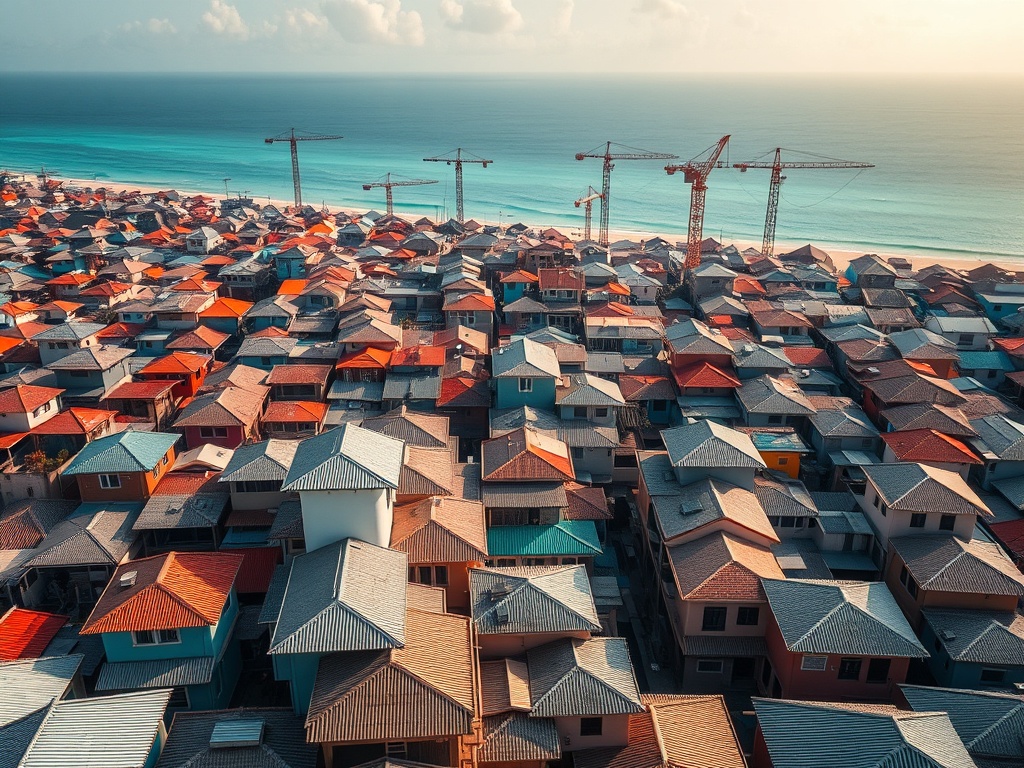
Parliament's Rush to Decide Who Gets a Home
The debate over housing in the Maldives has reached a critical juncture, with Parliament's sudden scheduling of committee meetings to review new legislation highlighting the urgency of this perennial crisis. Yet beneath the surface of policy discussions lies a more fundamental question: how did housing become the primary mechanism through which citizenship and belonging are measured?
The current system operates on multiple fault lines. On one side, there's the undeniable reality that Malé is physically full—a concrete island straining under the weight of demographic pressure. On the other, there's the persistent demand for what critics call "birthright benefits"—the expectation that being born in the capital confers special entitlement to state resources. This tension between geographical accident and national citizenship forms the core of the housing dilemma.
Previous schemes, like the MDP's Goathi program, demonstrated both the potential and pitfalls of government intervention. The policy itself addressed a genuine need at lower cost, but its implementation revealed constitutional vulnerabilities and bias in execution. The fundamental problem wasn't the concept but the administration—a pattern that repeats across successive governments.
Economic principles further complicate the landscape. When demand dramatically outstrips supply, price controls often backfire, creating black markets where housing units command illegal premiums. The rental market exemplifies this dynamic—while Malé residents may own the land, development and management involve stakeholders from across the archipelago, distributing income streams beyond the capital's boundaries.
The proposed legislation aims to standardize housing schemes and require governments to conduct proper surveys and adhere to national development plans. This technical approach suggests progress toward systematic solutions, but the political context raises concerns about whether standardization will merely institutionalize existing inequities.
What emerges from this complex picture is the need for criteria that transcend birthplace and profession. The real failure lies not with individuals seeking advantage—any rational actor would—but with successive administrations that have treated housing as electoral currency rather than fundamental right. A holistic national approach requires recognizing that the housing crisis affects Maldivians regardless of which island they call home, and solutions must be designed accordingly. The architecture of inequality can only be dismantled by building systems that treat all citizens as equal stakeholders in the nation's future.
— Source fragments: Male' is full; people demanding money as Male' meeha; MDP goathi scheme constitutional issues; price ceiling economics; rental market demographics; housing bill standardization; non-discrimination criteria; government failure to address crisis holistically