Pay Commission Assures No Civil Servant's Salary Will Be Reduced Under Harmonisation
The Pay Commission has assured that no employee will receive a salary lower than what they were earning when the government harmonised civil servant pay, saying any gap has been eliminated through a migration allowance.
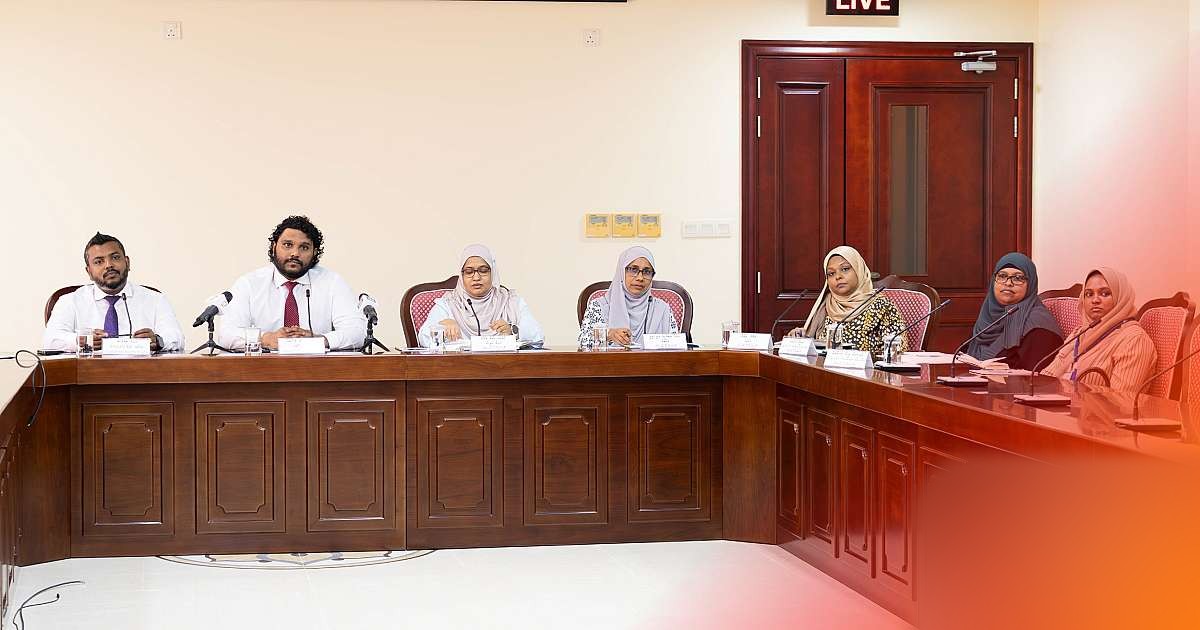
The assurance came during a sitting of the People's Majlis committee scrutinising the extent to which the government fulfils its responsibilities, which summoned officials from the Finance Ministry and the Pay Commission.
Speaking at the committee, Pay Commission Vice President Shanah Farooq said the salaries of 40,000 employees have been harmonised. She explained that when the process began in 2022, employees holding a certificate of the same level received the same salary regardless of institution or the work performed.
"For example, whether a doctor, a teacher, a nurse, an engineer, or an administrator. The difference is [the increase that came] to the salaries of employees in engineering or such skills for us," she said.
Shanah said engineers previously received only about Rf13,000 as take-home pay, which made it difficult for skilled Maldivians in the field to secure government jobs, and that many such posts were being filled on a contract basis. She said the pay harmonisation law was formulated to separate skills and set salaries appropriate to them.
According to Shanah, an entry-level engineer will now receive at least approximately Rf20,000. She also cited lawyers working in the judiciary as a special field under consideration.
Shanah said salaries are now based on skills rather than on a single certificate, and that pay for technical posts is set in a manner appropriate to that skill. She said that where pay harmonisation had reduced the salaries of long-serving employees, the gap has been eliminated through the migration allowance.
"No employee will get anything less than what they previously received," she said. "The salary received as before will be received along with it as take-home pay."
She indicated that under pay harmonisation overtime pay is capped at 10 per cent, and that various allowances have been introduced for employees who must work beyond that.
"Even if one has to work after 48 hours or after reaching 10%, those allowances will be available," she said. Shanah noted that some employees had previously been taking large amounts as overtime pay.
Hulhumalé South constituency member Dr. Ahmed Shameed noted that the salary received by ordinary citizens in the Maldives is not sufficient to live on, and that one cannot live on a median salary of Rf9,000. He asked whether the salary gap was being considered during pay harmonisation.
"There is a 12-fold difference between the most ordinary salary and the salary of a Majlis member," Shameed said, adding that no other country in the world has such a large gap in salaries.
In response, Shanah said Majlis members set their own salaries, and noted that members also receive committee allowances that other employees do not. She said the salary gap can be reduced after also considering the effects on the budget.
"I dare say now, gaps in many special specialized fields have now been greatly reduced," she said, adding that the Maldives follows the principles used in other countries when setting salaries for special fields.
"No employee will have their salary reduced. Nothing set as take-home pay will be reduced," Shanah said.