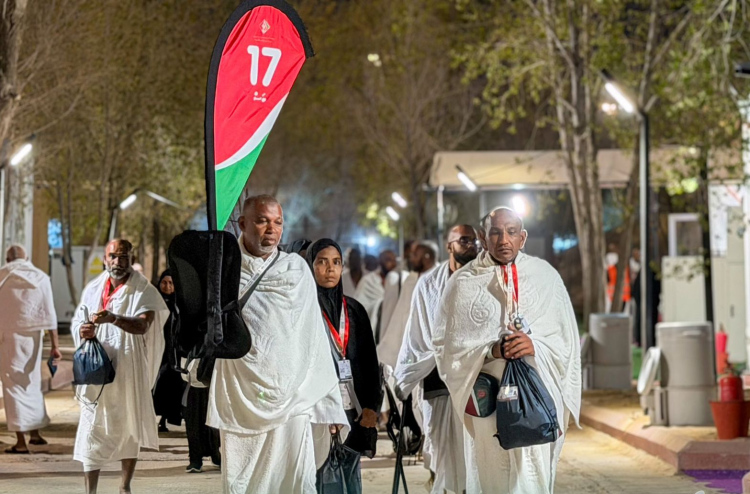
Pension Act Amendments Now Allow Seniors to Use Pension Funds for Hajj Reservations
The Maldives Pension Office has begun implementing amendments to the Pension Act that allow even persons aged 65 and above to reserve Hajj slots using funds from their Retirement Savings Account. Previously, individuals who had reached the age of 65 at the time of slot confirmation were not eligible to use their pension funds for this purpose.
Under the new amendment, which is now in effect, any eligible person of any age can perform the Hajj pilgrimage using funds from their Retirement Savings Account. Even if a member of the Retirement Pension Scheme has reached the pensionable age, funds may be used to reserve a slot for Hajj under the responsibility of the Hajj Corporation or to avail services provided by an entity responsible for taking people on Hajj.
Eligibility applies to members who have not previously performed Fard Hajj and have at least MVR 336,000 in their Retirement Savings Account. If a member has mortgaged pension funds for housing purposes, eligibility is met if the account balance remains at MVR 336,000 after deducting that amount.
Under this procedure, members wishing to go on Hajj will be allocated a slot according to the established order upon paying 20 percent of the Hajj travel cost to the Hajj Corporation. The remaining 80 percent of the travel cost will not be immediately deducted from the pension account; however, this money will be invested until it is handed over to the Hajj Corporation.
According to the new amendment, when calculating pension funds for members currently receiving pensions or newly retired members, the amount reserved for Hajj will not be included. Therefore, using funds under the Hajj benefit may result in changes to the monthly pension amount. However, if the Hajj reservation is cancelled for any reason or if the funds are returned to the Retirement Savings Account, the pension funds will be recalculated including those funds.
The Pension Office must retain in the participant's Retirement Savings Account up to 80 percent of the official cost of taking the participant on Hajj as requested by the participant, for whom the Hajj Corporation has reserved a slot and notified the Pension Office. If the company taking the pilgrim requests the release of funds, the money must remain retained in the person's account until the funds are released to that company or until the reservation is cancelled.
If a participant whose funds are retained passes away, the retention of funds from that participant's Retirement Savings Account shall come to an end. Retained funds cannot be used for collateralization as specified in the Pension Act or for any similar purpose. Funds may be released from the scheme to provide pension to a participant whose funds are retained only after reducing the retained amount.
Changes to the reserved slot for Hajj or cancellation can be made under procedures established by the government company providing Hajj services, upon the request and consent of the participant. In cases where the company lacks authority, such as when changes occur due to alterations in Hajj quotas and government policies, the authority to make changes to the slot will be granted.
The amendment also clarifies how to proceed if there is a change in the official cost of taking people on Hajj. If the amount determined by the government as the official cost is lower than the price set at the time of reservation, the retained amount from the Savings Account must be reduced. If the cost increases and sufficient funds exist, those funds will be retained under specific regulations. If the account does not hold such amounts, the option to pay the difference personally or cancel the reservation is available.
If a participant fails to go on Hajj for that year for any reason, the funds released for Hajj travel must be returned to the Pension Office by the entity providing Hajj services within 30 days after the Hajj dates have passed. Within 15 days of the Pension Office receiving these funds back, they must be deposited into the account of the relevant person.