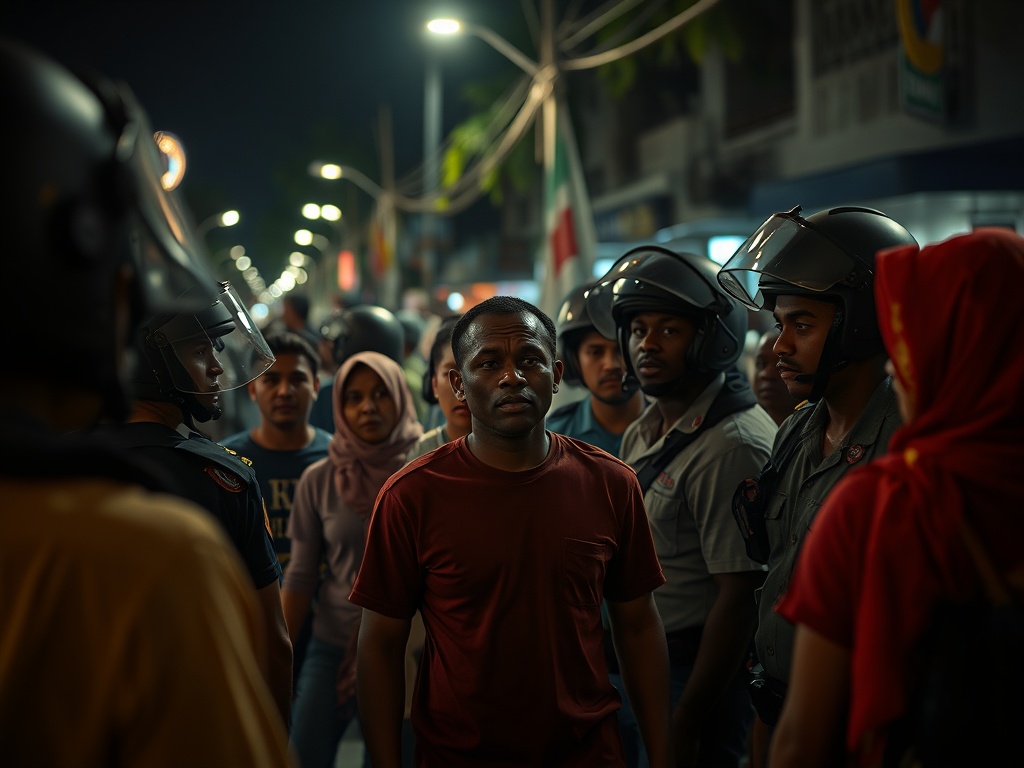
People don’t have to protest where Ihusaan tells us to
The fundamental right to protest has become a flashpoint in Maldivian politics, with citizens asserting their constitutional rights against what they perceive as government overreach. Overnight demonstrations accusing the administration of corruption and curtailing basic freedoms resulted in eight arrests, sparking intense debate about the boundaries of dissent in our democracy.
Many Maldivians are questioning the legitimacy of protest route restrictions, arguing that the constitution guarantees the right to assemble anywhere except specifically designated zones like schools and mosques. The sentiment that 'people don't have to protest where Ihusaan tells us to' reflects growing frustration with what critics call the politicization of law enforcement.
This tension comes amid broader concerns about eroding freedoms and the consolidation of power. The current administration faces accusations of using state institutions to suppress opposition voices while grappling with multiple crises - from the high cost of living driven by money printing and rising taxes, to youth unemployment and a housing crisis in congested Malé.
The police find themselves caught between enforcing regulations and protecting constitutional rights. While some citizens praise law enforcement as 'the best police in Maldives,' others accuse them of shielding corrupt officials and abusing authority to harm citizens rather than serving them.
As social media becomes an increasingly important platform for venting anger and exposing elite lifestyles, the government's handling of protests will likely determine the temperature of political discourse in coming months. With the opposition MDP accusing the ruling party of the same 'violence and hooliganism' they once condemned, and citizens questioning whether authorities are protectors or oppressors, the very nature of Maldivian democracy appears to be at stake.