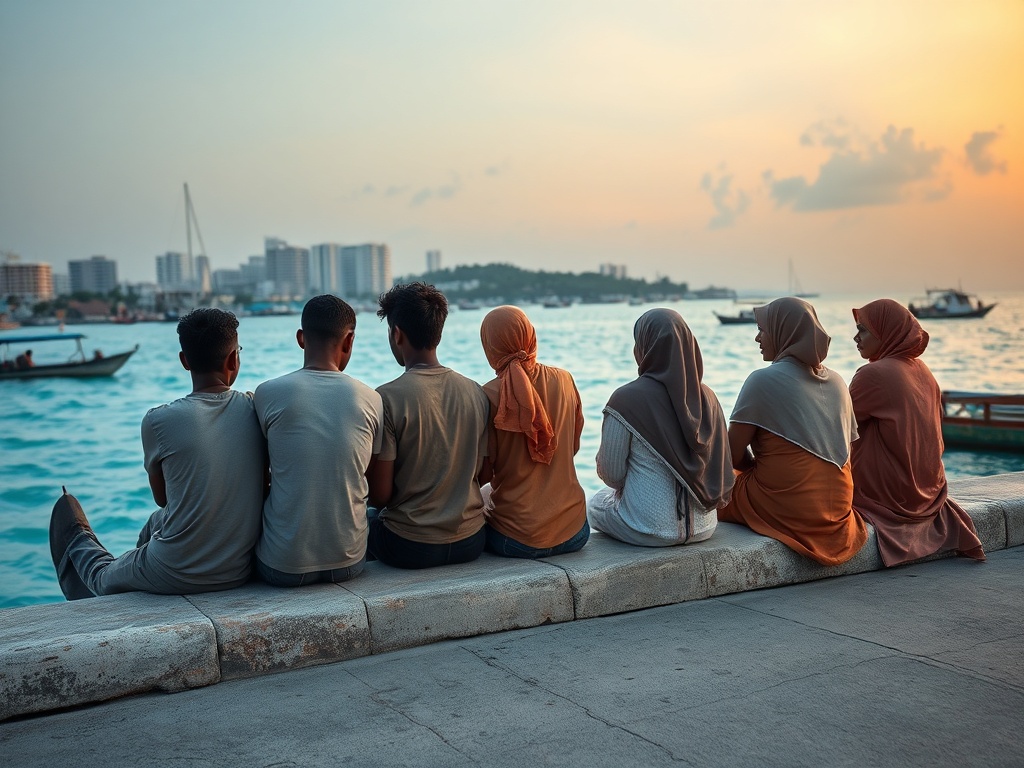
Phones Full of Dreams on Malé's Harbor Wall
The sea breeze carries more than salt these days—it carries the weight of waiting. In the narrow streets of Malé, between the concrete buildings that reach for the sky, young people move with a certain tension in their shoulders. They carry phones filled with opportunities glimpsed online, degrees earned through late-night study, and questions that hang in the humid air like the monsoon clouds that refuse to break.
You see it in the way they gather at the harbor wall in the evening, watching the dhows come and go. Their conversations are punctuated by the slap of waves against the seawall, each crash echoing the frustration of applications sent into silence, of qualifications that feel like keys to doors that don't exist. The expatriates who flow through the airport seem to move with purpose, while locals find themselves standing still, watching their own country transform around them.
Yet in this waiting, there's a peculiar kind of clarity. The drug use that whispers through some corners of youth culture isn't just rebellion—it's the manifestation of dreams deferred, of futures that feel increasingly out of reach. But look closer and you'll see other stories unfolding: the young woman teaching coding to children in her family's living room, the men who've turned fishing knowledge into eco-tourism ventures, the students using social media to create new forms of Maldivian art.
There's a resilience being forged in this generation, born of navigating the space between the Maldives they inherited and the one they're determined to build. They understand the ocean's fundamental truth—that stillness is temporary, that every tide eventually turns. Their patience isn't passive; it's the gathering of strength, the careful observation of currents, the preparation for the moment when they can finally set their own course.
— Source fragments: Youth issues: Drug use, unemployment, lack of educational/job opportunities; Expatriates: Uncontrolled numbers lead to competition with locals for jobs/business; Housing crisis in congested capital; Economy: High cost of living