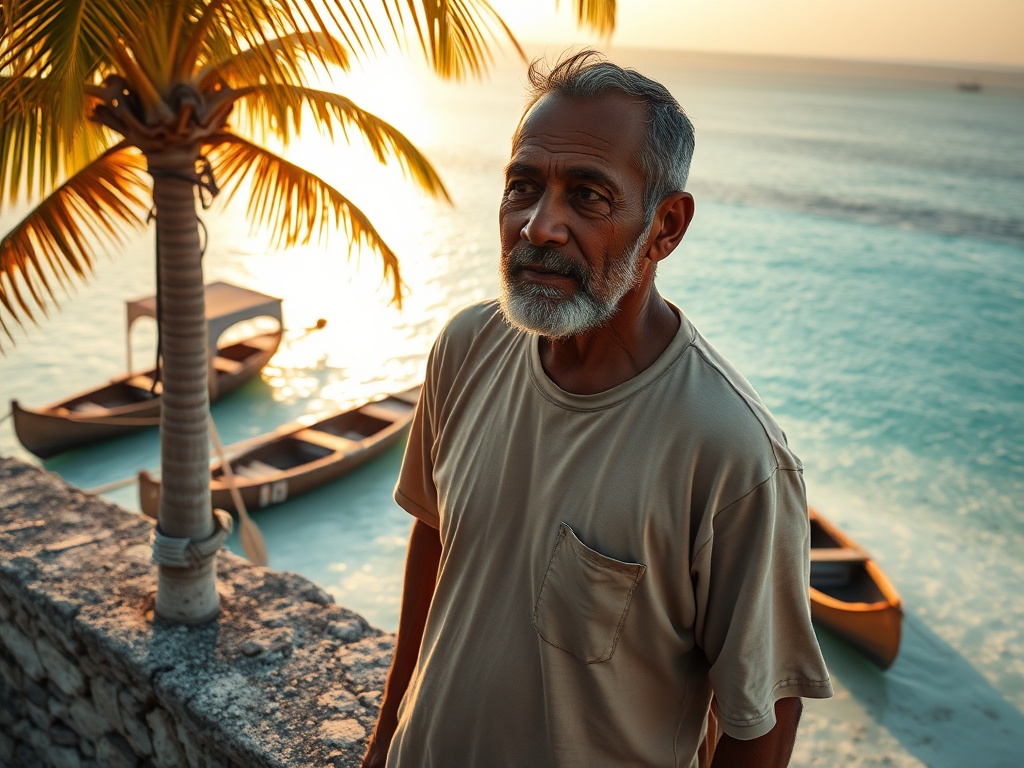
Photographs That Made Us Question Our Origins
In the digital age, where images travel faster than ideas, a simple comparison of photographs sparked a complex conversation about Maldivian identity. The visual juxtaposition of Kiribati islanders and Dhivehin prompted questions about shared Dravidian origins, but the responses revealed something more profound: a society grappling with the meaning of heritage in an era of globalization.
The debate quickly moved beyond physical anthropology to touch on fundamental questions of belonging. "We are all humans. We are all related," one voice noted, acknowledging universal kinship while resisting oversimplified migration narratives. This tension between scientific classification and lived identity runs deep in Maldivian discourse, where academic studies based on small samples clash with centuries of cultural continuity.
At the heart of the discussion lies the question of what constitutes "aboriginal" status and how Maldivians fit into this framework. The conversation reveals skepticism toward established theories of origin, with participants pointing to the nation's largely homogeneous society while acknowledging historical settlement patterns. This isn't merely academic—it speaks to how Maldivians understand their place in the Indian Ocean world.
The cultural dimension emerged sharply in discussions of dress and tradition. The careful distinction between Sherwani and Shalwar Kameez, between proper turban and simple scarf, reflects a society keenly aware of the nuances that define its cultural boundaries. These aren't trivial distinctions but markers of identity in a region where cultural influences have ebbed and flowed for millennia.
Even discussions of food etiquette reveal deeper cultural currents. The transition from traditional practices to modern conventions—from hand-eating to using utensils—becomes a metaphor for broader societal evolution. References to cultural festivals and changing customs highlight how Maldivians navigate the space between preservation and progress.
What emerges is a portrait of a society consciously constructing its identity against multiple backdrops: scientific evidence, historical narrative, cultural practice, and modern reality. The conversation isn't really about where Maldivians came from, but who they are becoming—and how they maintain cultural distinctiveness while participating in global conversations about human origins and connection.
This ongoing dialogue reflects a mature engagement with identity that acknowledges complexity without surrendering to confusion. It suggests a people comfortable enough with their place in the world to question it, and secure enough in their traditions to examine them critically.
— Source fragments: the picture on the left is kiribati islanders. the picture on the right is dhivehin. did kiribati people also come from Dravidian Indian somewhere?; Coco! We are all humans. We are all related. Doesn't mean we came from India to dhivehi raajje; What's the technical definition of aboriginal and how do we fit into that definition and negate the established theory of our origin here?; No we aren't. We are a largely homogeneous society. Yes there are foreigners who settled at various times in history. The study everyone is mentioning as bible is an extremely small sample study which was designed for another purpose.; Ao you are saying Maldives Salaf dresses as Indians grooms and that its Shalwar Kameez? Well its not Shalwar or Kameez its called Sherwani. And it always comes with a collar. And the pagri is not a scarf, its a proper turban.; Pizza, burgers sandwiches etc. are solids. We use napkins if we get anything on our hands, we don't lick our food off of our hands. 1,700 years ago we crushed grapes with our feet. Then we invented machines to crush them for us. You posted pictures of our cultural festivals.