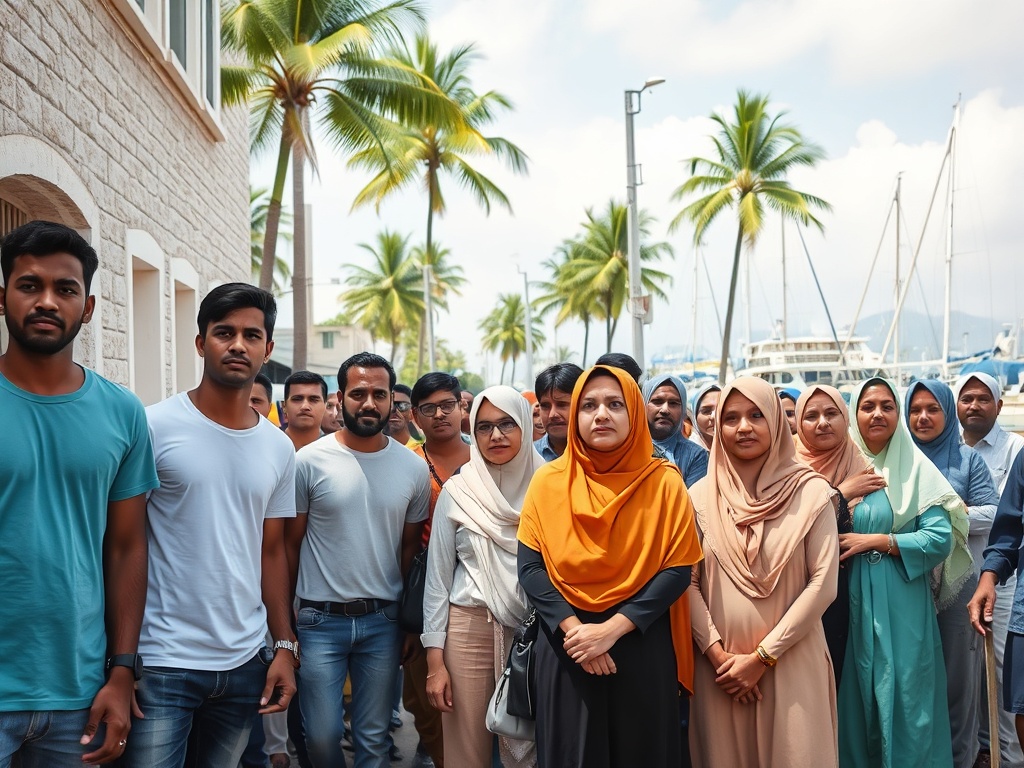
Police arrest protesters demanding justice for corruption
Growing public discontent has manifested in street protests across Maldivian communities, with citizens taking to the streets to voice their frustration over perceived government corruption and lack of accountability. The demonstrations, organized primarily through social media and word-of-mouth, have drawn participants from various age groups and backgrounds, reflecting widespread concern about governance issues affecting daily life.
Eyewitness accounts describe tense confrontations between protesters and law enforcement, with reports of excessive force being used to disperse crowds. Many citizens express feeling that their constitutional right to peaceful assembly is being systematically undermined by authorities more interested in protecting political interests than serving the public. The scenes of uniformed officers confronting ordinary Maldivians have sparked anger across social media platforms, where videos and images circulate rapidly among concerned netizens.
The underlying grievances fueling these protests stem from long-standing allegations of corruption within government institutions. Many protesters cite specific instances where public funds appear to have been misappropriated or where government contracts were awarded through questionable processes. The perception that certain individuals enjoy impunity while ordinary citizens struggle with economic challenges has created a deep sense of injustice that transcends political affiliations.
Youth participation in these demonstrations has been particularly notable, with many young Maldivians expressing disillusionment with the political establishment. They voice concerns about their future in a country where meritocracy appears secondary to political connections, and where economic opportunities remain limited despite the country's tourism-driven wealth. The generational divide in political engagement is narrowing as more young people become actively involved in demanding systemic change.
Community leaders observing the situation note that the protests represent more than momentary anger—they reflect a fundamental breakdown in trust between citizens and their governing institutions. The repeated pattern of promised reforms failing to materialize has left many Maldivians skeptical of political rhetoric and more willing to take direct action. This erosion of confidence threatens the social contract that underpins democratic governance in the island nation.
As the situation develops, many are calling for dialogue between protest organizers and authorities to prevent further escalation. However, the prevailing sentiment among demonstrators is that meaningful change requires more than symbolic gestures—it demands concrete action to address corruption and restore public faith in Maldives' democratic institutions. The coming days will likely determine whether these protests mark a turning point in Maldivian civic engagement or another chapter in the country's ongoing political tensions.