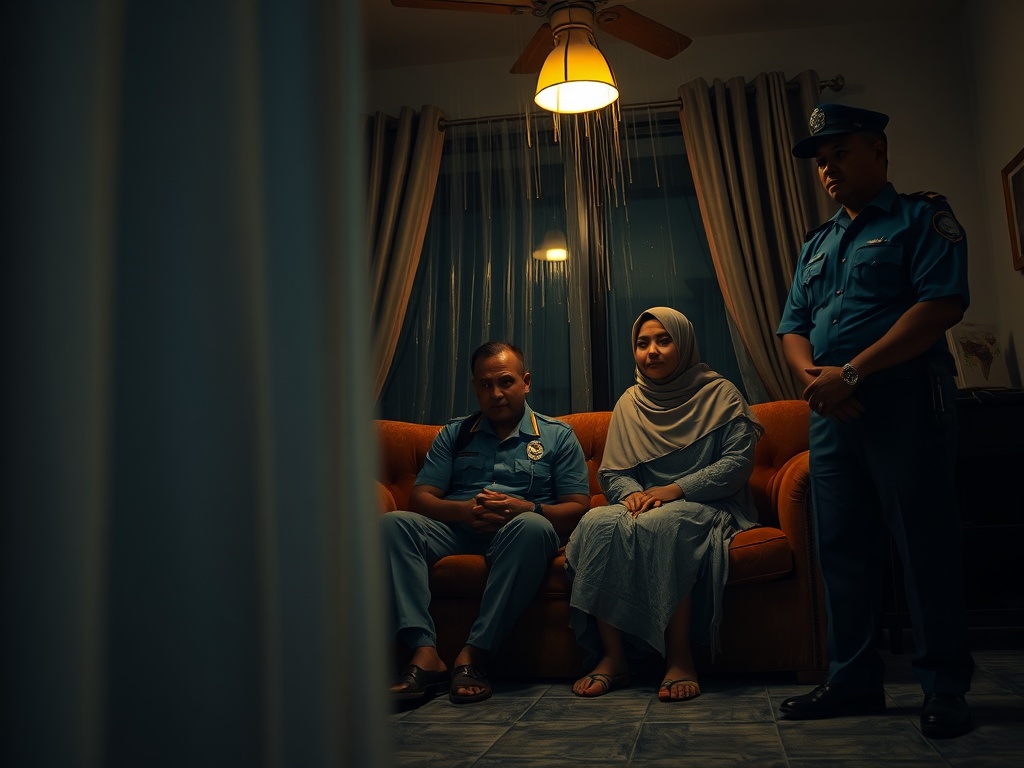
Police Officers in Your Living Room, Saying What They Can't Share
The police officers stood in our living room, their uniforms creating a stark contrast against the familiar surroundings of our home. Their presence felt both protective and ominous. 'We know what this is about, but we can't share it,' one officer repeated, his voice carrying the weight of institutional restraint. Another kept assuring us: 'We know you are innocent.' They saw firsthand the toll the investigation was taking—the sleepless nights, the worried glances between family members, the unspoken fear that hung heavy in the air.
This scene plays out across Maldivian households with unsettling frequency, where the line between security protocol and personal rights blurs. The justice system operates in a space where public safety concerns often overshadow individual presumption of innocence, creating a tension that resonates through our island communities.
In one particularly telling case that never reached trial, an investigating officer stood in Hithadhoo Magistrate Court during a remand extension hearing and claimed authorities had found enough explosives to 'blow up half of Addu City.' The case was later closed completely due to lack of evidence, but the damage was done—reputations shattered, families traumatized, and trust eroded.
This incident highlights a fundamental question that echoes through our courtrooms and living rooms: What do we do with individuals deemed dangerous during remand or pretrial detention? The challenge lies in balancing legitimate security concerns with the foundational principle that one is innocent until proven guilty. In our small, interconnected island society, accusations alone can destroy lives, regardless of eventual verdicts.
The system's imperfections become particularly visible when high-profile cases involving serious allegations surface. Public outrage demands swift action, while legal protocols require methodical evidence gathering. This tension creates a pressure cooker environment where law enforcement must navigate between protecting society and preserving individual rights.
As our nation grapples with these complex questions, the human stories often get lost in the legal arguments. Families wait anxiously for news, neighbors whisper in markets, and lives hang in the balance while the wheels of justice turn. The officers who stood in our home that day represented both the system's compassion and its limitations—they could see our innocence but were bound by procedures they couldn't control.
What emerges from these experiences is not just a legal question, but a societal one about how we define justice in a nation where everyone knows everyone, and reputations can be destroyed with a single allegation. The solution lies not in simplistic answers, but in creating a system that protects both public safety and individual dignity—where evidence, not allegation, determines outcomes, and where the presumption of innocence isn't just a legal concept, but a lived reality.
— Source fragments: Police officers repeatedly told us 'We know what this is about, but we can't share it' and 'We know you are innocent'; IO claimed they had found enough explosives to blow up half of Addu City during remand extension hearing; case was closed completely because there was no evidence