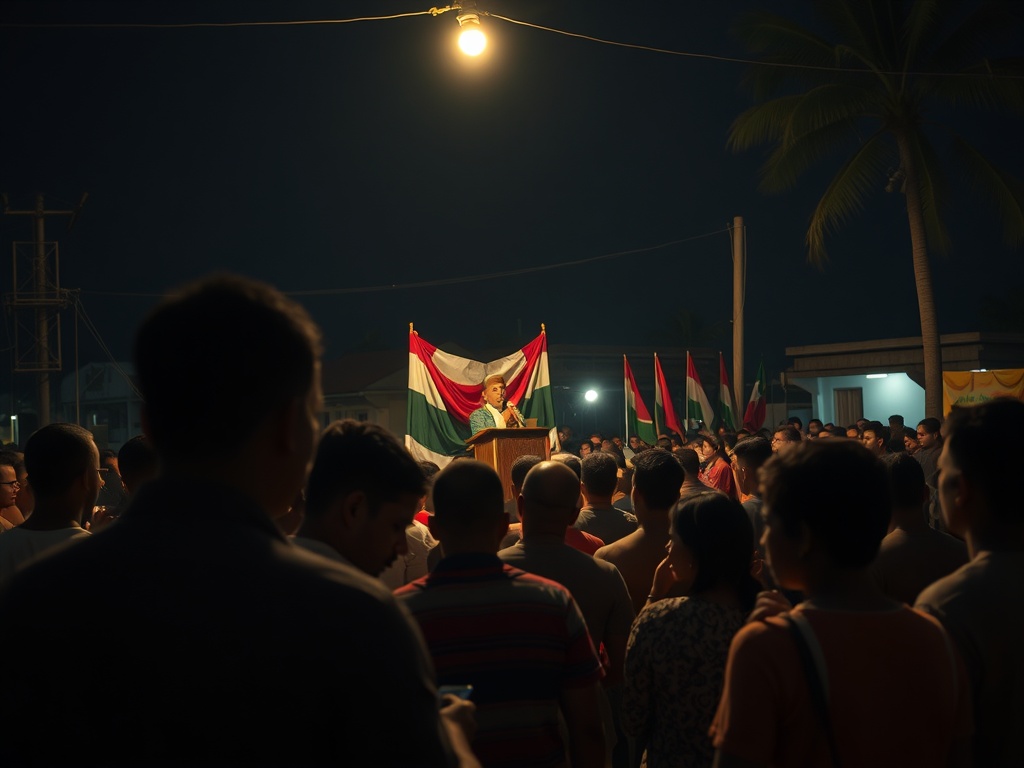
Political speeches in an empty Maldivian rally hall
Across the archipelago, a quiet frustration simmers beneath the surface of Maldivian politics—a sense that the political class has drifted from its purpose. The criticism that political parties have become collections of opportunists rather than servants of the people reflects a deeper crisis of confidence in the democratic process itself.
This perception of political self-interest manifests in tangible ways that affect everyday life. When governance becomes transactional rather than transformational, public trust erodes. The consequence is not merely cynicism but a fundamental questioning of whether political institutions truly serve the nation's interests.
In a country where tourism revenue fuels the economy yet fails to adequately benefit the broader population, where housing remains a persistent crisis despite political promises, and where youth face limited opportunities while watching resources flow elsewhere, the disconnect between political rhetoric and lived reality grows increasingly apparent.
The call for governmental honesty isn't merely about transparency in policy—it's about the basic contract between citizens and their representatives. When political positions appear to serve primarily as stepping stones for personal advancement rather than platforms for public service, the entire democratic framework weakens.
This environment creates a vicious cycle: public disillusionment leads to decreased civic engagement, which in turn reduces accountability mechanisms. The result is a political landscape where genuine debate about the nation's direction often gets overshadowed by personality conflicts and power struggles.
Yet within this critique lies the possibility of renewal. The very act of questioning political motives represents a democratic impulse—a refusal to accept governance that doesn't serve the people. This public scrutiny, while often expressed as frustration, contains the seeds of the accountability that could eventually restore faith in political institutions.
The challenge for Maldives' democracy isn't just about which party holds power, but whether the political system as a whole can rediscover its purpose: serving the nation's long-term interests rather than short-term political calculations.
— Source fragments: Political opportunism criticism, call for government honesty