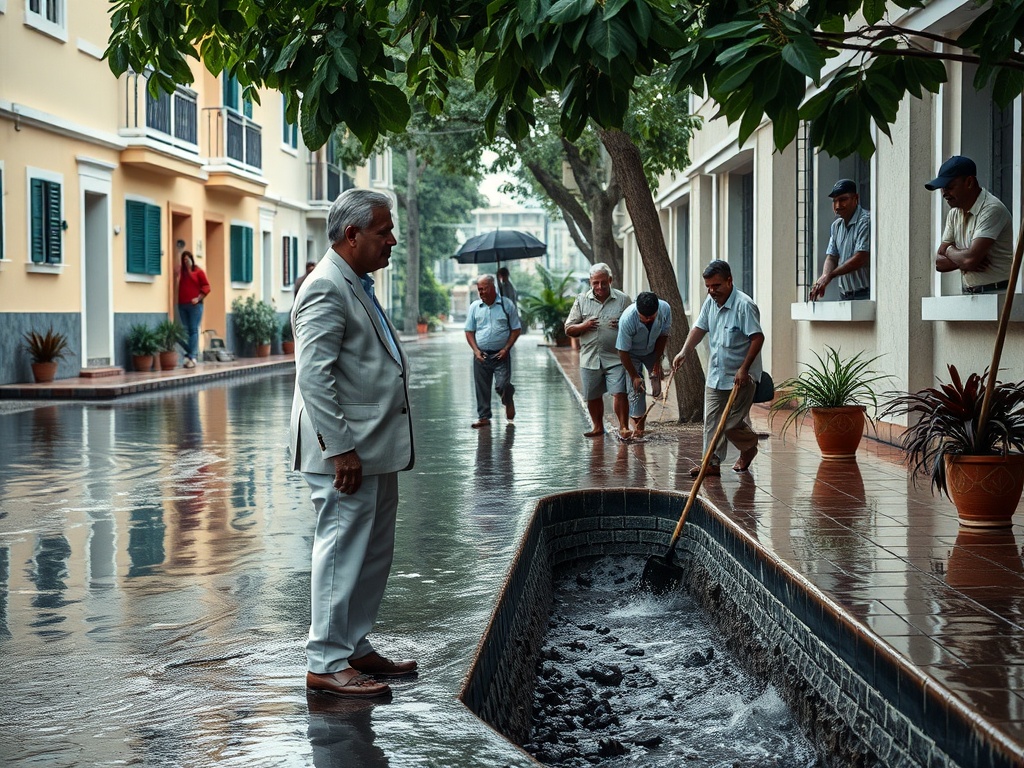
Politician Oversees Routine Drainage Cleaning as Malé Floods Again
In the narrow lanes of Malé, where seasonal rains routinely overwhelm inadequate drainage systems, a recent video circulating on social media has sparked more than just passing interest. It shows a political figure overseeing the cleaning of a kaanu—the local term for drainage channels—ostensibly as part of addressing flooding issues that plague the congested capital.
The visual raises immediate questions about governance priorities in a nation where infrastructure challenges are both chronic and critical. Why would cleaning drainage channels, a routine municipal responsibility, require high-level political supervision? And why document it for campaign purposes?
This incident reflects a broader pattern where basic governance functions become politicized performances. Across the Maldives, public works that should be routine administrative duties are increasingly framed as political achievements. The cleaning of drains, the paving of roads, the distribution of housing—all become opportunities for political theater rather than evidence of functional systems.
Meanwhile, Malé's flooding problems persist as symptoms of deeper infrastructural neglect. The capital's drainage system, designed for a smaller population, struggles under the weight of rapid urbanization and inadequate maintenance. Seasonal rains regularly transform streets into rivers, disrupting daily life and damaging property.
The performative aspect of governance becomes particularly problematic when contrasted with the systemic challenges facing the nation. While political figures stage managed responses to visible problems, the underlying issues—inadequate urban planning, bureaucratic inefficiency, and resource allocation based on political rather than practical considerations—remain unaddressed.
This dynamic extends beyond flooding to other critical areas: housing projects that become political bargaining chips rather than solutions to the accommodation crisis; healthcare initiatives that prioritize visibility over sustainability; economic policies that address symptoms rather than structural weaknesses.
The fundamental question isn't whether drainage channels should be cleaned—they absolutely should, and more frequently—but why such basic maintenance requires political theater. In a functional system, municipal workers would perform these duties routinely, without political supervision or documentation for campaign purposes.
What citizens witness instead is the transformation of governance into content—carefully staged moments designed for social media consumption rather than substantive problem-solving. The real work of addressing Malé's flooding issues requires comprehensive urban planning, adequate funding for maintenance, and technical expertise—none of which are particularly photogenic or easily distilled into campaign videos.
As climate change intensifies rainfall patterns and sea-level rise threatens coastal communities, the need for genuine, systematic infrastructure planning becomes increasingly urgent. Performance politics may generate temporary visibility, but only substantive governance can address the structural challenges facing the nation's urban centers.
— Source fragments: what did he do to fix the flooding issue? watched over kaanu cleaning (which should be done more frequently regardless) for a campaign video?