Power is the real ideology in Maldives
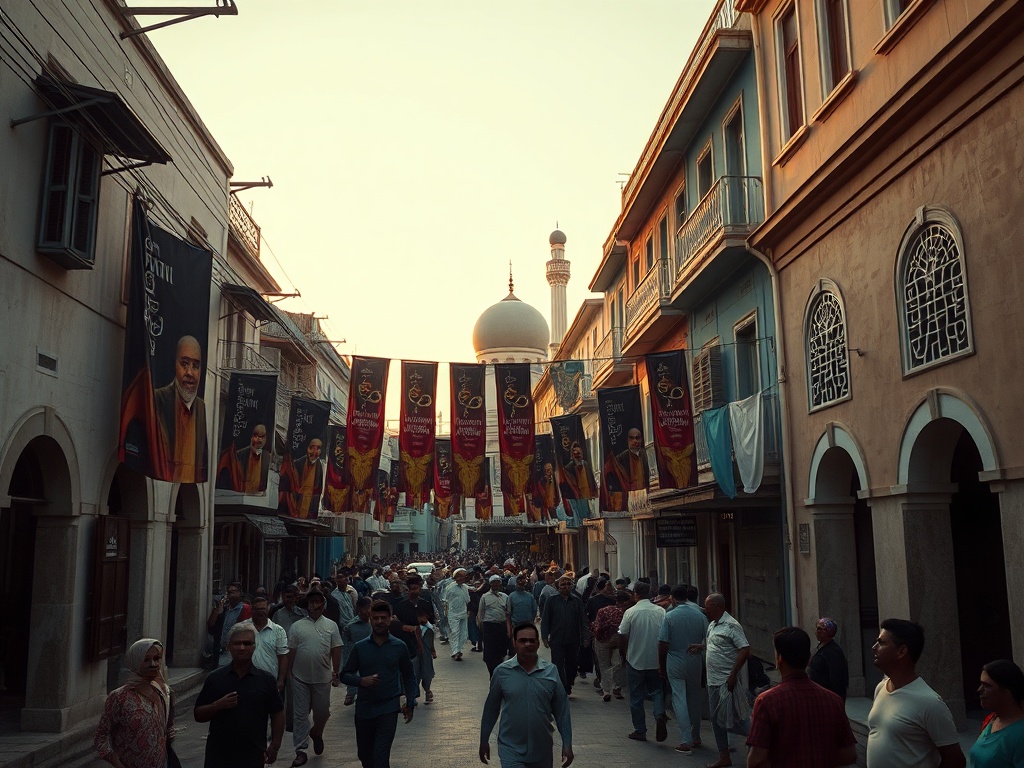
The afternoon call to prayer echoes across Malé's crowded streets, and as shops momentarily close and people move toward mosques, there's a familiar rhythm to our days that transcends political labels. We are a nation united by faith, bound by shared traditions that have weathered centuries of change. Yet when election seasons arrive, when political banners drape across narrow lanes and speeches blare from loudspeakers, something becomes clear: the traditional left-right spectrum that defines politics elsewhere simply doesn't fit here.
Islam provides our moral and social foundation—it's the bedrock upon which our laws, our education, and our daily lives are built. This reality means that many progressive or secular frameworks that form the basis of left-leaning ideologies elsewhere have little ground to stand on in our islands. We don't debate whether religion should influence governance; that question was settled generations ago. What remains, then, is not a competition of economic theories or social policies in the Western sense, but something more fundamental: the pursuit of power itself.
Walk through any local café where political discussions unfold over sweet sai and roshi, and you'll hear it—the conversations aren't about socialism versus capitalism, but about which candidate can deliver jobs, which party leader commands loyalty, which family holds influence. Power becomes the currency, the measure, the objective. It manifests in the way development projects materialize in certain constituencies before elections, in how government positions shift hands with changing administrations, in the subtle realignments that happen when political winds change direction.
This isn't necessarily cynical; it's pragmatic. In a small nation where resources are limited and opportunities scarce, control over institutions means the ability to provide for one's community, to secure scholarships for students, to ensure medical treatment for the sick, to direct infrastructure to neglected islands. The competition for power isn't abstract—it translates directly into who gets electricity subsidies, whose children receive overseas education, which fishermen receive fuel support.
Yet this singular focus on power acquisition comes with its costs. We've seen how it can overshadow long-term planning, how personal loyalties sometimes trump institutional development, how the constant churn of political realignment can distract from addressing fundamental challenges like youth unemployment, housing shortages, and healthcare accessibility. The very homogeneity that gives us strength as a nation—our shared faith, language, and heritage—can sometimes make our political competitions more personal, more intense, more focused on personalities than platforms.
There's hope, though, in our collective memory of what makes us Maldivian. The same sea that separates our islands also connects us, reminding us that beyond the political maneuvering, we share common challenges and common dreams. Perhaps recognizing that power has become our default ideology is the first step toward questioning what we want that power to achieve—beyond merely holding it. Do we want power to perpetuate itself, or to build something lasting for generations who will still hear the same call to prayer echoing across these same coral-stone walls?
The ferries continue to connect our islands, carrying not just people and goods, but the quiet understanding that while political winds shift, our fundamental identity remains. The challenge ahead isn't to fit into foreign political categories, but to forge our own path—one where power serves purpose, where leadership means stewardship, and where our unity as a Muslim nation becomes the foundation for governance that truly serves all Maldivians.