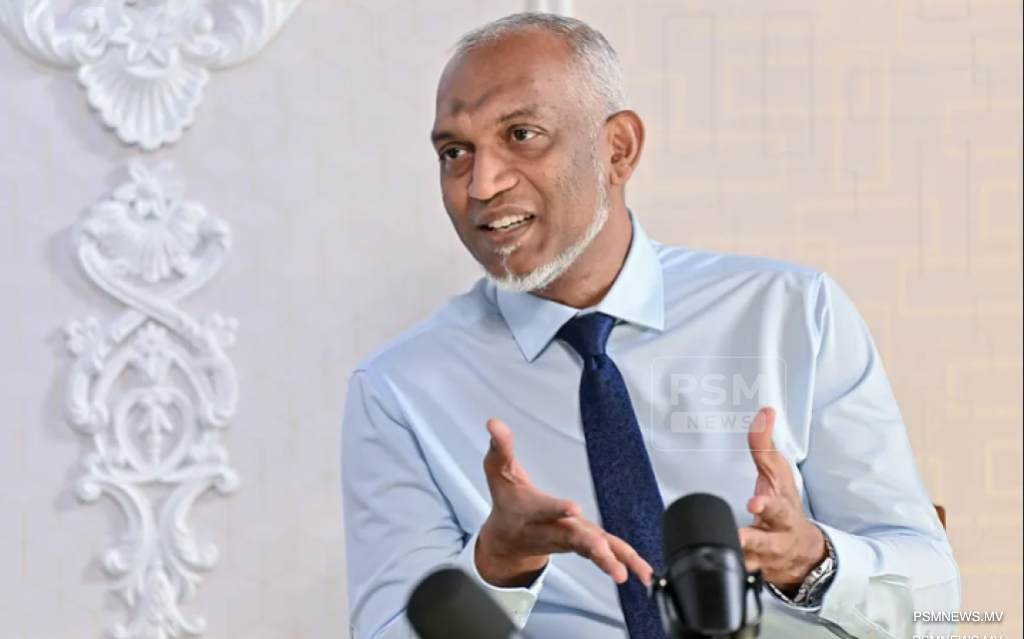
President Muizzu Assures Council Land Reclaimed Only for Vital Public Projects
President Dr. Mohamed Muizzu has announced that the state will only reclaim land under local council jurisdiction as a last resort to ensure the completion of critical public development projects. The assurance follows the President's ratification of an amendment to the Decentralization Act, which legally empowers the central government to take possession of council-administered land under specific conditions.
Speaking after the ratification, President Muizzu explained that the government supported the amendment—originally submitted by an independent lawmaker—to eliminate developmental bottlenecks. He noted that several opposition-led local councils had obstructed land allocation for state-planned projects, leading to significant delays across various islands.
"In reality, the government does not want to remove land from councils, but when obstacles are created, delays drag on for months," the President stated. He emphasized that when such roadblocks occur, essential projects must proceed to serve the public interest, even if it requires the state to take possession of the land.
To prevent government overreach, the President highlighted that the new law mandates a rigorous and transparent procedural framework. This process must be fully exhausted before any land repossession proposal reaches the Cabinet. Under these new guidelines, the state is legally required to publicly disclose project details and actively solicit feedback from the community. Local councils will also be granted formal opportunities to consult with the relevant government authorities before any action is taken.
Furthermore, the President assured that fair compensation will be provided if a local council or a third party has made prior financial investments on the land slated for repossession. He reiterated that no land transfers will occur until all legal requirements, including public participation and formal consultation, are met.
With the amendment now officially enacted, the administration expects to bypass localized political friction and streamline the delivery of vital infrastructure across the Maldives, ensuring that national development is not stalled by regional disputes.