President Muizzu Calls for National Cooperation to Resolve Migrant Worker Challenges
President Dr Mohamed Muizzu has called for a unified national effort to address the systemic challenges surrounding migrant workers in the Maldives, stating that a permanent resolution is only possible through collective cooperation between the state and the public.
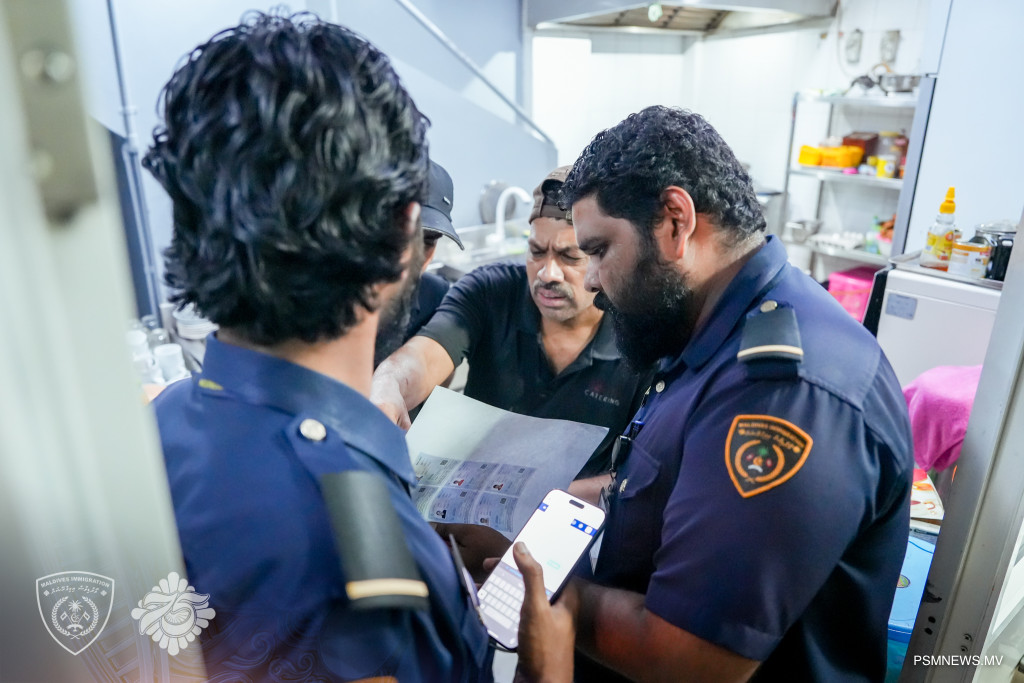
Speaking during the third episode of the 'Nation Chat' program, the President highlighted that the government is currently implementing a comprehensive policy framework to manage undocumented migrant workers. He noted that state enforcement has reached record levels over the past two years, with a significant number of individuals being repatriated to their home countries.
According to official data, state authorities repatriated 12,552 individuals by June 13 of this year. These removals included both formal deportations and alternative mechanisms, primarily targeting foreign nationals who were operating businesses illegally or those with incomplete documentation.
President Muizzu emphasized that the issue of illegal business operations is often exacerbated by local practices. He observed that some Maldivian business owners relinquish operational control to foreign nationals for personal convenience, creating a complex web of recruitment challenges and legal breaches that hinder the government's efforts to regulate the workforce.
"Matters such as these are deeply interconnected with this issue," President Muizzu stated. "This is, in truth, a matter that demands a comprehensive solution. Securing the co-operation of private individuals and all citizens is vital to achieving a permanent solution."
Significant progress has also been made in cataloguing the resident migrant workforce. The administration reports that biometric data collection is nearly complete, with only 1 percent of the workforce remaining. Currently, the number of foreign nationals with valid work permits has risen to 208,937, while over 200,000 individuals have now had their biometrics and photographs captured by the state.
By integrating stricter enforcement with a digitized registration system, the government aims to create a transparent and legal labor market that protects both the state's interests and the rights of foreign workers.