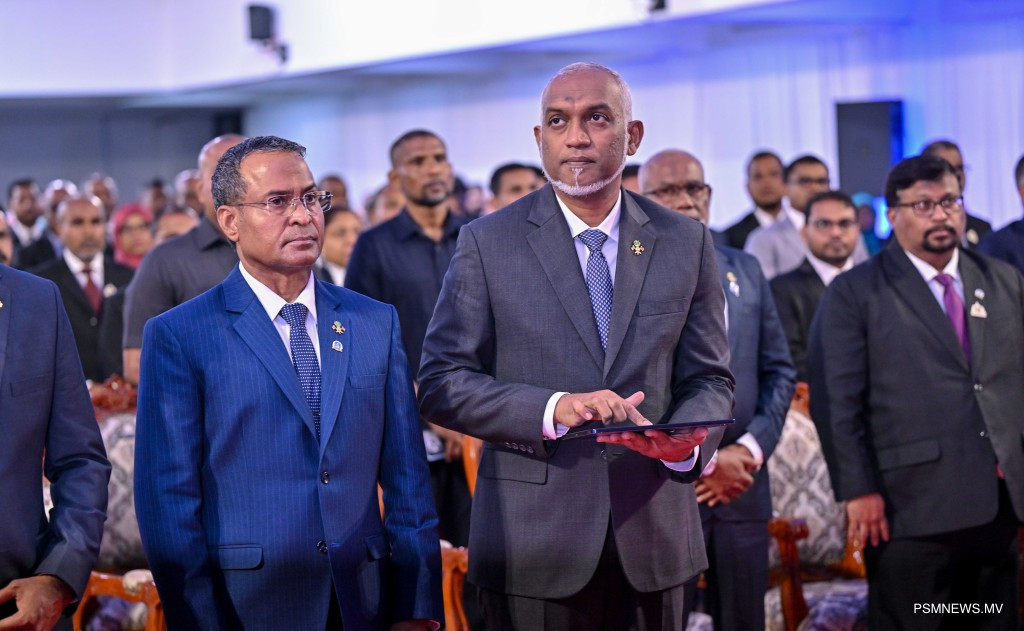
President Muizzu Ends Executive Interference in Maldives Judiciary to Ensure Legal Autonomy
President Dr Mohamed Muizzu has announced the end of executive interference in judicial judgments, marking a significant shift toward the separation of powers in the Maldives. Speaking at the official ceremony for the 61st Independence Day, the President asserted that true national sovereignty depends on independence across all state sectors, specifically emphasizing that an autonomous judiciary is vital for public trust in freedom.
A central pillar of this reform is the introduction of the first-ever independent budget for the judiciary. President Muizzu explained that a lack of financial autonomy had historically served as the primary barrier to judicial independence, leaving the courts vulnerable to executive influence. By decoupling the judiciary's funding from direct government control, the administration aims to eliminate systemic vulnerabilities and resolve long-standing allegations of meddling.
Reflecting on previous governance, President Muizzu explicitly addressed the history of the President's Office directing orders to the courts. He stated that this practice has been completely abolished, ensuring that judges are no longer pressured to deliver specific verdicts based on government instructions. "The judiciary has been completely liberated," the President remarked, asserting that no judge today would claim to be under such directives.
In addition to financial and policy reforms, the government is prioritizing the modernization of judicial infrastructure to eliminate bottlenecks in the legal system. The President noted that the Criminal Court and Drug Court had previously faced operational halts due to deteriorating facilities. Both have since been relocated to larger, more capable buildings to expedite case resolutions and enhance efficiency.
Looking toward long-term structural stability, the President highlighted the ongoing construction of the Hulhumalé Superior Court Complex, managed by the Maldives Transport and Contracting Company, which is slated for completion by the 2029 judicial year. Furthermore, President Muizzu reaffirmed his commitment to a campaign promise to restructure the Judicial Service Commission, ensuring a more robust framework for judicial appointments and oversight.