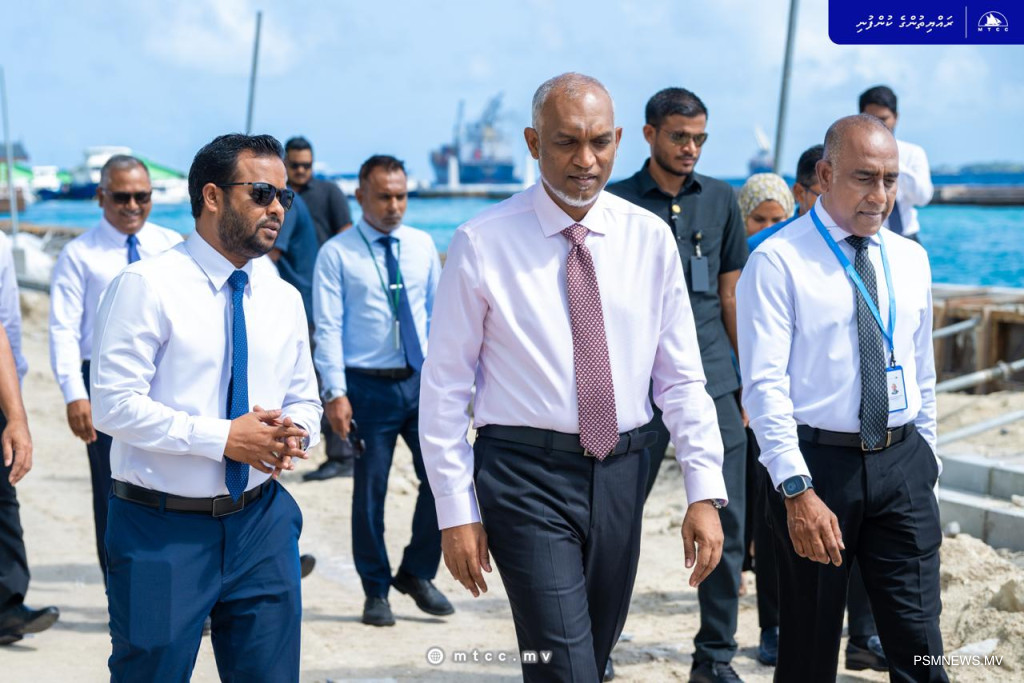
President Muizzu Plans Seven Urban Zones to Reduce Malé City Overcrowding
President Dr Mohamed Muizzu has announced a strategic regional development plan designed to alleviate the severe congestion and chronic overcrowding burdening Malé City. The initiative seeks to address the systemic migration of citizens from across the archipelago to the capital by creating sustainable urban hubs in the outer atolls.
Speaking during the fourth episode of 'The Pulse' podcast, President Muizzu attributed the capital's demographic pressure to historical development imbalances. With approximately 40 percent of the national population currently residing in Malé, the administration intends to decentralize essential services to curb the continuous influx of residents.
To achieve this, the government is dividing the country into seven designated zones. Each zone will feature a robust urban center equipped with premier hospitals and diverse employment opportunities, ensuring that high-quality healthcare and jobs are accessible outside the capital. The President confirmed that work on an integrated development zone in the North is already underway.
Beyond regional decentralization, the administration is simultaneously addressing immediate infrastructure deficits within the capital. President Muizzu acknowledged the long-standing struggle to secure adequate parking in Malé, confirming that construction on at least two parking buildings will commence this year. In a move toward self-reliance, the President stated that he has opted against seeking foreign assistance for these specific projects.
Further efforts to reduce traffic congestion are already visible in Hulhumalé, where construction has begun on several parking facilities. Together, these regional and local interventions form a comprehensive strategy to widen the city's narrow thoroughfares and improve the overall quality of urban life for residents of the capital.