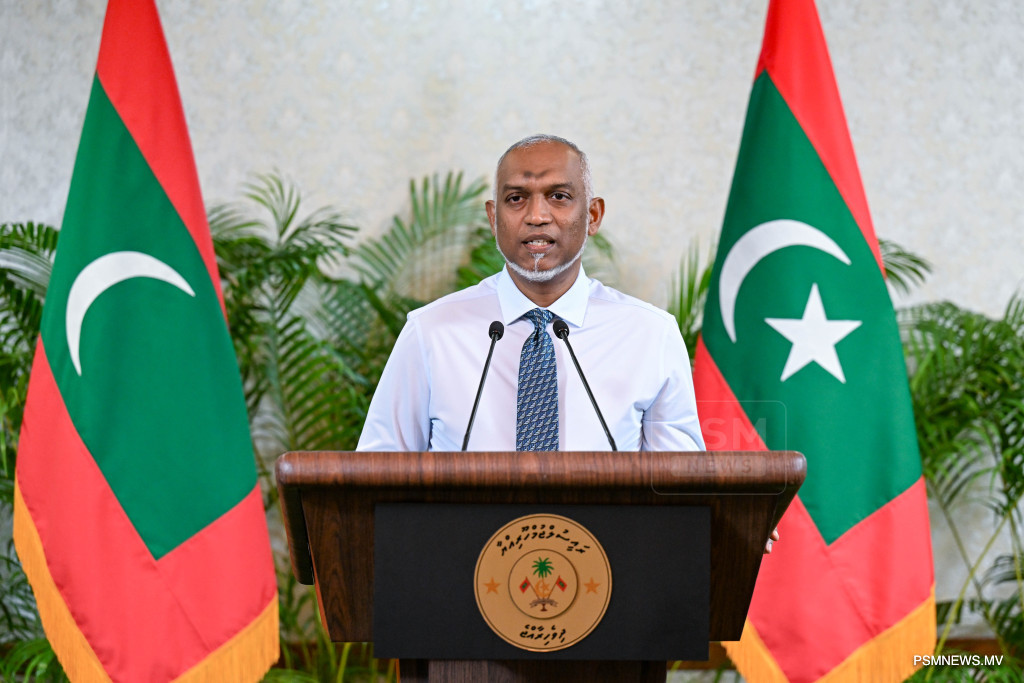
President Muizzu Vows Merit-Based Civil Service and Judicial Reforms Following Referendum
President Dr Mohamed Muizzu has announced a strategic shift in governance, pledging to abandon further constitutional amendments in favor of targeted legislative and institutional reforms. Speaking at a comprehensive press conference on April 20, the President stated that the results of a recent public referendum provided a clear mandate against constitutional changes.
"The people have sent a clear message," President Muizzu told journalists, confirming that the administration will no longer pursue amendments to the Constitution. He emphasized that his government's priorities have now pivoted toward reforming existing laws to better serve the public interest.
A primary focus of this agenda is the restructuring of the judiciary. The President announced plans to re-establish a Judicial Council, which would consist of the Chief Justice and the chief judges of the superior courts. This move aims to revert the Department of Judicial Administration (DJA) from its current placement under the Judicial Service Commission (JSC).
According to the President, placing the Chief Judicial Administrator under the accountability of the Judicial Council and the Chief Justice will prevent the concentration of power and streamline the administration of justice across the archipelago.
In addition to judicial changes, President Muizzu committed to the depoliticization of the Maldives' civil service. He vowed to end the practice of awarding government positions based on political loyalty or campaign connections, asserting that all future recruitment will be determined strictly by merit, educational qualifications, and professional experience.
Addressing the scale of government, the President noted that the public desires a leaner administration. Consequently, state-owned enterprises have been directed to reduce their workforce by 33 percent. The administration assured that these reductions would be handled carefully to protect employee rights and ensure that essential services remain uninterrupted.
Parallel to these institutional reforms, the President highlighted ongoing development projects, including a new hospital in the second phase of Hulhumalé and a local market complex in Malé City, signaling a dual approach of systemic reform and infrastructure growth.