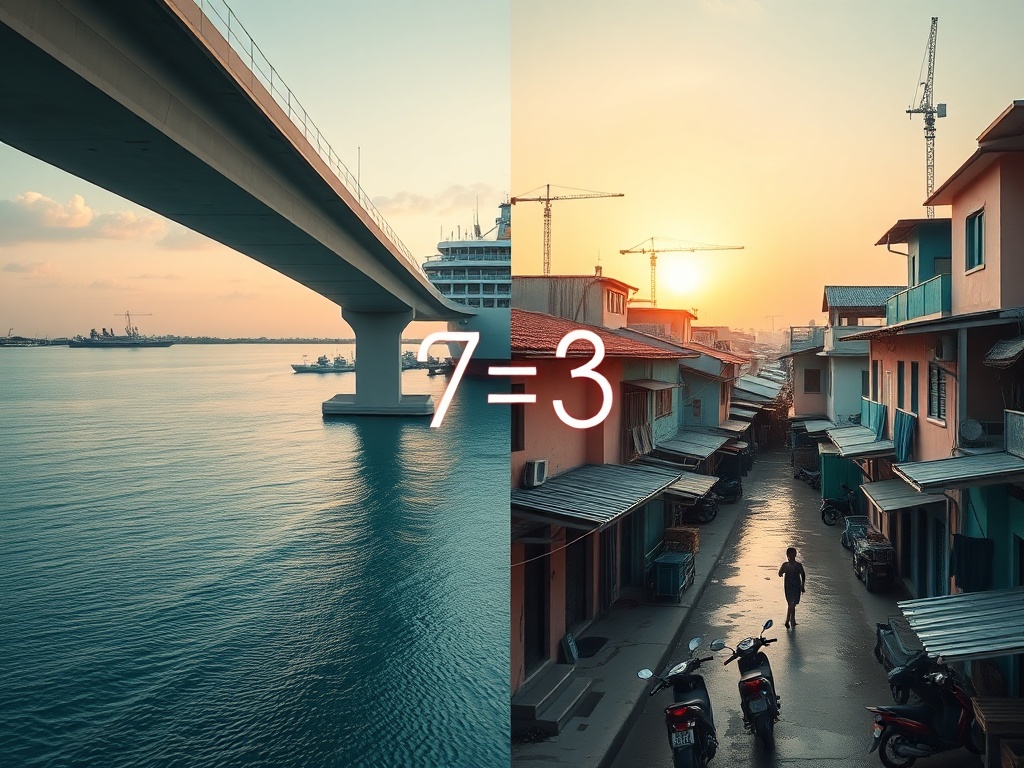
Progress for the People, But Only When the Powerful Profit
In the intricate political landscape of the Maldives, a persistent narrative has taken root among observers: that meaningful change for ordinary citizens rarely occurs in isolation. Instead, it often arrives as an incidental benefit to larger schemes that primarily serve powerful interests. This perception reflects deeper structural issues within the nation's governance and economic systems.
The pattern manifests across various sectors. Major infrastructure projects, while beneficial to the public, frequently coincide with lucrative contracts for well-connected businesses. Housing initiatives, desperately needed in the congested capital, become entangled with political patronage systems. Economic policies designed to stimulate growth often disproportionately advantage those already positioned to capitalize on new opportunities.
This dynamic creates a system where public good becomes conditional—a secondary outcome rather than a primary objective. The result is a growing cynicism among citizens who witness improvements in their daily lives, yet simultaneously observe the widening gap between their reality and the exponential gains accumulating at the top.
The tourism sector exemplifies this paradox. While it generates essential foreign exchange, benefits frequently flow offshore or concentrate among resort owners, with limited trickle-down to the broader population. Similarly, government appointments and resource allocation often appear to follow networks of influence rather than principles of merit or equitable distribution.
This perception of transactional progress undermines public trust and fuels disillusionment. When citizens believe that their needs are only addressed as collateral benefits in larger transactions, it erodes the social contract. The challenge for the Maldives lies in restructuring systems to make public welfare the explicit goal rather than the incidental byproduct of elite enrichment.
Addressing this requires transparent governance, accountable institutions, and policies that prioritize equitable development. Until then, the sentiment that common people only receive what elites don't need for themselves will continue to shape political discourse and public perception in the island nation.
— Source fragments: Will never happen. Welcome to the maldives. Where the common people only get something if the elites get something bigger in return.