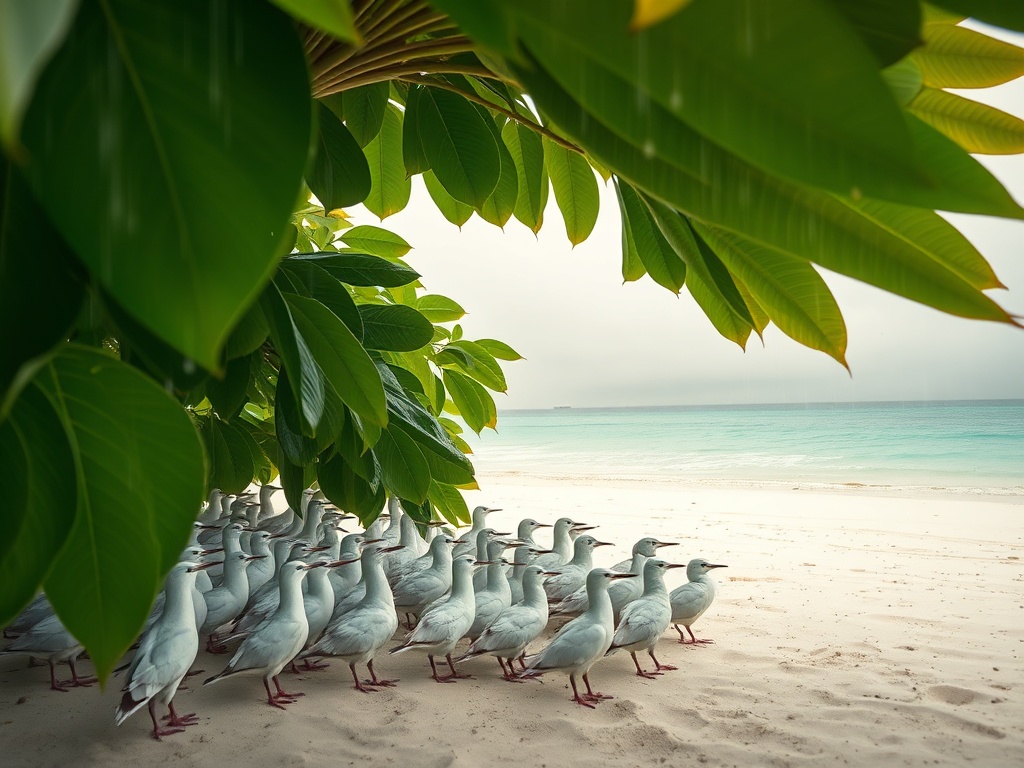
Rain transforms the islands into quiet sanctuaries
The rain falls steadily, a soft curtain of water washing over the uninhabited island. Big branches of the trees create natural shelters where birds huddle together, their feathers damp but spirits patient. They look out from under the broad green leaves, gazing across the beach toward the ocean, waiting for this temporary interruption to pass. There's no panic in their stillness, only a quiet acceptance of nature's rhythm.
This scene captures something essential about our islands. We're surrounded by water, yet rain transforms everything. The sand, usually blazing white under the tropical sun, becomes cool and comforting beneath bare feet. The brightness softens into a gentle glow, the world washed clean and quiet. The sound of rain on leaves and water replaces the usual chorus of waves and wind.
In our daily lives back in Malé or the inhabited islands, rain often means inconvenience—flooded streets, delayed ferries, canceled football matches. But on these uninhabited stretches of land, rain reveals a different Maldives. It's the Maldives of our ancestors, who understood the necessity of both sun and rain, who knew that the islands needed these quiet moments as much as the brilliant sunny days that tourists photograph.
Watching the birds wait patiently under their leafy shelters, I'm reminded how our relationship with weather runs deeper than mere comfort or discomfort. For generations, our fishermen have read the skies, our farmers have welcomed the rain for their crops, our communities have gathered indoors during showers, sharing stories and strengthening bonds. The rain connects us to cycles older than memory.
Even as development transforms our nation with guesthouses and infrastructure projects, these moments remain—the fundamental beauty of a rainy day on a quiet island, the patient wildlife, the cool sand, the sense that everything has paused to breathe. This is the Maldives that exists beyond tourism brochures, the one that sustains our souls when the world feels too rushed.
Perhaps what makes this scene so beautiful isn't despite the rain, but because of it. The rain reminds us that our islands have their own rhythms, their own quiet moments of transformation. The birds will eventually fly again, the sun will return, but for now, there's perfection in the waiting, in the soft fall of water on leaves, in the temporary stillness that makes the eventual return to activity all the sweeter.