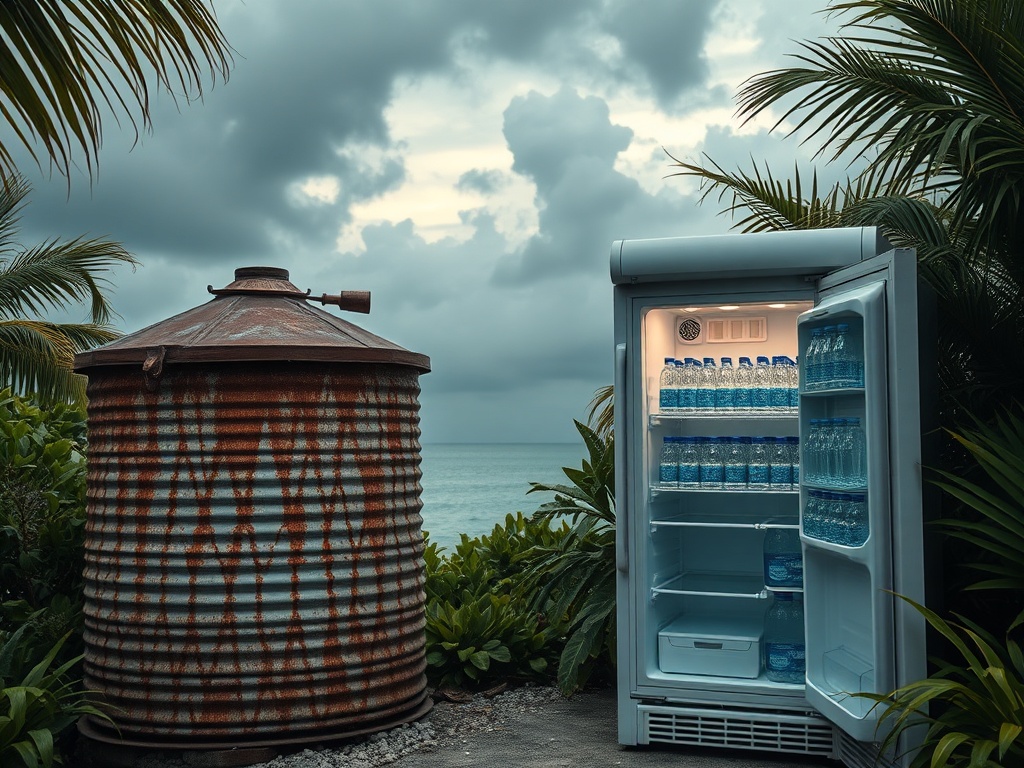
Rainwater Tanks Stand Empty as Bottled Water Arrives
In the scattered atolls of the Maldives, a quiet revolution has occurred in something as fundamental as drinking water. Where once the sound of rain hitting zinc roofs meant fresh water for days, now the crackle of plastic seals and the clink of glass bottles mark our hydration. The question hangs in the humid air: if we've come to believe that sun-boiled mineral water from distant lands is superior to the rainwater our ancestors collected and drank for generations, what does that say about the development path we're following?
This shift from rain catchment to imported bottled water represents more than just changing consumption patterns. It speaks to a broader transformation in how Maldivians relate to their environment and their traditions. The rainwater tank, once a centerpiece of every household compound, represented self-sufficiency and harmony with natural cycles. Its water tasted of the islands themselves—clean, soft, and free.
Now, supermarkets overflow with imported alternatives, each bottle promising purity from foreign springs. The marketing suggests progress, but the reality is more complex. This dependency on imported drinking water mirrors other import dependencies that strain our economy—from construction materials to much of our food supply. Each plastic bottle represents not just hydration, but foreign exchange draining from our shores.
The irony is palpable in a nation surrounded by water, where traditional knowledge about collecting and storing rain has been largely abandoned in favor of manufactured solutions. Older islanders remember when reading the clouds was as important as reading any modern forecast, when the first rains after the dry season were celebrated for replenishing household supplies.
This transition raises fundamental questions about what we value in development. Is progress measured by how many imported goods we can consume? Or does genuine development include preserving what worked sustainably for centuries while selectively adopting new technologies that truly improve lives?
The answer likely lies in balance—recognizing that some modern innovations bring genuine benefits while others simply replace functional traditional practices with costly alternatives. As Maldivians navigate the complexities of modernization, the question of what we drink and why serves as a microcosm of larger choices about identity, sustainability, and what kind of future we're building across our scattered islands.
— Source fragments: If all of us want to believe these sun boiled mineral water is better than the rain water we use to collect and drink in the islands, then the question to ask is this the development we want.