Rainy days reveal our lack of road discipline
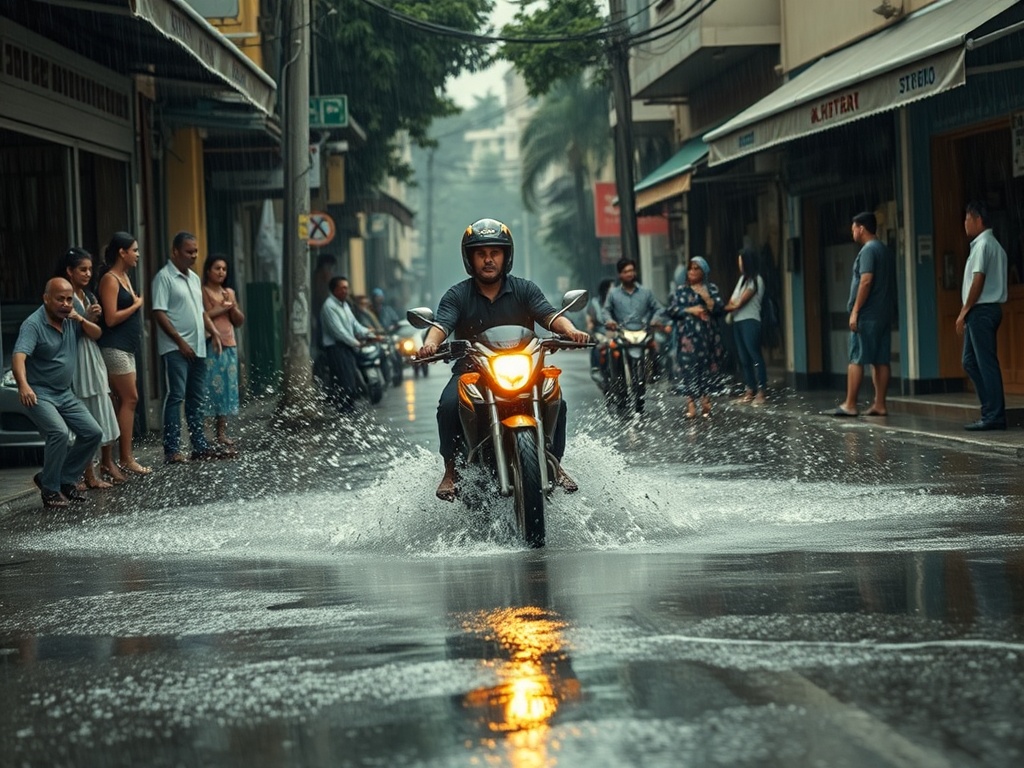
The first drops hit the hot pavement, and you can already feel the tension shift. On narrow Malé roads or across the gravel paths of our islands, rain doesn't just cool the air—it reveals character. The way some riders accelerate through puddles, sending walls of water crashing over pedestrians waiting for buses, children in school uniforms, elders carrying groceries home. It happens every rainy season, this thoughtless surge forward, this momentary triumph of individual haste over collective courtesy.
We see it most clearly in Malé, where space is precious and tempers run short. Someone on a motorbike zips through a flooded stretch of Majeedhee Magu, drenching a group of women in modest dress—their carefully wrapped headscarves now soaked, their day disrupted by someone's unwillingness to slow down for thirty seconds. The rider disappears into traffic, anonymous behind their helmet, while those left behind wipe muddy water from their faces and clothes. This isn't about bad weather; it's about broken social contracts.
What does it say about us as a community when we prioritize saving a few minutes over showing basic respect to our neighbors? In a society that values modesty and dignity, where we pride ourselves on our close-knit island communities, this roadside behavior feels like a contradiction. Our grandparents taught us to watch out for one another, to share what little we had, to consider how our actions affect those around us. Yet here we are, splashing through puddles with no regard for who gets wet.
This isn't just about rainy days or road etiquette. It reflects a broader erosion of civic responsibility that we're witnessing across our islands. From the litter accumulating in our harbors to the noise pollution disturbing our peaceful evenings, small acts of disregard accumulate into larger social problems. When we stop seeing each other as members of the same community, when individual convenience trumps collective well-being, we lose something essential about what makes Maldivian society special.
The solution begins with recognition—acknowledging that our public behavior matters. It continues with conversation, with parents teaching children, with friends gently reminding one another, with community leaders setting better examples. We have the capacity for tremendous courtesy and consideration; we see it every day in how we welcome guests to our homes, how we care for our elders, how we come together during difficult times. That same spirit needs to extend to our roads and public spaces.
Next time the clouds gather and the roads begin to flood, let's make a different choice. Let's slow down, make eye contact with those waiting at the curb, give a small nod of recognition before carefully navigating around the deepest puddles. These small gestures rebuild the invisible threads that connect us as a community. They remind us that even in our busiest moments, we're still responsible for one another's dignity and comfort.