Rasmalé Project to Inject USD 20 Billion to Diversify Maldivian Economy
The development of Rasmalé is set to bring an investment equal in value to the total accumulated assets created throughout the history of Maldivian tourism, announced Mohamed Saeed, the Minister of Economic Development, Transport and Trade.
Signed on September 21 between the Maldivian government and Abu Dhabi-based developer Eagle Hills, the agreement outlines the construction of a USD 20 billion waterfront and marina project. Minister Saeed stated that the venture is essential for elevating the Maldives to a fully developed nation by 2040, arguing that the national economic framework must move to a new tier to achieve this goal.
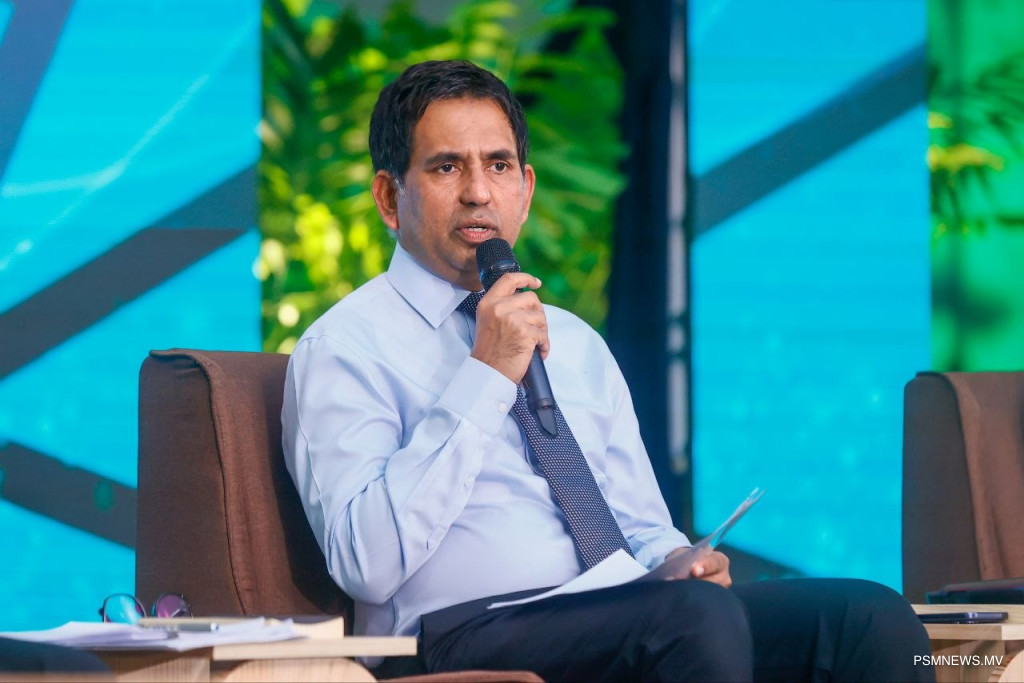
Speaking at the eighth session of the 'Ahaa' public forum, the Minister dismissed criticisms from opposition groups who alleged that the project involves selling sovereign territory to foreign buyers. Saeed characterized these concerns as politically driven attempts to create public panic, asserting that the project's success would fundamentally shift the political landscape.
Highlighting the need for economic resilience, the Minister noted that the 170 resorts currently operating in the Maldives generate an annual direct inflow of USD 1.7 billion. He cautioned that over-reliance on a single sector poses systemic risks to national stability, positioning the Eagle Hills project as a strategic move to diversify state revenues while remaining compatible with the environment.
"No other initiative to date has yielded such a high impact on the Maldivian economy," Saeed asserted. He explained that while the investment might seem modest compared to global mega-projects, the capital allocation is immense relative to the scale of the Maldives.
To counter claims of irregularity, Minister Saeed pointed out that long-term leasing of state land is common practice. He recalled that between 2013 and 2018, land reclaimed via USD 1 billion in investment was allocated on a freehold basis. Furthermore, legislation passed after 2018 allows public land to be leased for tourism for up to 99 years, a framework already utilized by 54 resort properties.