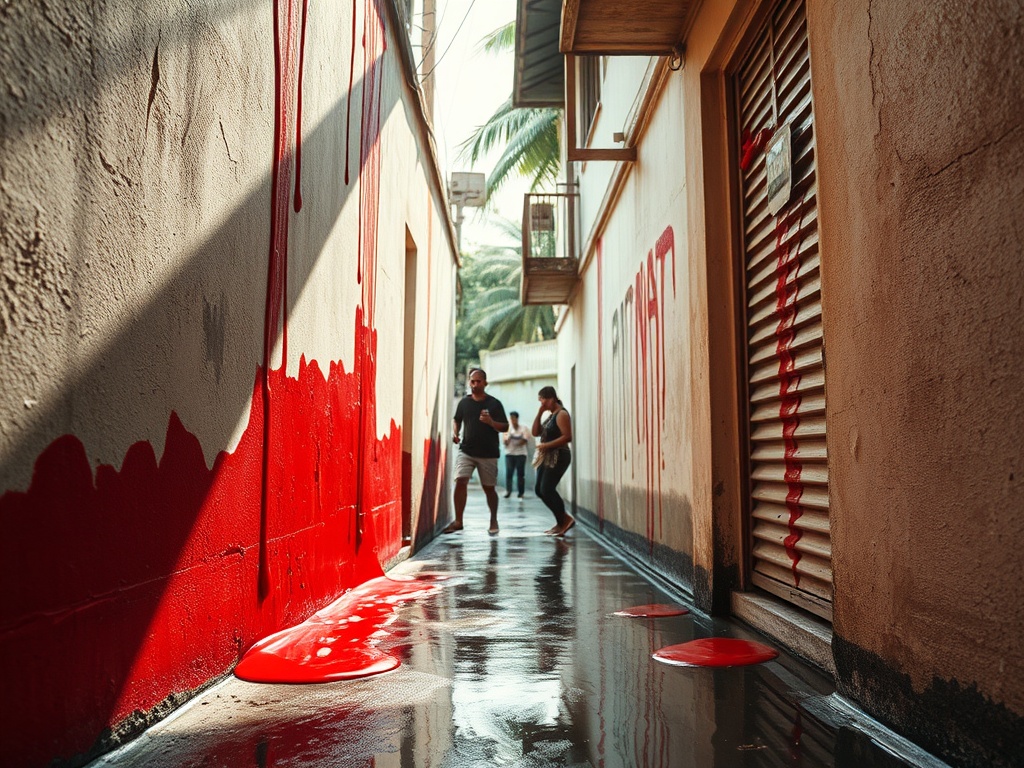
Red Paint on Government Walls Is Not Vandalism—It’s a Message
The red paint splashed across a government building isn't vandalism—it's a message. The traffic halted by protesters isn't inconvenience—it's a cry for attention. The uncomfortable truth about genuine activism is that it was never designed for your comfort. It exists to disrupt, to provoke, to force a conversation where silence has been the default.
In the Maldives, where political expression often walks a tightrope between permitted dissent and suppressed opposition, the nature of protest has evolved. The 'India Out' campaign, the environmental demonstrations against coastal erosion, the housing crisis protests—each carries the same essential characteristic: they make people uncomfortable. They disrupt the carefully maintained facade of normalcy in a society grappling with systemic challenges.
This discomfort serves a purpose. When housing projects become political bargaining chips and subsidized flats are subleased for profit by absentee leaseholders, polite letters to editors achieve little. When youth unemployment persists despite tourism wealth, and when medicine shortages become routine in healthcare facilities, quiet diplomacy has proven insufficient. The outrage that activists provoke is precisely calibrated to match the scale of the problems they address.
There's a parallel to the digital age's surveillance concerns—that momentary fear of being marked, of having a red cross painted on one's door. In a society where political allegiances can determine opportunities and where speaking out carries professional and social risks, the act of protest itself becomes a form of bravery. The discomfort isn't collateral damage; it's the point.
The criticism that activists should be more polite, more convenient, more palatable misses the fundamental nature of social change. The civil rights movements, the environmental campaigns, the anti-corruption drives that have shaped Maldivian society all shared one thing: they made people confront uncomfortable truths about their government, their economy, their own complicity in broken systems.
As the Maldives navigates foreign currency shortages, political polarization, and a housing crisis in Malé that leaves both locals and expatriates struggling, the conversations we need to have won't be comfortable. The solutions won't emerge from business-as-usual approaches. True progress demands that we sit with our discomfort, that we listen to the messages we'd rather ignore, and that we recognize that sometimes, the most constructive force in society is the one that refuses to let us look away.
— Source fragments: Its activism. It doesn't have to be convenient for you. Its supposed to make your outraged and wonder why people are doing this. Its a message. Not vandalism; ngl for half a second I thought it was a digital version of having a red cross painted on my door