Rewriting Our Story: The Search for Authentic Maldivian History
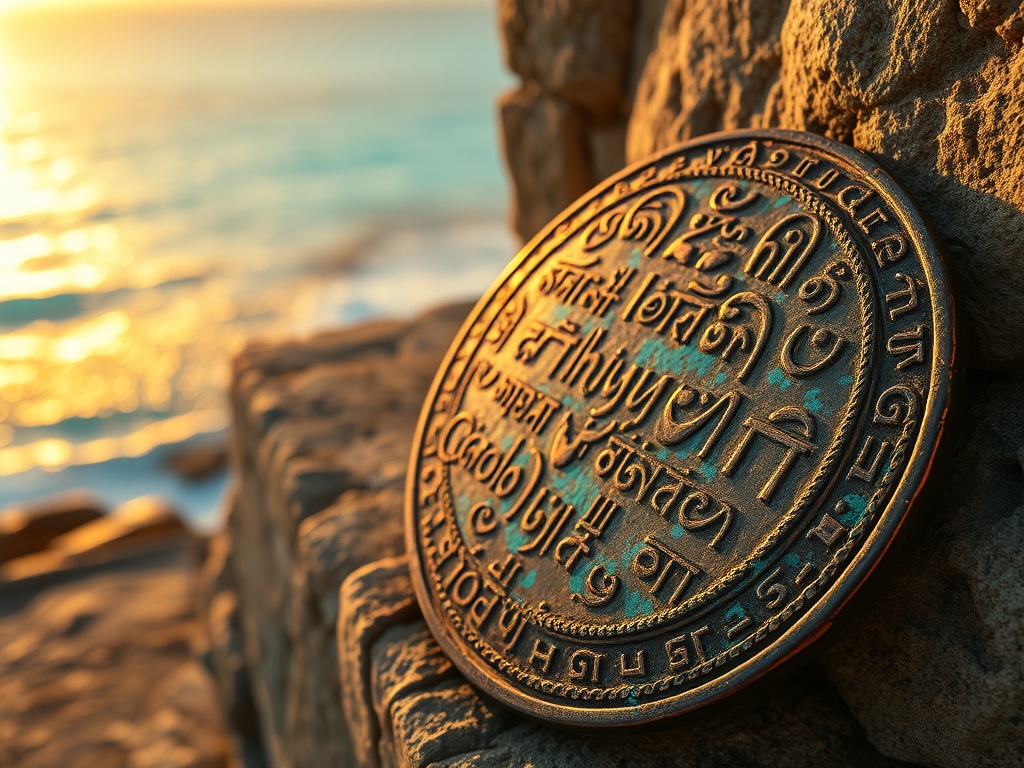
The copper plates of the Loamaafaanu feel cool to the touch even in the humid air, their ancient script telling stories that contradict what foreign scholars have written about us. I trace the engraved letters with my finger, wondering how our history became so distorted in others' telling. The story of independent atoll kingdoms never made sense—how could a king summon Buddhist monks to Malé for execution if each island truly ruled itself? The evidence was there all along, in these very artifacts that foreign historians claim to understand better than we do.
They stretch linguistic connections to breaking point, finding 'pandiyaaru' and declaring it proof of Indian influence, when it simply means 'judge'—something every society develops naturally. They interpret clay pottery imports as tribute, forgetting we were master cowrie shell farmers whose trade brought prosperity that built coral stone Buddhas, not foreign patronage. Our ancestors created beauty from their own ingenuity and economic success, not because some distant empire willed it.
What strikes me most is how our small population shaped our character. In a nation where everyone knows everyone, history wasn't written in grand chronicles but lived in the spaces between homes, in the shared understanding that bound communities across these scattered islands. The ocean that separates us also connects us in ways outsiders can't comprehend.
Our local historians, eager for international acceptance, often repeated these foreign narratives, admitting much was based on folklore while presenting it as fact. There's a quiet dignity in recognizing that our story might be different—not less significant, but uniquely ours. The coral stone mosques that replaced the Buddhist structures weren't just religious conversions; they were continuations of a building tradition that was distinctly Maldivian.
As the afternoon call to prayer echoes across Malé, I realize our search for historical truth isn't about rejecting connections with others, but about understanding ourselves on our own terms. The sea that surrounds us has witnessed our entire history—it knows the truth that written records have obscured. Our challenge isn't to prove we're special, but to recognize the specialness we've always possessed, waiting to be uncovered like ancient artifacts beneath the sand.
— Source fragments: Loamaafaanu's are probably correct; story of atolls each ruling by themselves is utter bs; king summoning Buddhist monks shows royal authority; linguistic connections stretched unnecessarily; cowrie shell trade brought prosperity; local historians repeating foreign narratives; search for authentic Maldivian identity