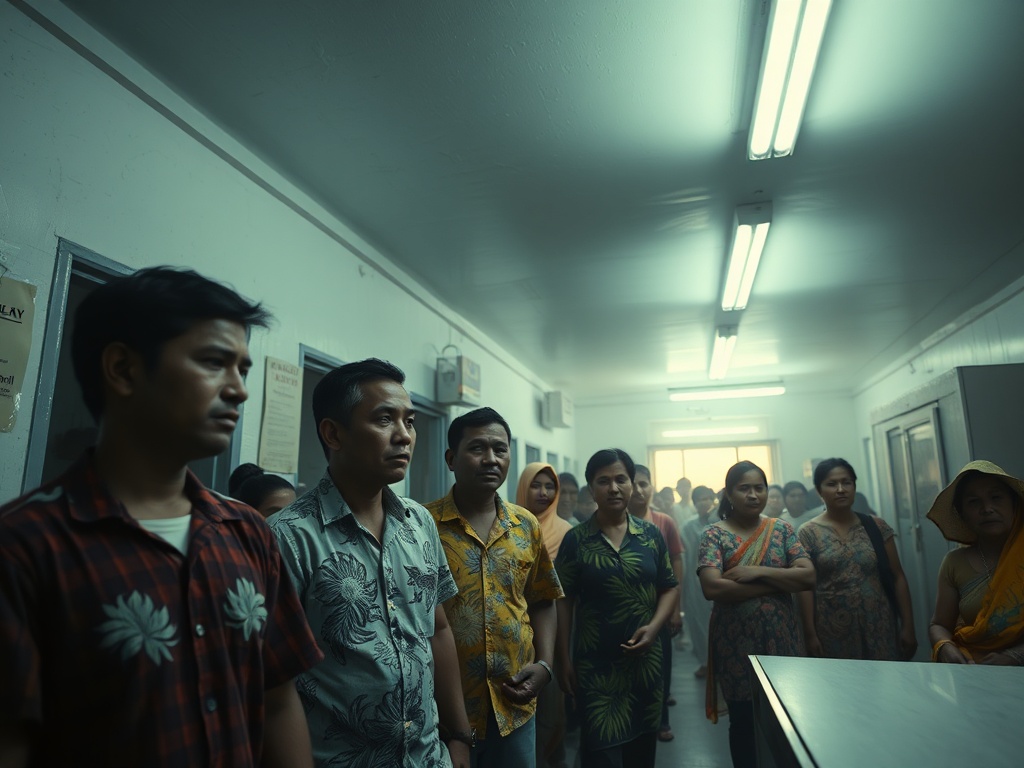
Rice office yes October 05, 2025 at 08:06PM
What does a simple message like 'Rice office yes' truly reveal about how we manage our most basic needs? In a nation that imports nearly all its food, a phrase hinting at a government rice office raises immediate questions about control, distribution, and who really benefits. Is this about ensuring affordable staples for families struggling with the high cost of living, or is it another layer of bureaucracy where political connections determine access?
The timing is everything. With inflation driven by money printing and rising taxes, the price of a bag of rice isn't just an economic indicator—it's a measure of household survival. When the state involves itself directly in the food supply, we must ask: does this increase transparency or simply create new opportunities for graft? Past patterns of subsidized housing being subleased for private profit by absentee leaseholders offer a worrying parallel. Could a 'rice office' become another channel where benefits meant for the people are diverted to the connected few?
Consider the human impact. For a young couple in Malé, already squeezed by housing costs and job uncertainty, the stability of their daily meal depends on consistent, affordable rice. If the government's role is to stabilize prices, why does the message feel so cryptic and unofficial? The lack of clear communication fuels speculation and distrust, especially in a climate where freedom of expression is eroding and the judiciary is seen as politicized.
This isn't just about rice; it's about the system that delivers it. A bloated public sector, filled with non-working political appointees, could turn a vital service into an inefficient, opaque machine. Will those who need help most—the unemployed youth, the underpaid civil servant—actually receive it, or will they be lost in the maze of paperwork and patronage?
And what of the broader economic picture? Heavy import reliance and foreign currency shortages mean that every shipment of rice strains our national reserves. If tourism revenues are parked abroad by resort owners and expatriate remittances drain forex, how sustainable is a government-subsidized rice program? Without addressing these structural flaws, any 'rice office' may become a temporary fix that deepens long-term dependency.
Ultimately, the phrase 'rice office yes' serves as a mirror. It reflects our collective anxiety about governance, economic justice, and whether the state can be trusted to manage the essentials of life. In a society facing so many layered crises—from corruption to healthcare shortages—the way we handle something as fundamental as rice will tell us much about the character of our leadership and the resilience of our nation.