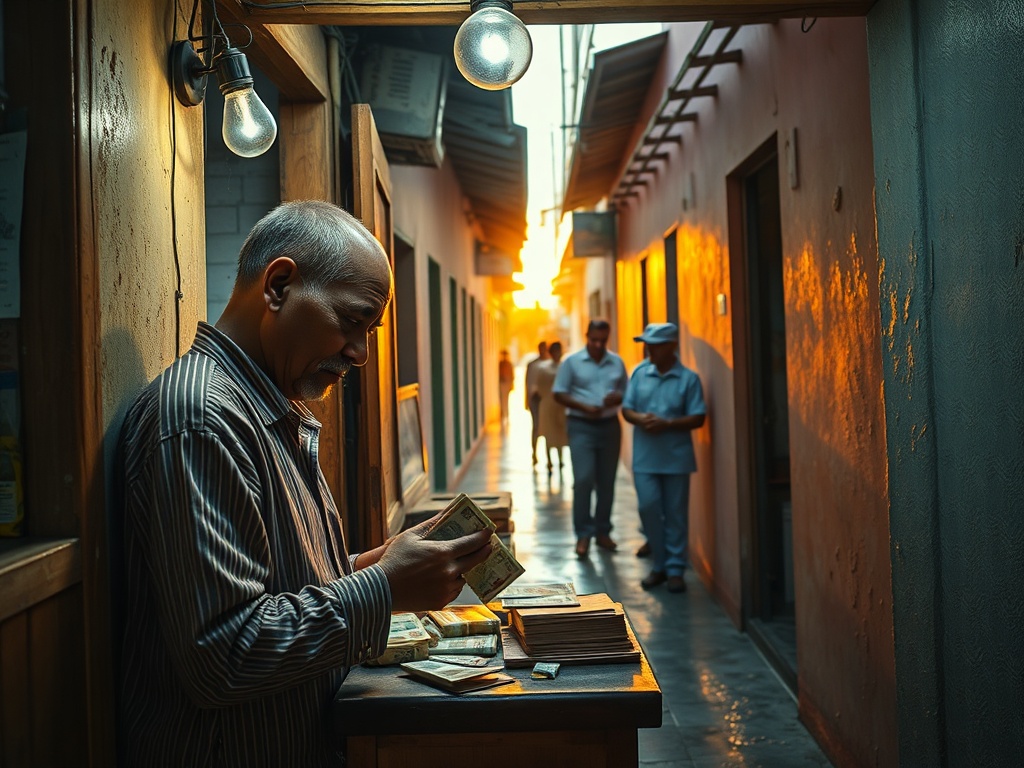
Rufiyaa Notes Counted as Resort Workers Exchange Currency Outside
The question hangs in the humid air like the salt spray from the Indian Ocean: what really constitutes the 'private sector' that fuels our economy? It's not the newspapers, as one voice insists, nor is it the political rhetoric that echoes through the narrow streets of Malé. The private sector lives in the spaces between policy and practice, in the unspoken transactions that keep these islands afloat.
When the government mandates resorts to purchase Rufiyaa at imaginary rates, the consequences ripple through the economy like waves against a reef. Workers who once dreamed of dollar salaries now receive local currency while watching their purchasing power erode like our shoreline. The resorts, caught between compliance and survival, find themselves with stacks of Rufiyaa they cannot use, creating shadow economies where currencies trade at losses that never appear in official reports.
Meanwhile, in the corner shops where fluorescent lights hum against the evening call to prayer, another economic reality plays out. When policies target 'generation bans' while drugs flow freely in broad daylight, shopkeepers face impossible choices. A paying customer is a paying customer, whether for cigarettes or sundries, and survival often trumps compliance when the system shows its contradictions.
The remittance caps that leave our Indian diaspora stranded reveal another layer of this complex tapestry. These are not just numbers on a balance sheet but families separated by economic necessity, workers who built lives across these waters now caught in political crosscurrents.
For fifty years we've spoken of diversification while watching our economy remain lashed to the same pillars. The reasons are etched in the faces of Maldivian workers counting Rufiyaa instead of dollars, in the resorts navigating imaginary exchange rates, in the shopkeepers weighing policy against survival. Our economy isn't just in the spreadsheets and government reports—it's in the hands counting change, the voices haggling in the market, the silent agreements that keep these islands moving when the official systems falter. The real private sector isn't what's documented in newspapers or political speeches—it's the unwritten understanding between people trying to make life work in these scattered islands.
— Source fragments: private sector that matters to our economy; maldivian workers suffering because they're being paid in ruffiya; resorts forced to buy mvr at imaginary rate; generation ban policy; remittance caps; economy needs diversification