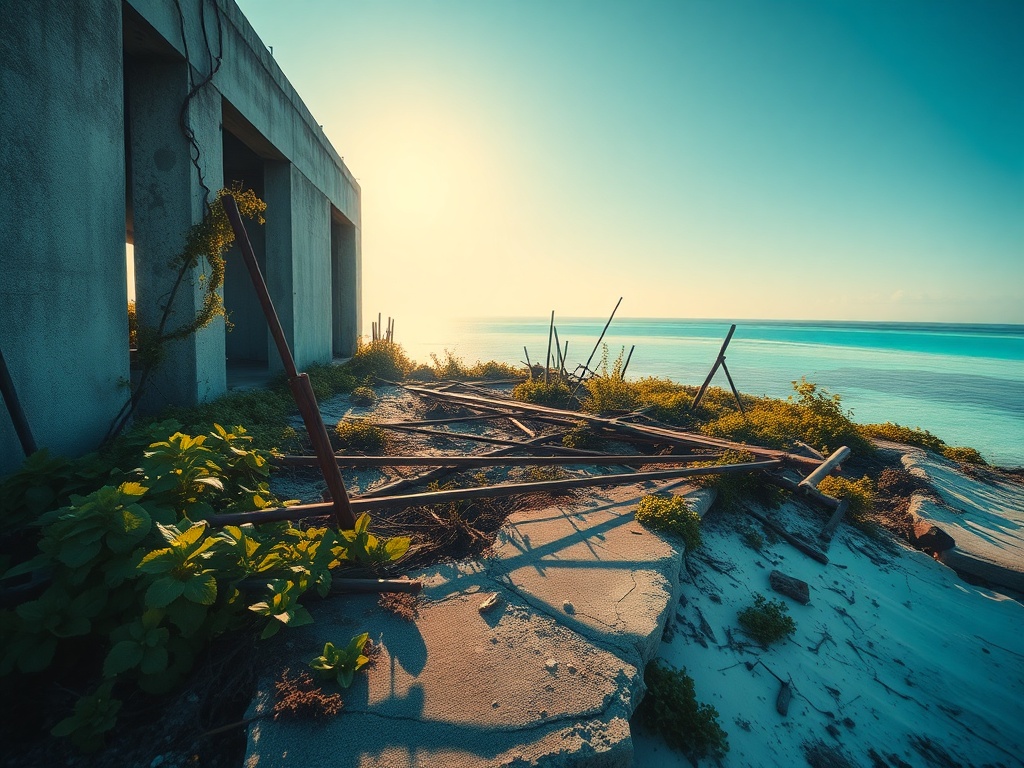
Rusted Rebar and Empty Promises on a Leased Island
A simmering discontent has settled over the atolls, not born of a single grievance but of a pattern. It is the quiet anger of watching resources meant for public good vanish into bureaucratic inertia, of seeing islands leased with grand promises left to languish, and of feeling the tangible disconnect between those who govern and those who are governed. The public conversation, fragmented across digital spaces, coalesces around a central, damning theme: a systemic failure of accountability.
At the heart of this disillusionment lies the troubled legacy of state-owned enterprises (SOEs). The narrative of MTDC is not an anomaly but a textbook case. Leases for prime resort properties like Kandima were sold off during development, leaving only a trickle of sublease revenue for the state coffers. The stories repeat with grim familiarity: N. Ekulhivaru, leased to cross-subsidize an airport, sits undeveloped; Th. Ruhthibi Rah, handed over to cover operational costs, yields no resort; Laamu Baresdhoo, under MITDC's stewardship since 2015, remains a promise on paper, devoid of investment or progress. The pattern is clear. The policy of gifting public assets—islands—to state entities as a shortcut to development has proven to be a catastrophic misallocation of national wealth. These are not just business failures; they are a direct dissipation of the public trust, funded by the taxpayer.
This failure of stewardship extends beyond resort plots into the very machinery of governance. The public's patience wears thin with ministries that obfuscate and delay, refusing to release information on financial settlements that are, by definition, public property. "This isn’t the minister’s money or the President’s money," the sentiment echoes. "These settlements are funded entirely by taxpayers." When basic transparency on the use of public funds is treated as a concession rather than a right, it breeds a corrosive cynicism. The logic becomes inescapable to many: citizens pay taxes from birth, yet the return on that investment—in functional services, in opportunity, in simple clarity—feels perpetually deferred.
The consequences are felt in the dissonance of everyday life. It manifests in the glaring mismanagement of human resources within the public sector, where some offices are so bloated with staff they lack chairs, while critical services elsewhere are starved. It is felt in the bitter irony of funding lavish, performative events with money that should secure medicine for hospitals. For the youth, this translates into a profound sense of abandonment—a feeling that the state apparatus has little tangible to offer in terms of education, employment, or a future worth building within the country.
The underlying critique is not merely of inefficiency but of a broken covenant. The appointment of unqualified individuals to positions of public service, the perception of rights as privileges, and the conversion of public assets into political bargaining chips have created a chasm. The public discourse is no longer just asking for better management; it is questioning the fundamental logic of a system that so consistently fails to deliver on its most basic promises to the people who sustain it.
— Source fragments: When was the last time this ministry has done anything for the youth of this country?; I swear I hate how difficult and complicated they make things in Raajje. Please stop appointing uneducated, illogical people to serve the citizens. We deserve basic human rights.; You have to pay taxes to your government for being born in that country = you are not free. Your logic not mine; The initial 21 days passed, the additional 14-day extension passed and still the Finance Ministry refuses to release this information. This isn’t the minister’s money or the President’s money. These settlements are funded entirely by taxpayers. So what exactly is the; We are paying for it. This cring fest is being paid by the money for medicine.; Looks like a mismatch of resources. In some places there are excess staff so much they don't have a chair to sit even...; Head lease for Kandima was sold during the development stage in 2016, making Anantara and Ayada the only properties that generate revenue for MTDC through sublease rent. MTDC is a textbook example of failed resort development, as are many other SOEs.; N. Ekulhivaru was leased to STO to develop a resort to help cross-subsidize their investment in constructing FVM Airport in 2011, but they failed to do so. Th. Ruhthibi Rah was given to Island Aviation over KDO airport operational costs, but they failed to developed a resort.; Laamu Baresdhoo has been under MITDC since 2015 for the development of an integrated resort, but they have neither built a resort nor secured an investing partner. Therefore, giving islands to SOEs has proven to be a bad idea.