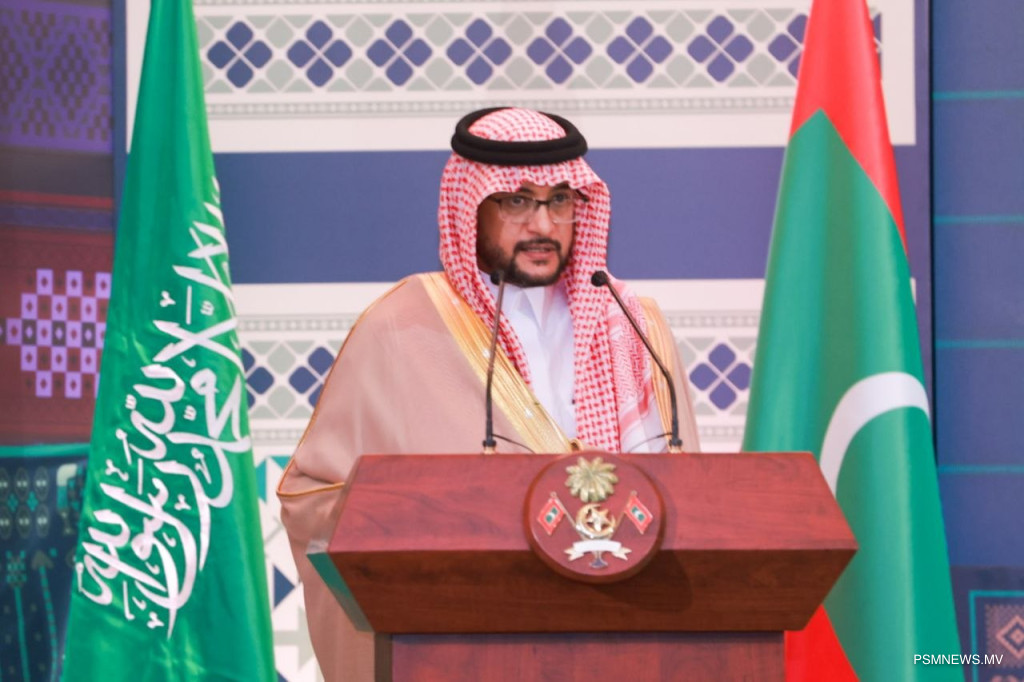
Saudi Arabia and Maldives Enter New Era of Economic and Investment Ties
The diplomatic and economic relationship between Saudi Arabia and the Maldives has entered a "new chapter," characterized by a shift toward deeper investment and strategic economic partnerships. This transition was highlighted by Saudi Ambassador Yahya Hassan Al-Qahtani during a reception celebrating the 96th National Day of Saudi Arabia.
Ambassador Al-Qahtani emphasized that the presence of President Mohamed Muizzu at the celebrations signaled more than a ceremonial gesture, reflecting a high-level commitment to strengthening bilateral ties. This momentum follows a June 2025 meeting between President Muizzu and Crown Prince Mohammed bin Salman, which reaffirmed both leaders' intent to expand cooperation.
Historically, Saudi Arabia has served as a cornerstone of Maldivian development. Since 1978, the Saudi Fund for Development (SFD) has provided approximately $488 million in financing, funding critical national projects across healthcare, transport, housing, fisheries, and general infrastructure.
However, the partnership is now evolving beyond traditional development aid. A recent visit by a Saudi investment delegation and the subsequent Maldives–Saudi Investment Forum have signaled a strong appetite for private sector collaboration. The Ambassador noted that Saudi Arabia is seeking increased investment opportunities in tourism, trade, renewable energy, technology, and sustainable development—sectors that align with the Maldives' national priorities and the ambitious Saudi Vision 2030.
Beyond economics, the two nations maintain a robust security partnership. The Ambassador praised the Maldives for its role in the Multinational Maritime Defense Coalition (MMDC) and its support for the Islamic Military Counter Terrorism Coalition. These collaborations underscore a shared commitment to protecting international trade routes and ensuring regional stability.
As both nations align their strategic visions, the relationship is expected to transition from a donor-recipient dynamic to a more balanced economic partnership, driving sustainable growth and mutual prosperity for both the Kingdom and the Republic.