Seventeen, One Bag, and the Ferry Dividing Two Worlds
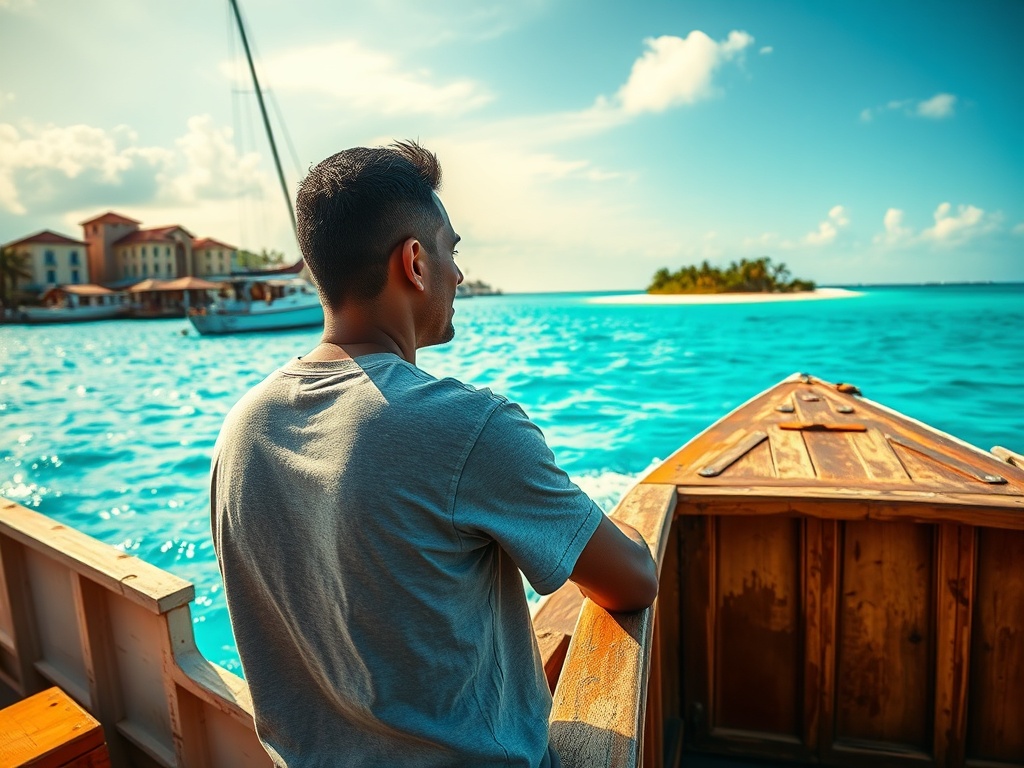
The ferry cut through the silver-green water, leaving a foamy trail that dissolved into the horizon. Ahmed watched the atoll recede—the familiar curve of his island's shoreline, the coconut palms bending in the sea breeze, the white minaret standing sentinel. He was seventeen, carrying a single bag and the weight of his family's hopes. Malé shimmered in the distance, a concrete mirage rising from the sea.
Five years later, Ahmed stands on a crowded pavement in the capital, the scent of salt and exhaust thick in the humid air. He remembers his father's words: 'We are the baakee generation. No opportunity in the islands because we moved to Malé. And no opportunity in Malé because we were born in the islands.' The irony tastes like diesel and regret.
His days are measured in queues—for job applications, for housing forms, for everything that promises stability but delivers only bureaucracy. He shares a cramped room with three others from different atolls, each carrying their own version of the same story. At night, they speak in hushed tones about thafaathu kurun—the gap between promise and reality, between rights granted and rights realized.
Sometimes, Ahmed walks to the seawall and watches the dhoni boats coming from the islands. He sees the new arrivals with their hopeful eyes and worn suitcases, mirroring his own journey. They speak of land promises that feel ancient, of colleges where admission depends on where your grandfather was born, of conversations about trauma that never quite happen.
Today, he received another rejection letter. The position went to someone with a Malé address, though the qualification requirements were identical. He folded the paper carefully, the creases aligning with the lines on his palm. On the ferry back to visit his family, he stands at the rail as the city diminishes behind him. The water beneath is the same turquoise he knew as a child, the same that surrounds his island home ahead. He exists in both places, yet belongs completely to neither.
The real division, he realizes, isn't between Malé and the atolls, but between the map drawn by others and the territory of his own life. He watches a frigatebird glide effortlessly between sea and sky, crossing boundaries without permission, and wonders when his people will learn to fly above the lines others have drawn in the water.
— Source fragments: We are the baakee generation; No opportunity in the islands because we moved to Malé; And no opportunity in Malé because we were born in the islands; Thafaathu kurun huttaalaa; The Malé person should have the same rights as the RT person; Thafaathu kurun is the problem; Dismissing the lived experiences of all those who underwent that