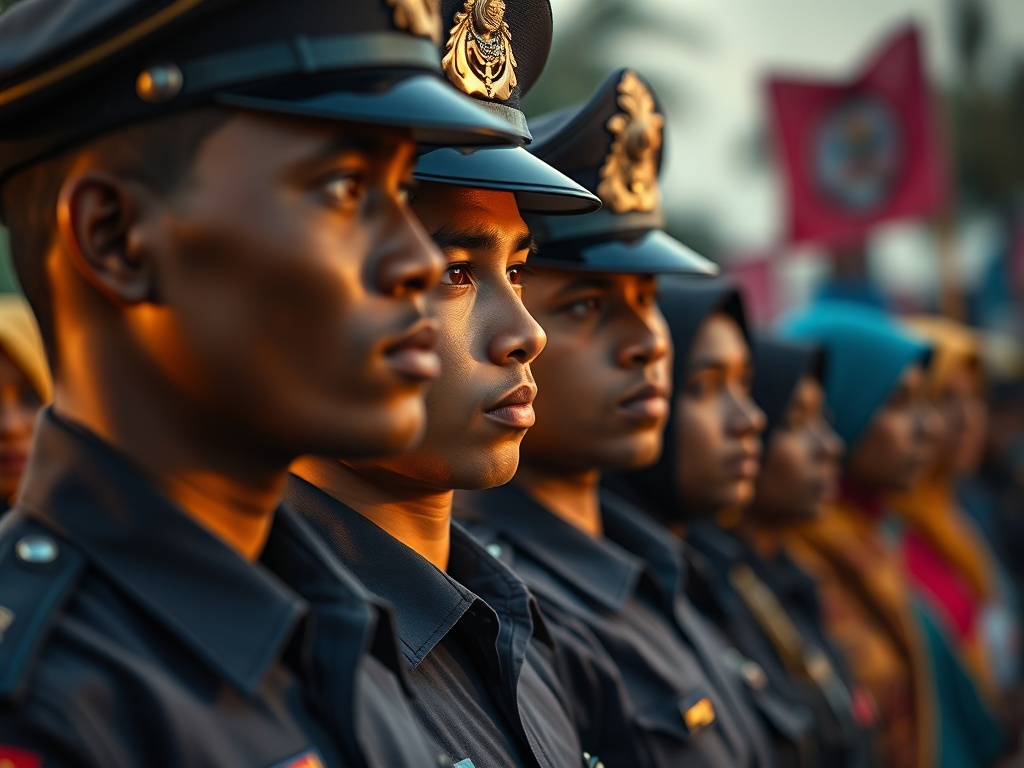
Shareef was given command of Male' after ACP Asim Abdulla refused to deploy LRAD
The streets of Male' witnessed a quiet but significant shift in police command this week, one that speaks volumes about the delicate balance between public safety and constitutional freedoms. When ACP Asim Abdulla, then the city's commander, stood his ground against deploying LRAD systems citing the absence of clear policy, he was promptly replaced. His successor, ACP Abdulla Shareef, faced no such hesitation.
This change at the helm of Male's police force comes at a critical juncture, as Maldivians increasingly exercise their constitutional right to peaceful assembly under Article 32. The document that forms the bedrock of our democracy clearly states: "Everyone has the right to freedom of peaceful assembly without prior permission of the State." Yet the deployment of Long Range Acoustic Devices—powerful sound weapons with potential health risks—suggests a worrying escalation in crowd control measures.
The police service itself remains divided on these tactics. While some officers demonstrated what they called "professionalism in the face of immense provocation," others question whether heavy-handed equipment aligns with our nation's values of peaceful protest and dialogue. The sidelining of CP Naveen further complicates the command structure, leaving many to wonder who truly directs security operations in our capital.
For ordinary Maldivians gathering in the narrow streets between white coral stone buildings, these internal police dynamics matter deeply. When neighbors assemble to voice concerns about rising living costs or political decisions, they expect protection of their constitutional rights, not confrontation with military-grade equipment. The thobe-clad men and women in colorful hijabs who fill our protest spaces represent the very essence of Maldivian democracy in action.
As this story unfolds, it reflects broader tensions between security and liberty that resonate across our islands. The question remains whether our institutions can protect public order while honoring the freedoms that define us as a nation. In a country where community and conversation have always resolved differences, the introduction of such equipment marks a departure from tradition that deserves careful public scrutiny.