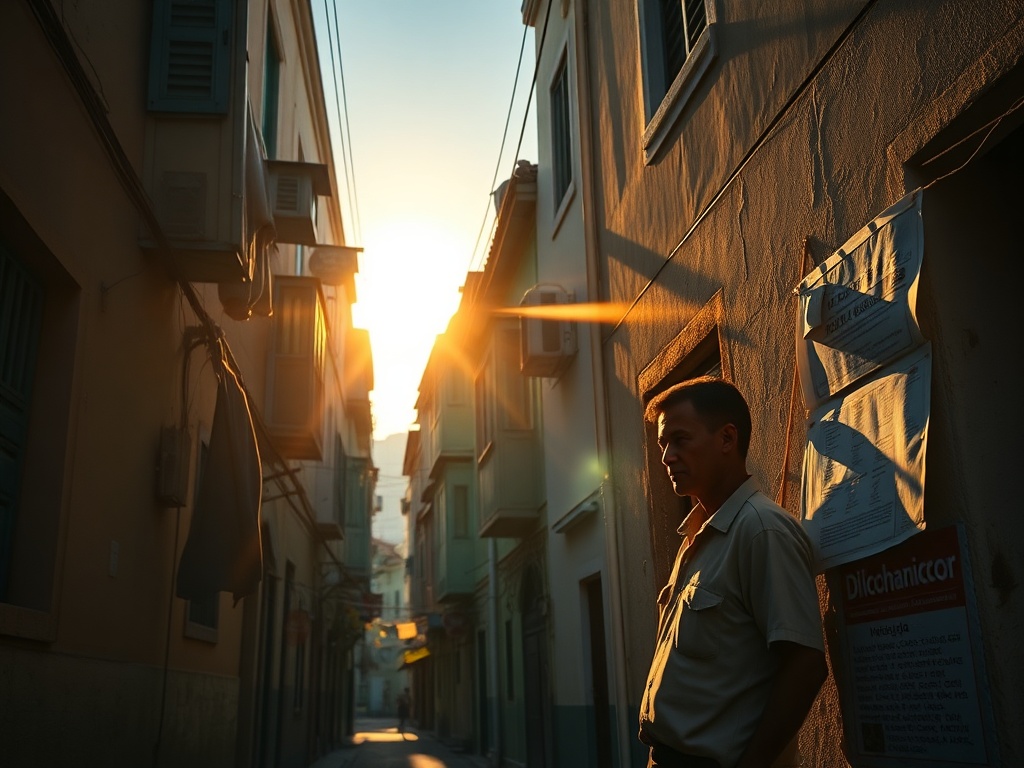
Shopkeeper Wiping Sweat Over New Age Verification Rules
The afternoon sun beats down on the tin roofs of Malé, the heat rising in visible waves that distort the narrow streets. In a small shop near the harbor, a shopkeeper wipes sweat from his brow as he considers the new regulations. He wonders how he's supposed to verify ages when his own school headmaster still looks like a teenager. The policy feels distant, abstract—another layer of complexity in a system already buckling under its own weight.
Across the city, conversations unfold in tea shops and living rooms, voices lowered but urgent. People speak of free land distributions that create invisible boundaries between neighbors, of housing policies that promise shelter yet deliver division. They watch as construction cranes silhouette the skyline, monuments to an industry thriving while families struggle to pay rent in the very shadow of these new structures.
The sea, our constant companion, seems to mirror the economic tides—foreign currency ebbs while prices flow ever higher. There's talk of simple solutions, of balanced books and fiscal responsibility, but these concepts feel like distant islands seen through fog. The reality is more immediate: the fisherman who can't afford diesel for his boat, the mother calculating how many more meals she can stretch her rufiyaa to cover, the young graduate watching opportunities vanish like monsoon rain on hot concrete.
In the space between policy and practice, a quiet realization grows. It's not just about the money—the millions to newspapers or the subsidies to industries. It's about the fundamental contract between governed and governing, the belief that systems should serve people rather than trap them. The frustration isn't violent or loud; it's the slow accumulation of small disappointments, the gradual understanding that the machinery of state has developed its own priorities, its own logic, separate from the lives it's meant to improve.
Yet even as doubts gather like storm clouds on the horizon, life continues. Children still chase each other through narrow alleys, the call to prayer still echoes across the city, and the sea still offers its timeless rhythm. The resilience of daily existence becomes its own quiet protest against systems that seem increasingly detached from the people they're meant to serve.
— Source fragments: Free land distribution creating societal imbalance; impractical age verification policies; construction industry priorities vs public needs; currency stability concerns; disconnect between different regulatory approaches; quiet frustration with systemic issues