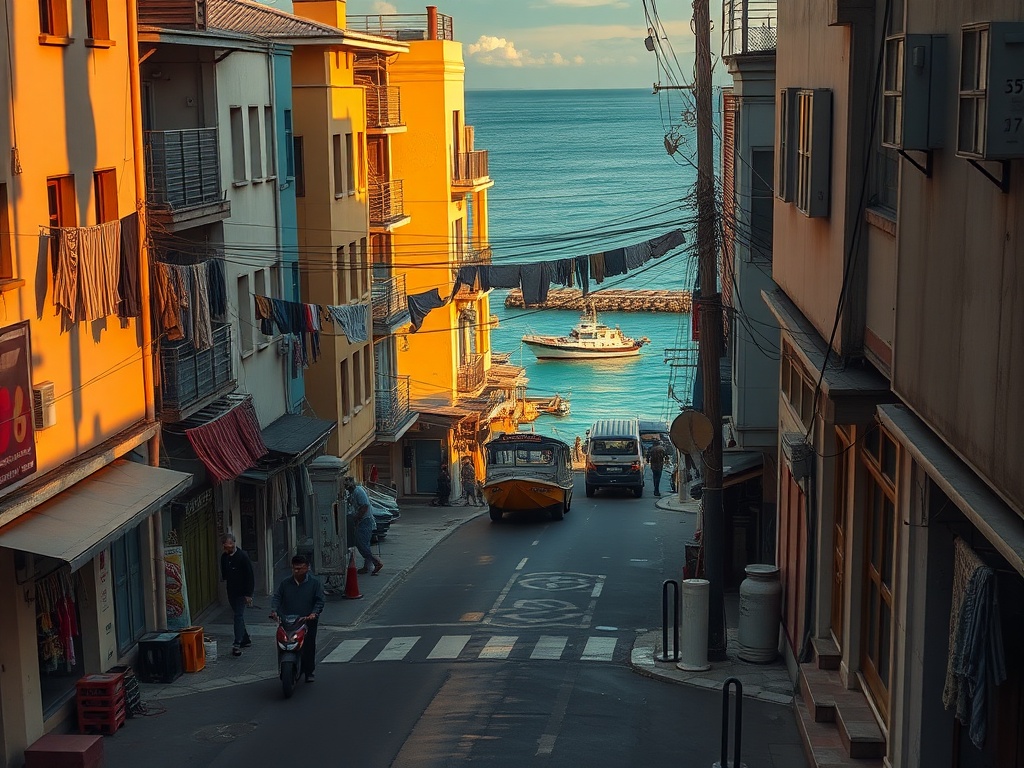
Shoulder to Shoulder in Malé's Narrow Streets, Drifting Apart
Sometimes I walk through Malé's narrow streets, shoulder to shoulder with strangers, and wonder about the invisible currents pulling us in different directions. The sea that surrounds us has always been our lifeblood, yet lately it feels like we're drifting further from each other, further from ourselves.
The morning air carries the scent of salt and diesel, a peculiar mix that somehow defines our capital now. Young men gather at tea shops, their conversations laced with a quiet desperation that the roaring speedboats can't drown out. They speak of jobs that don't exist, of dreams deferred until the next tourist season, of watching foreign workers fill positions they themselves were trained for. There's a particular pain in realizing you've become a spectator in your own homeland.
In the evenings, the lights from the harbor dance on the dark water, creating illusions of prosperity. But behind closed doors, families calculate the rising cost of rice and fish, the impossible math of making a Maldivian salary stretch across imported necessities. Our islands have become storefronts for everything we don't produce, and our wallets have become collection boxes for taxes we can't avoid.
Yet what strikes me most isn't the economic strain, but the emotional distance growing between us. We've become experts at navigating crowded spaces while maintaining perfect isolation. We know how to smile for tourists while hiding our worries from neighbors. There's an unspoken agreement to keep the surface calm, like the still lagoon that hides the strong currents beneath.
But the sea teaches patience. It teaches that tides change, that seasons turn, that even the strongest current eventually meets its countercurrent. Perhaps what we're experiencing isn't permanent displacement, but necessary turbulence—the churning that comes before clarity. The same ocean that separates our islands also connects them, and the same challenges that divide us might eventually reveal our shared anchors.
Tomorrow, the fishermen will still go out before dawn, the mothers will still send their children to school, the shopkeepers will still open their doors. There's resilience in these ordinary rhythms, a quiet determination that no economic indicator can measure. We are learning to navigate not just the physical space between our islands, but the emotional space between our hopes and our reality.
— Source fragments: Youth issues: Drug use, unemployment, lack of educational/job opportunities; Housing: Crisis in congested capital, Malé; Economy: High cost of living, heavy import reliance; Society: Expatriates lead to competition with locals for jobs/business