Smiles Across Political Lines
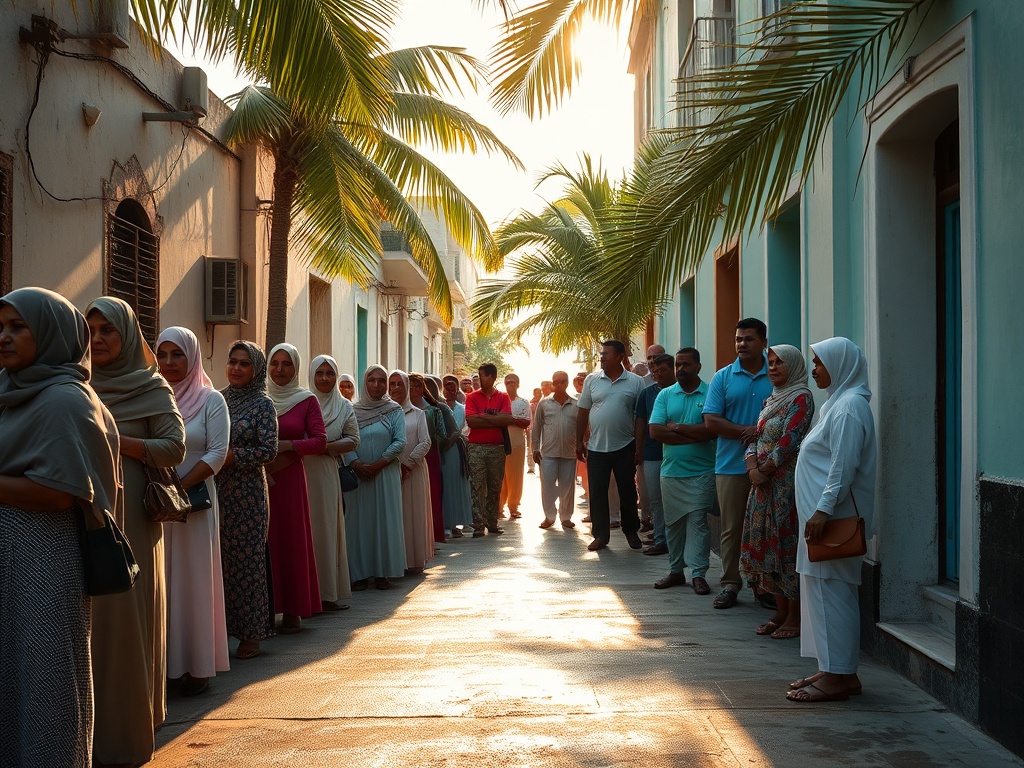
The sun was beginning to dip toward the western horizon, casting long shadows across the island's sandy paths. I watched from the edge of the gathering as people moved toward the temporary stage—neighbors, relatives, people I'd known since childhood. Our island had always voted MDP, the political banners during elections made that clear enough. Yet here they were, forming orderly lines, waiting their turn.
What struck me wasn't the political spectacle, but the ordinary humanity of it all. The woman ahead of me adjusted her dhigu hedhun, smoothing the fabric nervously. She'd been complaining just yesterday about the rising cost of flour, how her husband's construction work had become irregular. Now she stood ready to speak to the President about exactly that—not as a political statement, but as a mother trying to feed her family.
When her turn came, I saw her smile—that genuine, slightly nervous Maldivian smile we reserve for important occasions. She shook hands, spoke briefly, and stepped away looking relieved. No grand political conversion, just a citizen sharing her reality with someone in power.
This is how we navigate our divided landscape—not through shouted arguments or social media wars, but through these small, human interactions. The sea doesn't care about our political affiliations; the fishing boats still go out each morning regardless of who's in power. The monsoons will still come, the coconuts will still fall.
Perhaps this is our resilience—the ability to separate the person from the politics, to acknowledge shared needs while maintaining our convictions. In that moment, watching handshakes and smiles cross political lines, I remembered that beneath the banners and slogans, we're all just island people trying to make our way in this archipelago we call home.
— Source fragments: My island is politically aligned with the MDP, but everyone came to meet the President to express their needs. They smiled, shook hands with the President, and shared what they wanted.
— Tone: wistful