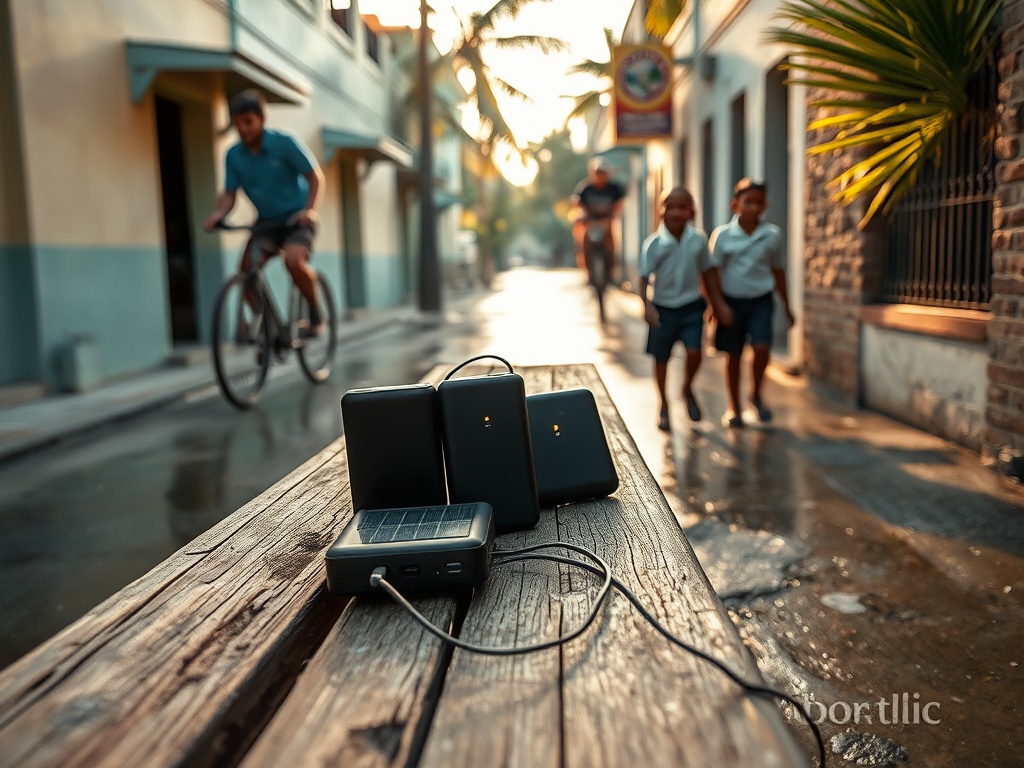
Solar Power in Island Life
The sun rises over the eastern horizon, its first rays catching the edges of tin roofs and the white paint of mosque domes. By mid-morning, the heat is already pressing down on Malé's narrow streets, a familiar weight that we carry through our days. In this intensity, there is also potential—an energy source that we've lived with for generations, yet have only begun to properly harness.
Imagine power banks charged not by flickering grid electricity, but by the same sun that warms the coral stone walls of our homes. On islands where power cuts can disrupt work, study, and connection, solar energy offers more than convenience; it offers continuity. For students studying for exams, for fishermen tracking weather updates, for families staying in touch with relatives on other atolls—this isn't just about never running out of power. It's about never being cut off.
The affordability argument goes beyond rupees and laari. When we tap into what nature provides so abundantly, we reduce our dependence on imported fuel, on generators that rumble through the night, on systems that strain under growing demand. There's a quiet dignity in self-sufficiency, in knowing that the device in your hand draws its life from the same source that has guided Maldivian navigators for centuries.
But the true beauty lies in the subtle shift it represents—from seeing our environment as something to be endured to recognizing it as a partner in our daily lives. The same sunlight that dries fish on the rope lines can charge the phone that connects a mother to her daughter studying abroad. The same warmth that bleaches the wooden dhonis can power the tablet where a young entrepreneur builds her business.
This isn't just about technology; it's about reimagining our relationship with the elements that have always defined us. As the climate changes and sea levels rise, finding ways to live in harmony with our environment becomes not just practical, but essential. Solar power banks are a small step, but they point toward a larger truth: the solutions to our challenges often lie in the resources we've had all along, waiting for us to see them with new eyes.
— Source fragments: IMO everyone in this tropical country should be using solar-powered power banks. It's eco-friendly, affordable, convenient, and best of all, you will literally never run out of power
— Tone: hopeful