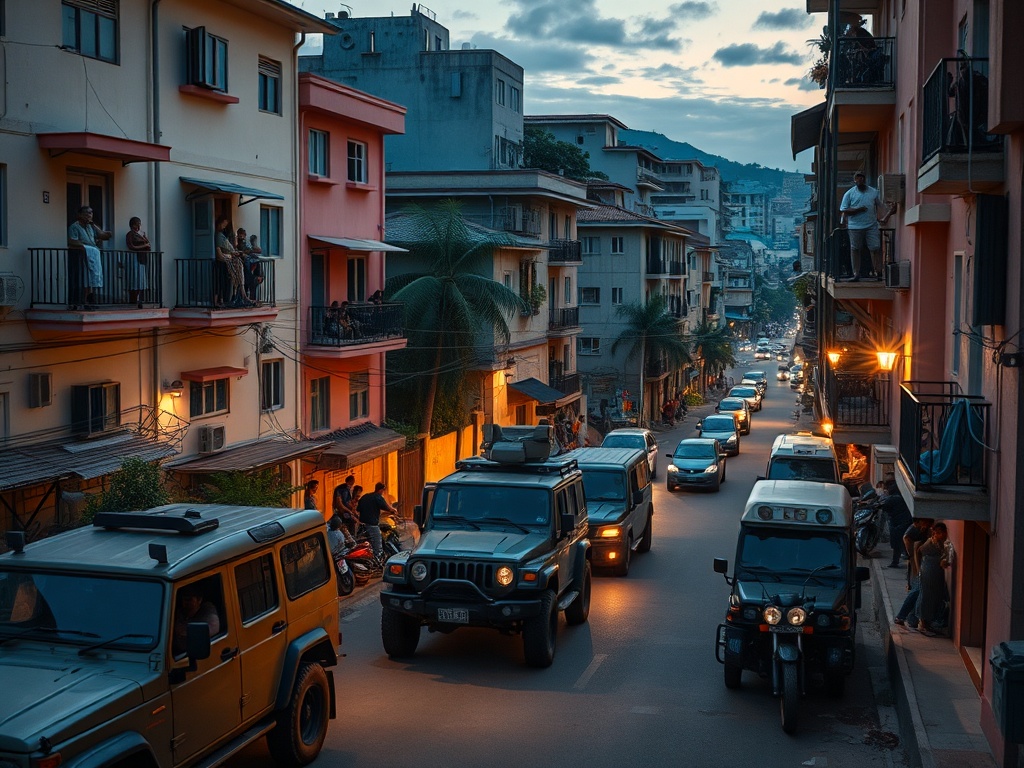
Sonic weapons have no place in Malé's crowded streets
That day on October 3rd, the sound didn't just hit the protesters—it rattled the windows of homes where children were doing homework, vibrated through the thin walls of apartments where families were preparing dinner, and echoed across the narrow streets that barely separate our lives in this crowded capital. When they turned that LRAD on, they weren't just targeting political opponents; they were weaponizing the very air we breathe in a city where privacy is already a luxury.
In Malé, where over 150,000 people live compressed into less than two square kilometers, there's no such thing as a 'controlled' deployment. The sound that's louder than a jet engine doesn't discriminate between protester and pedestrian, between political activist and the grandmother hanging laundry on her balcony. This isn't about maintaining order—it's about instilling fear in a population that's already grappling with youth unemployment hovering around 30%, housing shortages, and the daily struggle to afford basic necessities.
What troubles me most is the pattern. First came the military vehicles patrolling before the protest even began—a show of force that felt alien in our small island nation. Then the sonic weapon, something most of us had only seen in foreign action movies. Now, six people remain detained a week later, their families left wondering when—or if—they'll come home. This escalation feels like we're losing something fundamental about how we resolve our differences as Maldivians.
We've always had our political disputes, our heated debates in coffee shops and on social media. But we've traditionally handled them within the bounds of our shared identity, our common faith, our understanding that at the end of the day, we're all neighbors in these crowded islands. The introduction of military-grade equipment changes that equation fundamentally. It tells citizens that their government sees them not as people to be heard, but as threats to be suppressed.
The absence of public guidelines for using this weapon speaks volumes. For pepper spray or batons, there are procedures. For this sonic device? Silence. That lack of transparency is what makes this feel like we're crossing a line from law enforcement to something darker, something that doesn't belong in our islands.
As someone who remembers when police carried out their duties with minimal equipment, when disputes were settled through dialogue rather than decibels, I worry about where this path leads. Our strength has always been in our ability to talk through our problems, to maintain the social fabric even when we disagree politically. Weapons that can harm bystanders and residents fundamentally undermine that social contract.
Perhaps what we need most right now isn't just the release of those detained or an investigation into this specific incident, but a broader conversation about what kind of society we want to build. Do we want one where dissent is met with military-grade force, or one where we preserve the Maldivian way of resolving differences through engagement and respect? The answer, I believe, lies in remembering who we are—and that sonic weapons have no place in that identity.