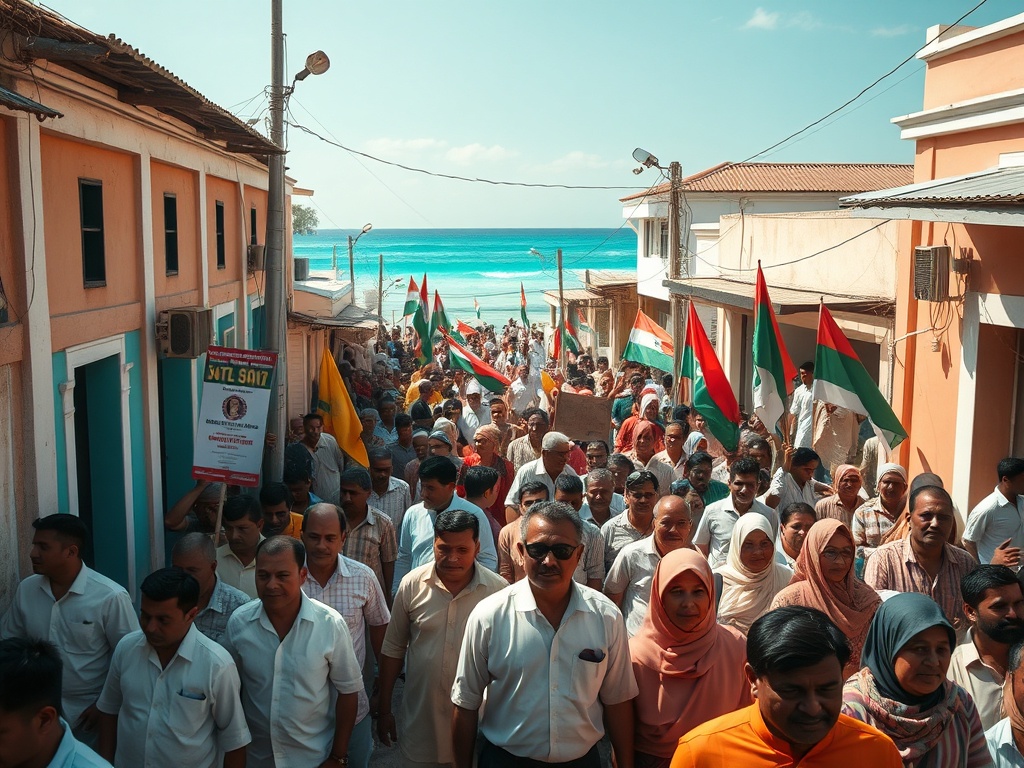
State Jobs for Rally Crowds in Malé
In the crowded cafes of Malé and the quieter offices of atolls, a familiar conversation is taking place. The murmur isn't about policy debates or ideological differences, but about the mechanics of political mobilization and what many perceive as the systematic conversion of public resources into party assets.
The discussion centers on allegations that the ruling party is leveraging state infrastructure to bolster its membership and attendance at political events. According to widespread public discourse, the Department of National Registration's data is being utilized for membership drives, while budget allocations are allegedly repurposed as grants to facilitate political activities. The upcoming November 14 rally has become a focal point for these concerns, with reports of coordinated transportation bringing supporters from across the archipelago to the capital.
What makes these conversations particularly charged is the perception that this represents a new normal in Maldivian politics—where the boundary between state and party has become increasingly blurred. The misuse of state resources, once discussed in hushed tones, has become open table talk, suggesting either greater transparency about existing practices or an escalation in their brazenness.
The public response reveals a complex spectrum of attitudes. Some express outright fury at what they see as systematic theft of public funds, while others question the narrative of coercion, pointing out that participation often involves willing acceptance of benefits. This distinction between forced mobilization and incentivized participation lies at the heart of the ethical debate.
Critics argue that when political support becomes transactional—traded for travel expenses, accommodations, or future promises—it undermines the very foundation of democratic participation. The concern isn't just about the immediate financial cost, but about the long-term corrosion of political culture. When loyalty can be purchased rather than earned, the relationship between citizens and their representatives transforms from one of accountability to one of patronage.
The conversations reflect a broader anxiety about the health of Maldivian democracy. Beyond the specific allegations about rally attendance, there's a growing sense that political participation is becoming less about conviction and more about calculation. The promise of future positions, the distribution of immediate benefits, and the strategic use of state infrastructure have created what many describe as an ecosystem where principle takes a backseat to pragmatism.
As these discussions continue in homes and workplaces across the islands, they reveal a citizenry grappling with fundamental questions about political integrity, the proper use of public resources, and what it means to genuinely support a cause versus being compensated for showing up. The answers to these questions may well determine the future trajectory of political engagement in the Maldives.
— Source fragments: Political mobilization methods, allegations of state resource misuse, public discourse about transactional politics, debate about coercion versus willing participation