State Minister Calls for Public Awareness to Strengthen Human Trafficking Laws
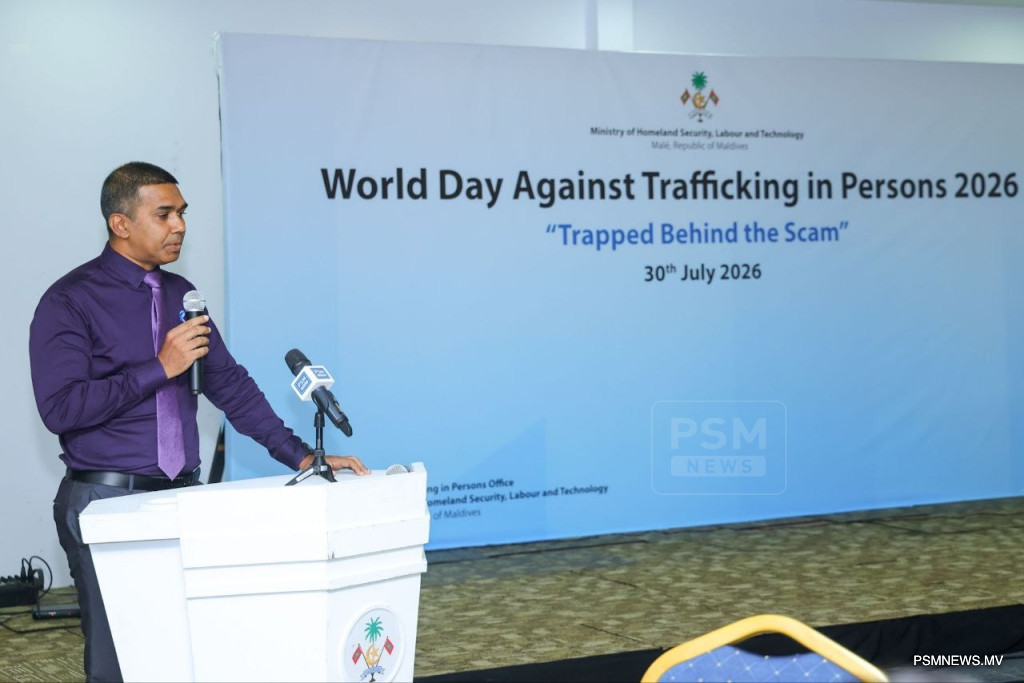
The Maldives is prioritizing a surge in public and institutional awareness to bridge the gap between existing human trafficking laws and their practical enforcement. State Minister for Homeland Security, Labour and Technology, Dr Abdulla Phairoosch, emphasized that legal frameworks alone are insufficient without a well-informed society and vigilant institutions.
Speaking at a workshop commemorating the World Day against Trafficking in Persons, Minister Phairoosch highlighted the development of the Maldives Anti-Human Trafficking Strategic Plan. This national framework focuses on a three-pronged approach: prevention, the protection of victims, and the execution of rigorous investigations to dismantle trafficking networks.
This year's global theme, "Trapped Behind the Scam," addresses a modern evolution in exploitation where victims are lured into online scam compounds via digital tools. While the Minister confirmed that such cases have not yet been recorded in the Maldives, he warned that the global rise of these crimes, coupled with a local increase in digital scams, makes preemptive action an urgent necessity.
Minister Phairoosch urged relevant agencies to look beyond the Human Trafficking Act and adopt a more comprehensive perspective on vulnerability. He noted that the new strategic plan incorporates critical feedback and rankings from international bodies, specifically addressing the widespread lack of awareness regarding legal protections over the past two years.
In a move to streamline governance, the Ministry has recently unified immigration, labour governance, inspections, and law enforcement under a single framework. This structural overhaul is intended to create a more seamless response to labour migration issues and exploitation.
Closing his remarks, the State Minister stressed that the government cannot eradicate trafficking in isolation. He called for a "whole-of-society" approach, insisting that full cooperation from employers, civil society organizations, and the general public is essential to building a resilient system that stops exploitation before it begins.