Still Waters, Stagnant Dreams
The call to prayer echoed across the tin roofs of Malé, but Ali barely heard it. From his small room overlooking the narrow alley, he watched the sea in the distance—a constant, breathing presence that seemed to mock the city's congestion. The air was thick with the smell of salt and diesel, a familiar scent that clung to everything like regret.
At twenty-three, Ali felt the weight of his degree in business administration like an anchor. He'd returned from Malaysia full of ideas, only to find that opportunities here were like the monsoon rains—either flooding or absent entirely. His father's fishing boat sat idle at the harbor, its nets drying in the sun while foreign trawlers worked the rich waters beyond the atoll.
'Another flat viewing,' his mother had said that morning, her voice tight with the strain of hope. The government housing project in Hulhumalé promised relief from their cramped two-room existence, but the waiting list stretched longer than the horizon. Ali had seen the new buildings rising from the reclaimed land—concrete dreams that felt as distant as the stars.
He walked through the crowded streets where young men gathered in clusters, their laughter sharp and restless. Some spoke of leaving—Dubai, Malaysia, anywhere with more space to breathe. Others talked of the resorts, those glittering islands where they could serve tourists while their own futures remained landlocked.
At the café where he sometimes met friends, the talk turned to politics. The usual complaints circulated like the ceiling fans—corruption, nepotism, promises made and broken. But Ali noticed how voices dropped when certain names were mentioned, how eyes darted toward the door. The sea might be free, but the islands felt increasingly contained.
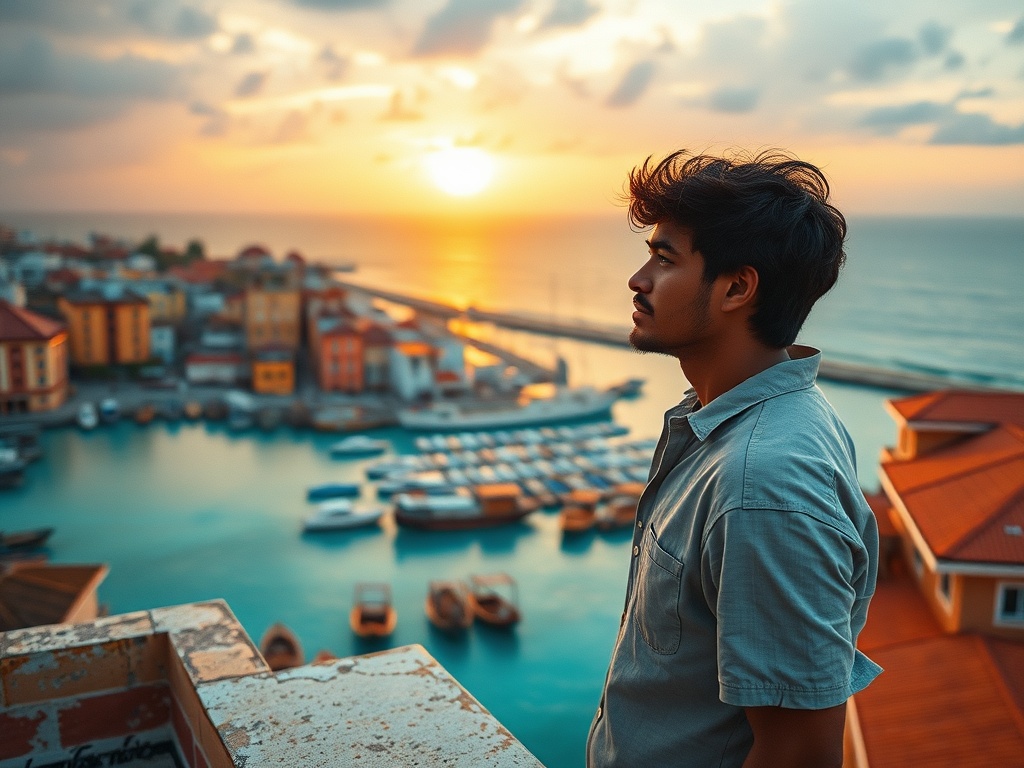
That evening, Ali climbed to the rooftop as the sun bled into the ocean. Below him, the city pulsed with the frantic energy of survival. He thought of his sister, studying medicine in Sri Lanka, and wondered if she'd return to the medicine shortages and overwhelmed hospitals. He thought of his childhood friend, now lost to the easy escape of drugs that flowed as freely as the tides.
The sea had always been their compass, but now it seemed to point in every direction at once. Ali watched a cargo ship move slowly across the horizon, carrying goods they couldn't produce, funded by currency they struggled to keep. The water that connected them to the world also highlighted their isolation.
As darkness settled and the city lights flickered like uncertain stars, Ali made a decision. He wouldn't wait for the tide to turn. Tomorrow, he would approach the local boat builders about a small venture—ferrying supplies between islands, using the sea not as a barrier but as a path. It was a fragile hope, but like the coral that built these islands grain by grain, it was a start.
The waves continued their patient work against the shore, reshaping the land as they had for millennia. And Ali understood that survival here had always been about learning to move with the water, not against it.
— Source fragments: