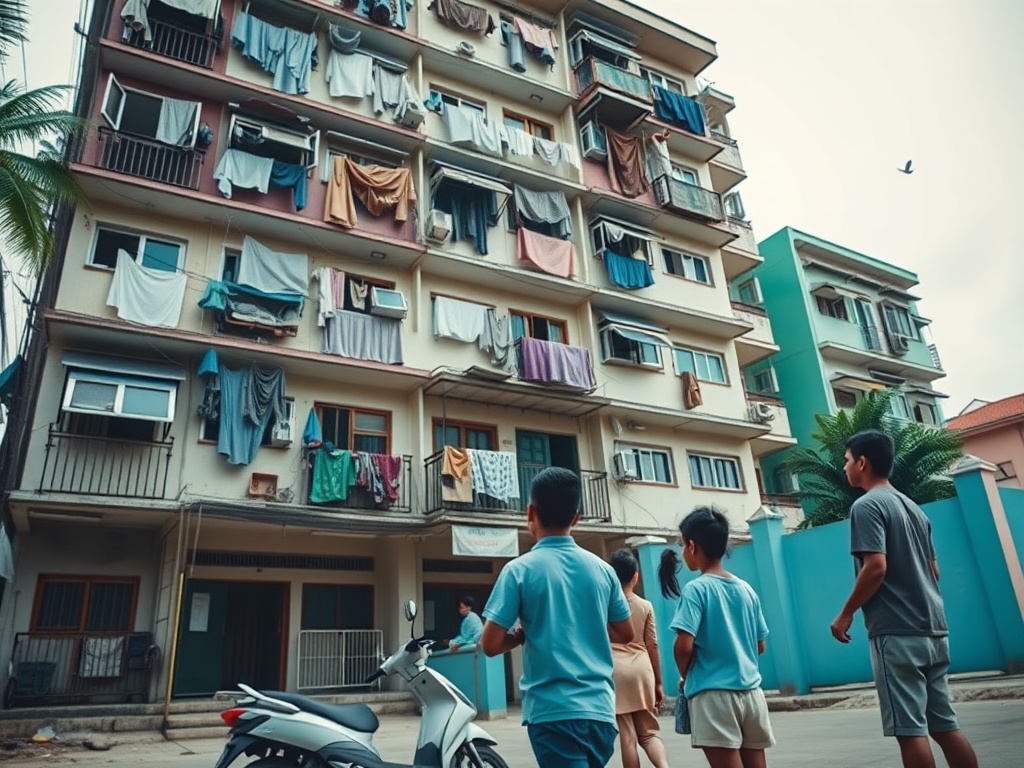
Subsidized flats are subleased for profit by leaseholders abroad
In the cramped lanes of Malé, where every square foot is precious, a quiet injustice unfolds. The government’s subsidized housing projects, built to shelter Maldivian families, are being exploited by a select few. Leaseholders who secured these flats at subsidized rates are now living abroad, subleasing them at market prices for personal profit. This isn’t just a breach of contract; it’s a betrayal of public trust and a direct cause of the chronic housing shortage.
Why does this continue unchecked? The system is riddled with loopholes and a lack of enforcement. Many of these leaseholders have political connections or were awarded flats as electoral favors. There is little to no follow-up to ensure they actually reside in the units, allowing them to treat public assets as private revenue streams. The result is that families in genuine need remain on waiting lists for years, while flats meant for them sit occupied by tenants paying exorbitant rents to an absentee landlord.
The financial mechanics are simple, yet devastating. A leaseholder pays a minimal, subsidized rate to the government—sometimes even defaulting without consequence. They then sublease the apartment at a rate several times higher, pocketing the difference. This not only deprives the state of potential revenue but also inflates the rental market, making it even harder for ordinary Maldivians to find affordable housing.
What does this say about our governance? The housing crisis is a symptom of a deeper malaise: the politicization of public resources. When housing is used as a tool for political patronage rather than social welfare, the most vulnerable citizens pay the price. The government’s failure to audit these allocations and enforce residency requirements suggests either incompetence or complicity.
Is there a way out? The solution requires political will, not just policy. A transparent, public registry of all subsidized housing allocations and regular physical verification of occupancy could curb this abuse. Stricter penalties for violations and the blacklisting of fraudulent leaseholders would act as a deterrent. But beyond enforcement, we must ask: when will our leaders prioritize the people’s welfare over political expediency?
The sight of overcrowded households in Malé, while subsidized flats serve as investment properties for the connected few, is a stark reminder of the inequality gnawing at our society. This isn’t merely a housing issue; it’s a question of justice. How long will we allow a system that was designed to help the needy to be hijacked for private gain?