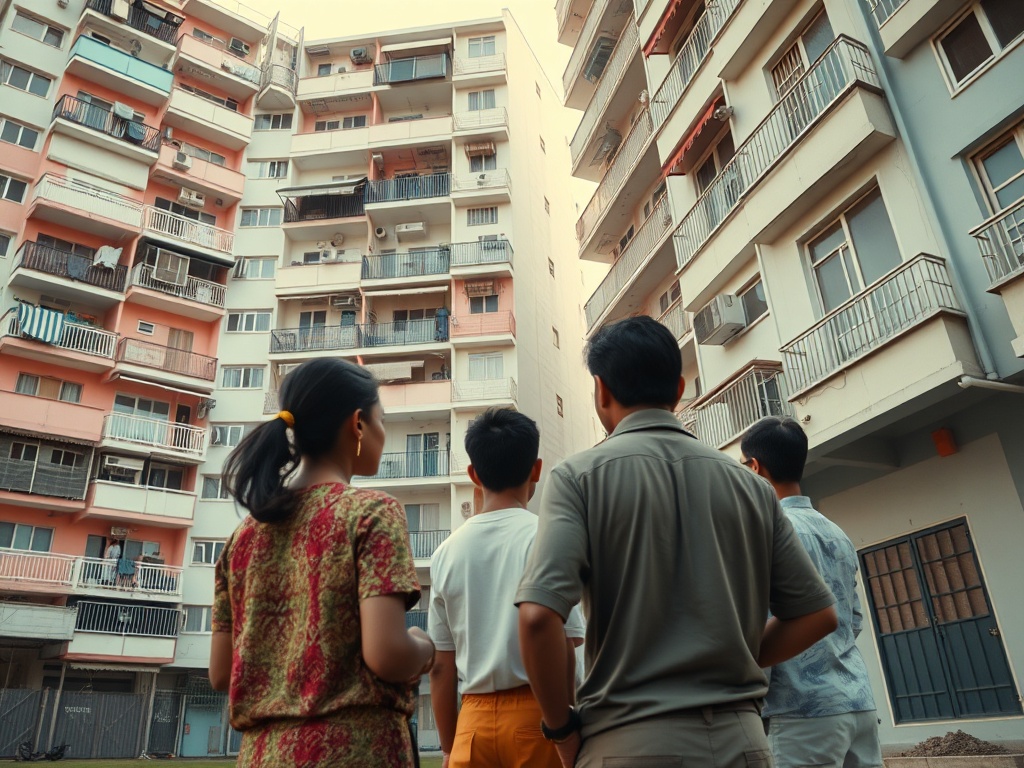
Subsidized flats are subleased for profit by leaseholders living abroad.
In the heart of Malé, where the ocean breeze mingles with the scent of concrete and desperation, a quiet betrayal unfolds. The very roofs meant to shelter Maldivian families have become assets in a shadow economy, traded by absentee leaseholders who view public welfare as private profit. How did a system designed to alleviate suffering become a tool for exploitation?
The answer lies in the intersection of policy loopholes and political negligence. When subsidized housing is allocated, the checks to ensure recipients actually reside in them are notoriously weak. This creates an open invitation for those with connections or capital to secure a flat, then immediately sublease it at market rates—often to expatriates or wealthier locals who can pay. The original leaseholder, comfortably settled abroad, collects rent without ever setting foot on the island, while the intended beneficiary—a young couple, a struggling family—remains in overcrowded conditions.
Why does this persist? Because the housing crisis is not just a failure of infrastructure; it is a symptom of deeper governance ills. The politicization of housing projects means that allocation is often tied to loyalty rather than need. Flats become electoral currency, handed out to secure votes with little regard for long-term consequences. When the very authorities tasked with oversight are complicit in the system, who will blow the whistle?
The effects ripple through our society. As more flats are effectively privatized through subleasing, the cost of living in Malé skyrockets. Locals competing for limited housing face inflated prices, pushing them further into debt or forcing migrations to even more congested areas. This isn't merely an economic issue—it erodes social trust and fuels resentment among communities that feel abandoned by their leaders.
What can be done? Transparency in allocation and robust monitoring are obvious starting points, but they require political will that has so far been absent. Strengthening legal frameworks to penalize fraudulent subleasing could deter abuse, yet enforcement remains lax. Perhaps the real solution lies in community-led audits and public pressure to hold officials accountable.
Ultimately, the subleasing scandal is a mirror reflecting our broader struggles: corruption, nepotism, and the hollowing out of public resources for private gain. Until we confront these root causes, the dream of affordable housing will remain just that—a dream, floating just out of reach like a mirage on the Maldivian horizon.