Subsidized Flats, Profiteering Landlords
A deep-seated disillusionment has settled over the Maldivian archipelago, a quiet but persistent current flowing beneath the surface of island life. This is a complex web of political fatigue, economic pressure, and a growing chasm between the governed and their governors. The public discourse reveals a populace grappling with a system many perceive as fundamentally broken.
The political arena is viewed as a stage for a perpetual power game, where the core objective is the consolidation of control rather than public service. The mechanisms include a judiciary whose independence is frequently questioned, an education system targeted for ideological reshaping, and a state apparatus bloated with political appointments that stifle efficiency. This environment breeds a profound cynicism, where every government action is scrutinized through a lens of suspicion.
Simultaneously, the economic reality for the average Maldivian grows increasingly precarious. The high cost of living, driven by systemic issues like heavy import reliance and foreign currency shortages, squeezes household budgets. The promise of prosperity from tourism often feels like a distant echo, with benefits perceived to be sequestered by a select few while resort earnings are parked offshore. This economic strain exacerbates social ills, from a pervasive youth drug problem to an unemployment crisis that pushes the ambitious to seek opportunities elsewhere.
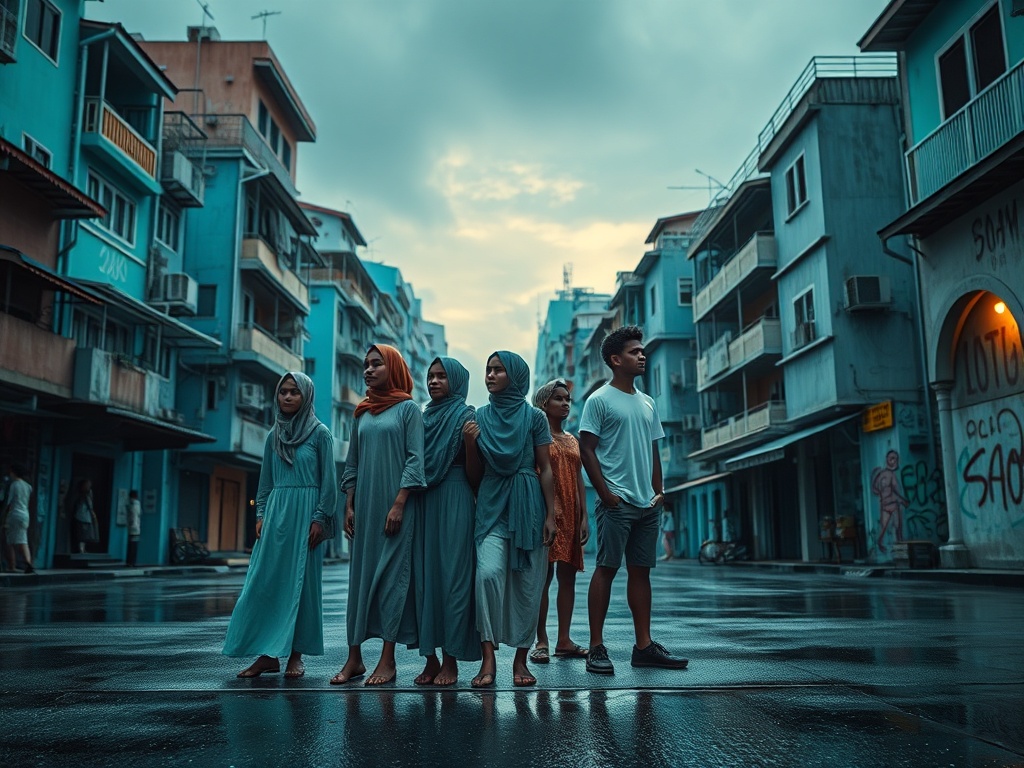
The housing crisis in the congested capital, Malé, stands as a physical manifestation of these systemic failures. Government housing schemes, intended as a social good, are widely believed to be politicized and corrupted, with subsidized flats becoming assets for profiteering rather than solutions for families. This tangible failure of policy fuels the broader narrative of a state that has lost its way.
Amid this discontent, a more abstract but potent layer of anxiety thrives. Geopolitical alignments, particularly the government's 'India Out' stance and its pivot towards other global powers, are interpreted by some through an apocalyptic, religious lens. Complex international relations are reduced to a simplistic narrative of a war on Islam, funded indirectly by the Maldives' own financial dealings. This conspiratorial framework provides a grand, if frightening, explanation for local struggles, merging legitimate grievances with global ideological battles.
The Maldivian psyche is caught in a tug-of-war between the grinding reality of domestic failures and the shadowy specter of international conspiracies. The result is a political climate where trust is the scarcest resource, and the very foundations of civic discourse are eroding. The path forward requires untangling this knot—addressing the concrete issues of governance and economy with transparent action.
— Source fragments: Political force trying to dismantle education system; Corruption in housing sector with subsidized flats being subleased for profit; High cost of living and foreign currency shortages; Perception of a politicized judiciary and bloated public sector; Geopolitical narratives framing foreign relations as a 'war on Islam'; Widespread sentiment of political gamesmanship and data collection for manipulation; Youth disenfranchisement and drug issues.