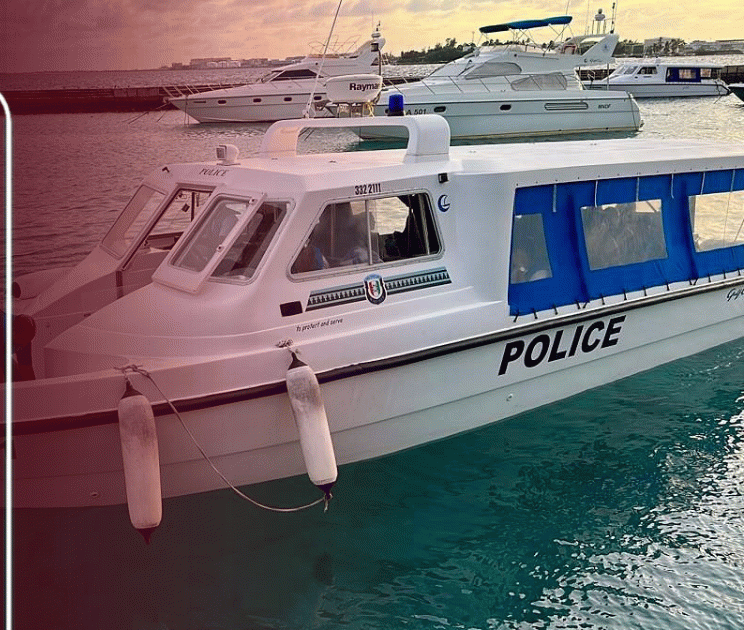
Supreme Court Upholds Dismissal of Police Officer in Boat Repair Funds Misuse Case
The Supreme Court has ruled that the Police Disciplinary Board's decision to dismiss Adham Iyaz, former Head of Marine Police and Chief Inspector of Police, was proper in a case involving misuse of state funds related to the repair and refitting of a police boat.
The case concerns Iyaz's dismissal in 2018 over allegations that procedures regarding state funds were violated when the boat 'Police 20' was sent to Sri Lanka for repairs and brought back to Malé. Specifically, it involved releasing 6,500 liters of fuel to a tugboat without permission from the Finance Department and issuing a letter independently to pay money to private companies through Alied Insurance.
Iyaz had filed a case at the Civil Court seeking reinstatement, arguing his dismissal was contrary to law, but the court ruled in favor of the state. The High Court also upheld that decision, and Iyaz appealed to the Supreme Court.
In his appeal, Iyaz argued that failing to produce witnesses before the Civil Court to prove the investigation by the Disciplinary Board was improper, and not stating reasons for not producing these witnesses, violated trial principles. He also claimed that the decision by the National Integrity Commission (NIC) was not followed, and that the Anti-Corruption Commission (ACC) had found no grounds to accuse him of corruption.
The Supreme Court, in its unanimous judgment, noted that while previous judgments require reasons to be stated in the report if witnesses are not considered, if there is no circumstance that would change the outcome, annulling the lower court's judgment solely on that basis is not necessary.
The court stated that documents establish that Iyaz acted against financial regulations, and that he did not follow procedures under the State Financial Regulations to obtain insurance compensation. The court also highlighted that the standard of proof for dismissal from police duties is lower than for ordinary jobs.
Furthermore, since Iyaz was dismissed before the NIC concluded its investigation, offices are not obliged to act upon the commission's directives under the NIC Act. The ACC's decision was submitted to the Supreme Court only after hearings concluded, so it could not be considered under regulations.
The Supreme Court determined there is no legal or statutory reason to alter the High Court's judgment and upheld the decision.