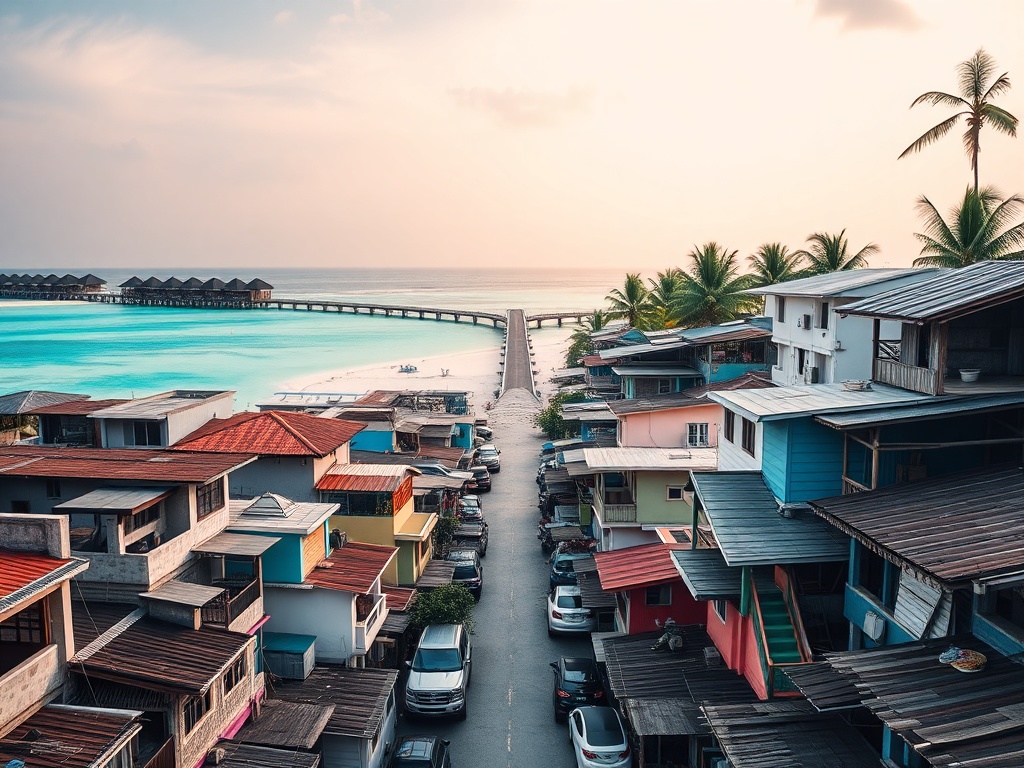
The Airport That's Been Awful for So Long
A recent cap on remittances, leaving the Indian diaspora in the Maldives in a precarious position, is more than an isolated policy. It is a symptom of a deeper, systemic ailment. It echoes in the frustration over a national airport that has remained 'awful for so long,' in the forced USD forex policy that degrades the Maldivian Rufiyaa, and in a World Bank growth forecast of just 3.9% for 2026—a figure that feels anaemic compared to the boom years many remember.
The public discourse reveals a nation grappling with its own economic identity. The tourism sector, the undisputed engine generating over 80% of national revenue, is often held up as the nation's saviour. Its pioneers, largely from the commercial elite of Malé, are credited with transforming the archipelago's destiny. Yet, a counter-narrative persists, one that asks what was lost in this single-minded focus. Critics point to the deliberate dismantling of a shipping industry that, had it been nurtured, could have made tourism 'look like peanuts,' creating a more diversified and resilient economy.
This historical pivot has created a profound disconnect. The conversation is increasingly dominated by a sense of inequitable wealth distribution, where policy moves seem to consistently favour a 'privileged few.' The recent discussion around land development is a prime example. As one line of argument goes, only the wealthiest families will be in a position to develop newly allocated land without relying on loans from a banking system with severe capital limitations. The result, many fear, is not broad-based prosperity but another windfall for the 'wealthy elite,' further cementing a two-tiered society.
This is not merely an economic calculation; it is a social and psychological fracture. The 'forced economic migration' that has crowded the Malé region for decades is a testament to the lack of opportunity elsewhere. The nation's reality is one where the government, facing near-bankruptcy, must juggle billions in loans, an overloaded healthcare system, and over 50,000 people in immediate need of housing. In this context, new policies that add strain, rather than foster inclusive growth, feel like a betrayal of the collective good.
The core of the frustration is a perceived lack of vision. For 53 years, since tourism first began its transformative work, the plea has been for a government to truly revolutionize the economy, to take it to the next level. That breakthrough has not come. Instead, the system seems to incentivize short-term political gains—subsidized housing used as electoral bribes, a bloated public sector—over the hard work of building sustainable, equitable foundations. The Maldivian economy, built by the private sector's ambition, now appears trapped between its past success and a future where the benefits of growth are no longer shared, but hoarded.
— Source fragments: Cap on remittance leaves Indian diaspora in Maldives in the lurch; national airport been so awful for so long; forced usd forex policy; World Bank forecasts 3.9% GDP growth; It's greed for prime real estate; Inequitable wealth distribution; pioneers of tourism industry... also played a pivotal role in destroying the shipping industry; Why are you this ignorant?; majority of people are in Male' region by forced economic migration; the country is nearly bankrupt; Only the wealthiest families will be in a position to develop the land; it's just giving everything to the wealthy elite again; we have been begging governments to revolutionize our economy.