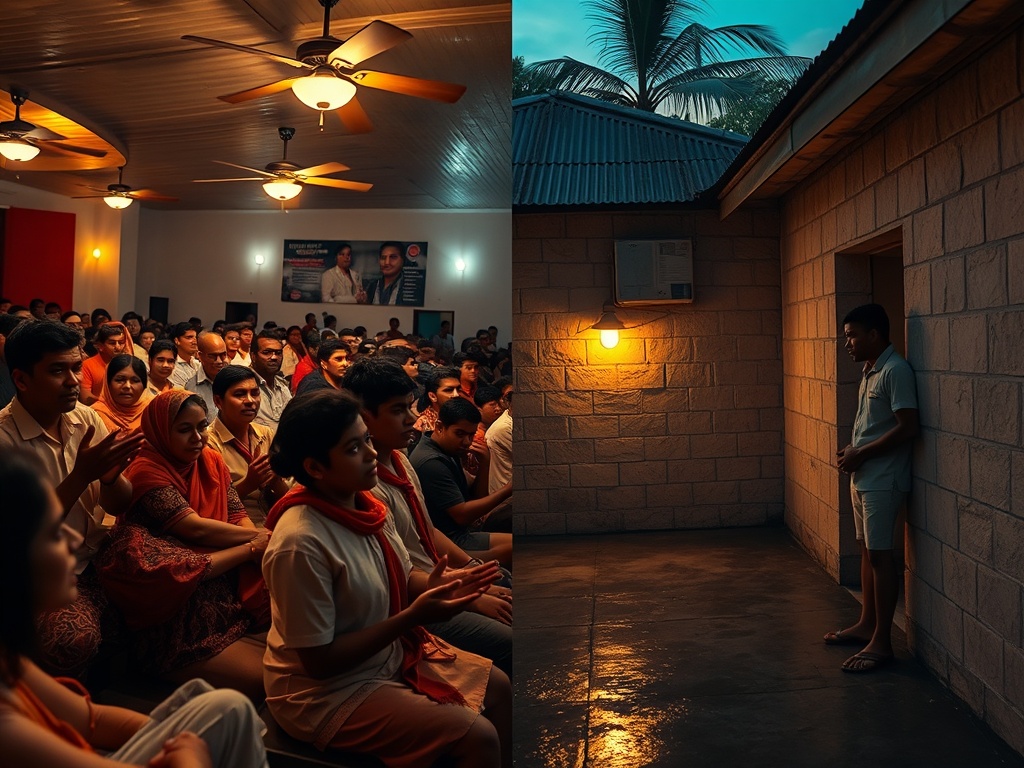
The Applause in Malé, The Complaints at Home
In the corridors of Maldivian politics, a curious transformation occurs when citizens encounter those in power. The collective frustration over governance failures—from economic pressures to institutional weaknesses—somehow dissipates in the moment of meeting, replaced by flattering words that many argue are entirely undeserved.
This phenomenon reveals a deeper cultural and political challenge facing the nation's democracy. When people who privately acknowledge systemic problems publicly offer praise to leaders, they inadvertently reinforce the very structures that perpetuate these issues. The gap between private criticism and public deference creates a dangerous disconnect in the accountability mechanism essential for democratic health.
The pattern extends beyond individual interactions to institutional practices. Questions arise about how the same individuals appear at multiple political meetings across different locations, suggesting a curated audience rather than genuine public engagement. This selective participation undermines the authenticity of political discourse and reinforces perceptions that only certain voices—those aligned with the ruling establishment—receive access.
At the heart of this dynamic lies the tension between political loyalty and democratic responsibility. The tendency to shield party figures from criticism, even when their performance warrants scrutiny, represents a fundamental challenge to political maturity. When party identity becomes a shield against accountability, the entire democratic process suffers.
The consequences ripple through governance. Without consistent pressure for improvement, inefficiencies persist, nepotism flourishes, and public resources continue to be mismanaged. The very problems that citizens privately acknowledge—from housing crises to economic pressures—remain unaddressed precisely because the feedback loop between governed and governors has been compromised by this culture of deference.
What emerges is a portrait of a democracy struggling with its own growing pains. The transition from traditional hierarchical relationships to modern democratic accountability requires citizens to maintain their critical perspective even when face-to-face with power. Only when praise is earned through genuine achievement rather than offered as automatic deference can the nation hope to address its most pressing challenges effectively.
The solution lies not in abandoning respect for leadership, but in redefining what true respect means in a democratic context. Genuine respect for the nation and its institutions demands honest assessment, constructive criticism, and the courage to speak difficult truths—especially when standing before those who hold power.
— Source fragments: If more people held the govt accountable instead of false praise, this country would be in a far better place. Everyone knows the problems we face. Yet the moment people meet the President, all that frustration disappears — replaced with flattering words they don't deserve; how are the same people attending different meetings; PNC selected those who worship their leader; To end nepotism; letting him hide behind the party brand