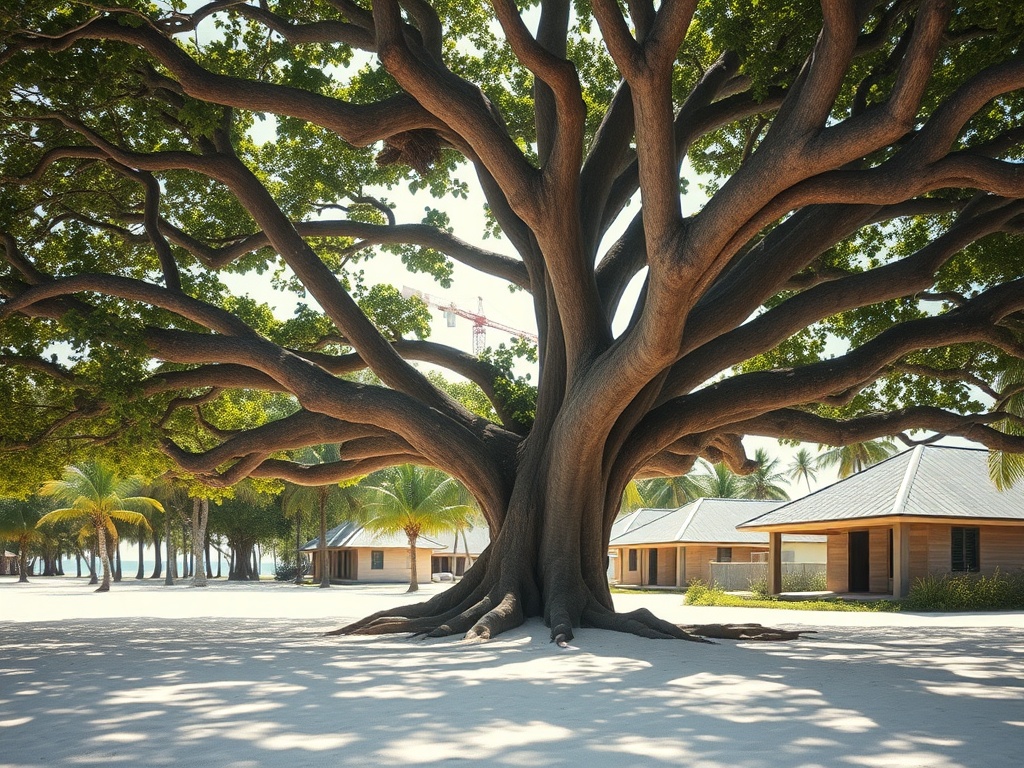
The Banyan Tree That Has Watched Dhangethi's Shore for Generations
On the eastern shore of Dhangethi, a massive banyan tree spreads its canopy like a living cathedral, its aerial roots forming pillars that have witnessed generations of island life. Similar ancient sentinels stand across the Maldivian archipelago—silent witnesses to centuries of history now facing an uncertain future in a nation rapidly transforming.
The absence of clear legal frameworks to protect these natural monuments has become increasingly apparent as development accelerates. While countries worldwide implement systematic approaches to preserving heritage trees based on age, cultural significance, and ecological value, the Maldives relies on ad hoc decisions and endless debates driven by personal preference rather than consistent criteria.
This regulatory vacuum creates a landscape where environmental protection becomes a matter of opinion rather than policy. As one observer noted regarding infrastructure projects, "When the bridge is complete, all the trees would vanish and all hotels would come." This sentiment reflects a broader anxiety about the trade-offs between modernization and preservation that many island communities now face.
Yet a shift in approach is emerging. Rather than waiting for government action that may never materialize, civil society groups and NGOs are taking initiative. They're meeting with communities, listening to concerns, and explaining why preserving these natural landmarks matters beyond mere aesthetics. These trees represent living history—ecological archives that contain stories of migration patterns, climate adaptation, and cultural practices that define Maldivian identity.
The urgency of this conservation effort resonates with indigenous wisdom captured by Alanis Obomsawin's warning: "When the last tree is cut, the last fish is caught, and the last river is polluted; when to breathe the air is sickening, you will realize, too late, that wealth is not in bank accounts and that you can't eat money."
In a nation where political debates often center on economic development and infrastructure, the preservation of ancient trees represents a different kind of investment—one in cultural memory, ecological resilience, and the intangible heritage that gives places their soul. As development continues to reshape the Maldivian landscape, the question remains whether there will be room for both progress and preservation, or if the nation's natural monuments will become casualties of unchecked growth.
— Source fragments: Legal framework gap for tree preservation, development impact on trees, NGO action importance, trees as living history, environmental wisdom quotes