The Breakfast Table Where a Nation Argues Over Tuna and Coconut
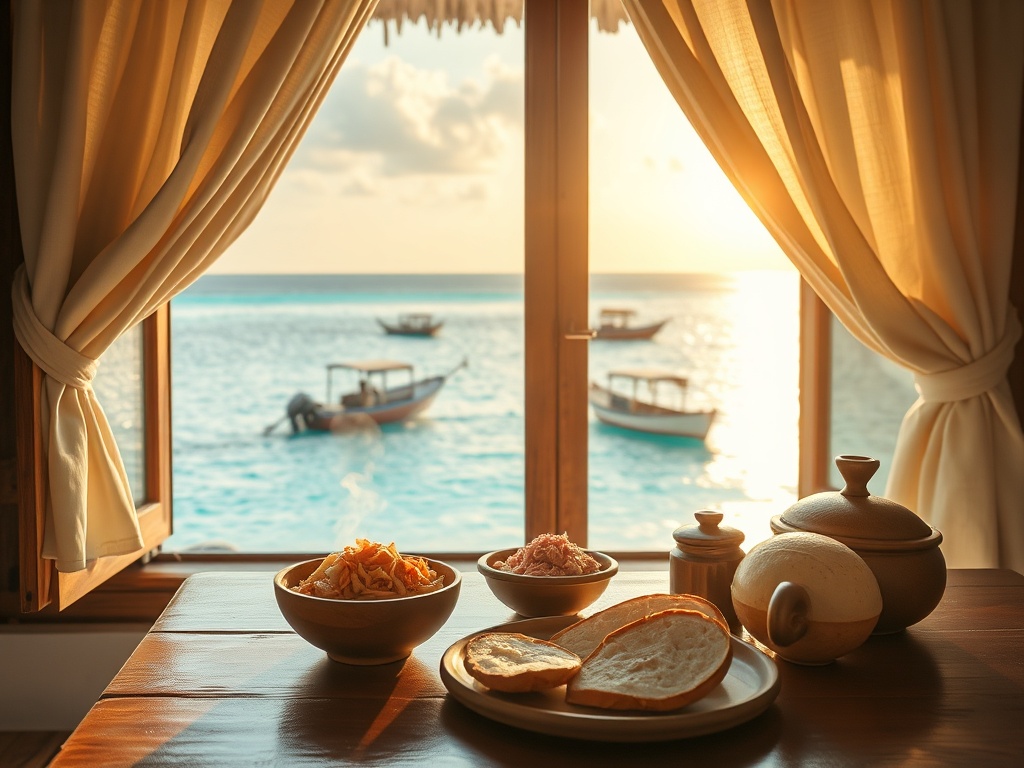
In the early morning light across the Maldives, the familiar aroma of mas huni fills countless households—flaked tuna mixed with coconut, onion, and chili, served with roshi. This simple breakfast dish represents more than just sustenance; it embodies a daily ritual that connects Maldivians across atolls and generations.
The suggestion that mas huni should be formally recognized as our national cuisine has sparked conversations that reveal much about our contemporary identity. Proponents argue it represents our maritime heritage, our relationship with the ocean, and the simplicity that once defined island life. Yet beneath this seemingly straightforward proposition lies the complex reality of a nation grappling with its own diversity.
Regional differences, particularly between northern and southern atolls, surface in these discussions. While mas huni remains a common denominator, variations in preparation and consumption habits highlight how geography and history have shaped distinct culinary traditions within our archipelago. These differences reflect the broader challenge of finding unifying symbols in a nation of scattered islands.
Parallels drawn between Maldivians and other societies—however casually—point to a deeper search for identity markers in a rapidly globalizing world. As one observer noted, the conversation often extends beyond food to questions of origin and belonging. In a nation where modernity constantly reshapes traditions, such discussions become proxy debates about what it means to be Maldivian today.
The evolution of mas huni consumption itself tells a story of social change. Where once women might have prepared this meal within domestic spaces, today it's served in cafes, offices, and restaurants across the islands. This shift mirrors broader transformations in gender roles, work patterns, and public life.
What emerges from these conversations is not just a debate about cuisine, but about how we navigate tradition in a changing society. The resistance to formalizing cultural symbols reflects concerns about oversimplifying our complex identity. Yet the very act of discussing these matters suggests a collective desire to find common ground—to identify what binds us even as we acknowledge what makes us different.
In the end, perhaps the value lies not in declaring any single dish as officially representative, but in recognizing that our shared experiences around food—whether mas huni in the morning or garudhiya in the evening—create invisible threads connecting us across distances and differences. These daily rituals, performed in homes from Haa Alif to Addu City, may ultimately say more about our national character than any official designation ever could.
— Source fragments: Ala should be popularized as national cuisine. I dunno if notherners can be convinced though; maldivians really are the americans of south asia; Do coffee when I am around, I will convince you both that it doesn't matter whether we are aboriginals or not; haha.. i guess i will fly under their radar cos we are aboriginals in a far away place...; Even back then if a women were to go out will cover their head.