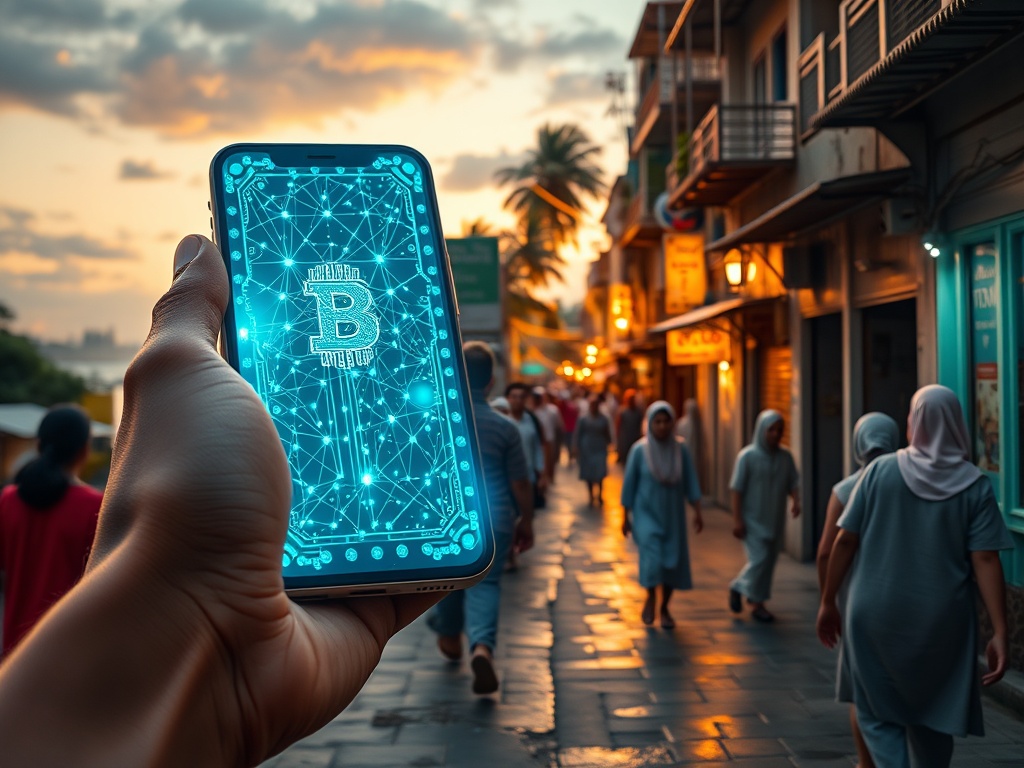
The Call for a Dhivehi Twitter
In the quiet hum of servers and the glow of smartphone screens, a parallel conversation unfolds among Maldivians. It is not about the familiar political entanglements or pressing socio-economic burdens. Instead, it is a conversation about digital futures, about building and belonging in a world defined by code and connectivity.
The promise of frontier technologies captures a specific imagination. Protocols like ORBT, branded as the 'Unified Liquidity Layer,' speak to a hunger for participation in global financial innovation, a desire to move beyond being mere consumers to becoming stakeholders in digital economies. The mechanics are technical—points campaigns, airdrops, token modules—but the underlying sentiment is universal: the search for agency and opportunity in a borderless digital marketplace.
This technological curiosity extends beyond finance. There is a palpable advocacy for artificial intelligence as an inevitable and empowering force. AI is framed not as a specter to be feared but a tool to be mastered—a great equalizer capable of enabling millions to achieve what was previously inaccessible. The vision extends to national capability; the belief that every nation must cultivate indigenous digital sovereignty, with tools that allow its citizens to disengage from external platforms if necessary.
These aspirations for digital creation are sharpened by a latent frustration with digital consumption. The rhetorical question—'why don't we build a Dhivehi Twitter?'—encapsulates a deeper yearning. It is a call to channel local talent, the 'super-brilliant people' recognized within communities, toward solving local problems and creating local platforms. The challenge is framed not as a lack of ability, but a misdirection of energy and resources.
Yet, these digital dreams exist in stark contrast to the tangible realities of the Maldivian state. The nation grapples with a high cost of living, a bloated public sector, a housing crisis in the congested capital, and a governance structure often perceived as prioritizing political consolidation over public empowerment. The very concept of building a robust, independent digital infrastructure or a thriving local tech ecosystem seems to bump against systemic hurdles: foreign currency shortages, a reliance on imports, and an educational and job market that struggles to retain its youth.
This creates a fascinating tension. On one hand, there is a clear vision of a future built on blockchain, AI, and digital sovereignty. On the other, the persistent challenges of governance, economy, and society act as a powerful gravitational force. The digital conversation reveals a community that is globally aware and aspirational. The question that hangs in the balance is whether the national framework can evolve to support this ambition, or if these digital frontiers will remain a realm of individual hobby projects, separate from the nation's core developmental narrative.
— Source fragments: ORBT protocol promotion and airdrop campaign; Advocacy for AI as an empowering, inevitable force; Mention of a personal AI-run news site as a hobby project; The idea that nations need digital sovereignty capabilities, citing China; The rhetorical question about building a 'Dhivehi Twitter' clone; Comments on the potential of Bangladesh versus India.