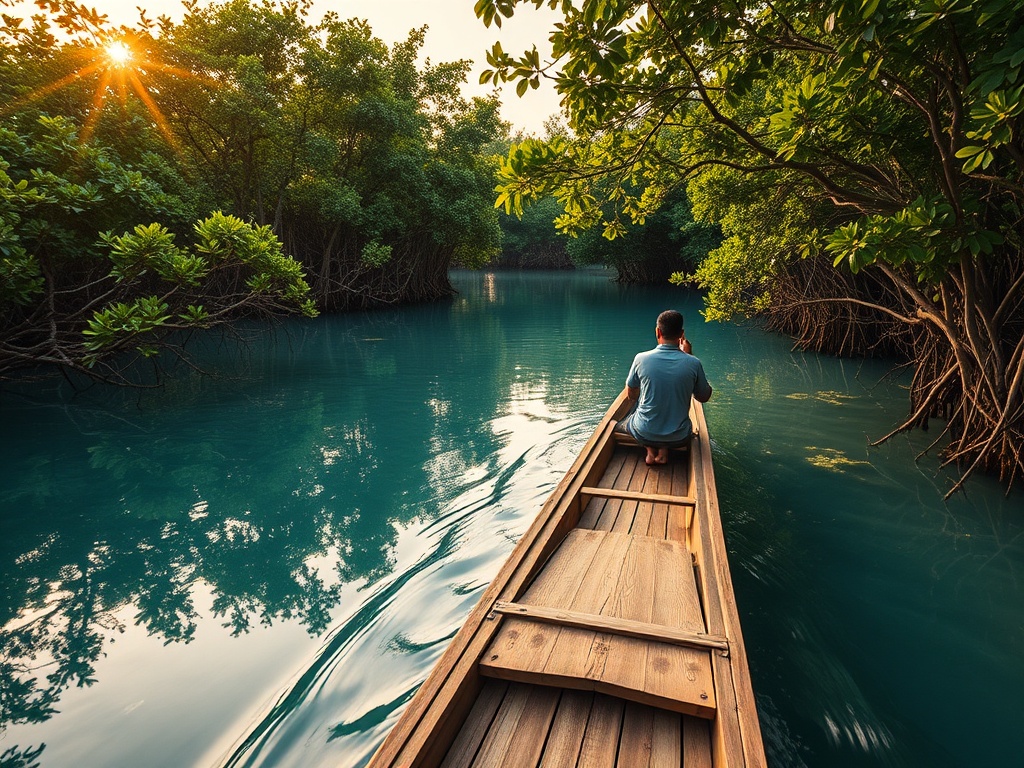
The Canoe's Last Journey Through Fishimathi's Mangroves
The paddle dips silently into the still water, parting reflections of mangrove roots that have stood sentinel here for generations. This journey from Baravela Muli to Moolekede Fishimathi feels different today—not just another canoe trip, but a farewell tour. The Environmental Protection Agency has approved the destruction of these mangroves, and the community knows this might be their last time seeing Fishimathi as it has always been.
Across the archipelago, similar stories unfold. In Addu's Hithadhoo, residents describe Fishimathi mangrove not as vacant land waiting for development, but as a living nursery where fish, crabs, and shrimp begin their lives. The argument that an existing route could be upgraded rather than destroying this ecological treasure falls on deaf ears. Each mangrove system lost represents not just disappearing biodiversity but reduced storm protection and diminished fisheries—the very foundations of island life.
Meanwhile, in Fuvahmulah, hundreds of coconut palms fall to make way for roads mimicking Malé's concrete landscape, a project initiated during Faisal Naseem's vice presidency. The 'heylhi'—those natural spaces between communities—will be replaced by asphalt. Critics note this doesn't justify Addu's planned destruction, but rather reveals a pattern of development priorities that value urbanization over ecological preservation.
The tension reflects a deeper national conversation about what constitutes progress. Many islanders seek 'tharahghee'—development characterized by concrete structures resembling the capital. Yet this pursuit comes at the cost of natural protections that have sustained Maldivian communities for centuries. The irony isn't lost on observers: resorts market the Maldives as a pristine natural paradise while simultaneously destroying the very ecosystems that make it unique.
Environmental advocates point to the fundamental mismatch between short-term economic gains and long-term ecological costs. Mangroves and mature trees represent natural capital that takes decades, sometimes centuries, to establish. When policymakers frame destruction as innovation, communities question whose interests are truly being served. The debate has shifted from whether development should occur to what kind of development honors both community needs and environmental realities.
As the canoe glides through waters that may soon disappear, the question hangs in the humid air: when the last mangrove falls and the final ancient tree is cut, what will remain of the Maldives that generations have known? The conversation is no longer about preserving nature for its own sake, but about recognizing that in a nation facing rising seas and climate uncertainty, these ecosystems aren't luxuries—they're life support systems.
— Source fragments: Canoeing from BaravelaMuli to MoolekedeFishimathi, last time in fishimathi, EPA approved to destroy mangroves; Addu's Hithadhoo Fishimathi mangrove as living nursery; Fuvahmulah cutting down coconut palms for roads; debate about tharahghee vs natural protection; destruction framed as innovation vs ecological reality