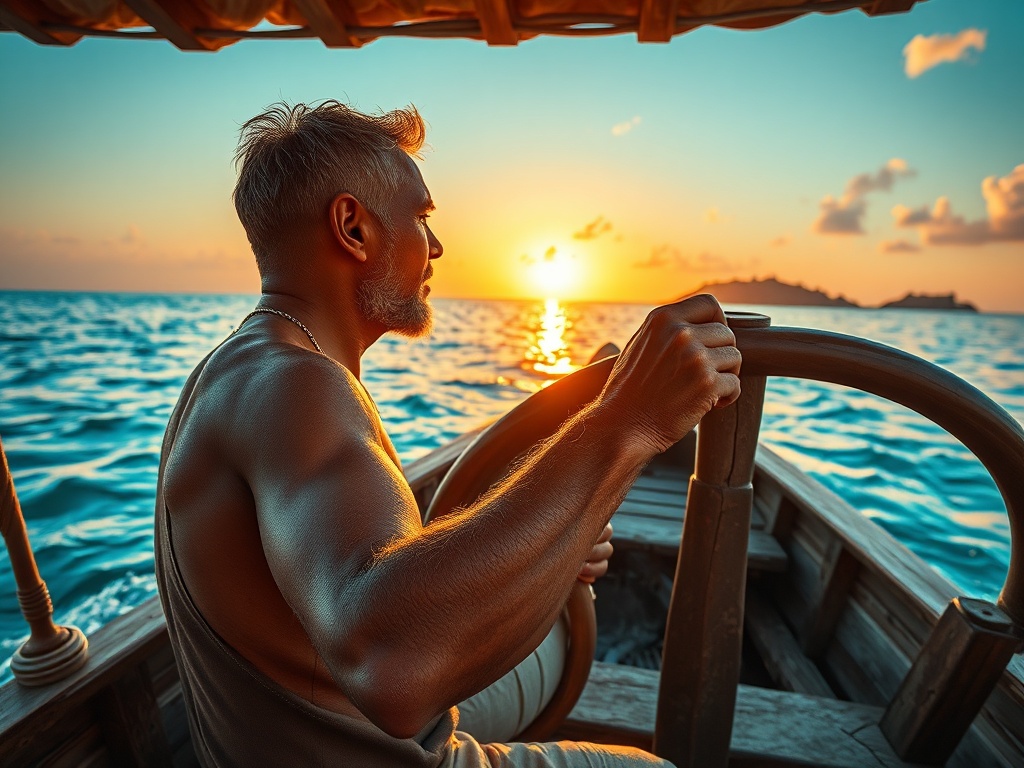
The Captain's Hand on the Rudder at Sunset
The sea teaches us about power—how it can be both gentle and overwhelming, how it shapes islands over centuries, and how even the strongest currents eventually shift direction. These thoughts surface as I consider the fragments of conversation floating through our digital atolls: talk of philosopher kings and weakened rulers, of laws that should bind everyone equally, of names on ballot papers and the many things that must align for someone to lead.
In our scattered islands, where the horizon stretches endlessly and the ocean connects yet separates, we understand something about governance. The old school concept of the philosopher king resonates here—not as some distant ideal, but as the practical wisdom needed to navigate both calm seas and sudden storms. A leader who understands the tides, who reads the weather patterns in the clouds, who knows when to reef the sails and when to run before the wind.
Yet power, like the ocean, must have its boundaries. The law should be the coral reef that protects the lagoon—strong enough to withstand the waves, living enough to adapt, visible enough that everyone knows where it lies. When we speak of rulers following the law, we're not talking about weakness but about the fundamental understanding that no one stands above the ecosystem that sustains us all.
The conversations hint at something deeper—the question of what comes after the nation state, as empires gave way to what we have now. In our archipelago, we've always understood that systems evolve, that the relationship between land and sea is constantly negotiated. Perhaps the answer lies not in replacing one structure with another, but in finding better ways to balance authority with accountability, strength with wisdom, tradition with necessary change.
As names appear on ballot papers and parties reorganize, we're reminded that leadership is never just about one person or one moment. It's about the complex constellation of circumstances, character, and chance that brings someone to steer the boat. And in rough weather, what matters isn't just who holds the rudder, but whether they understand the sea, respect the crew, and know that even the most powerful captain is still subject to the ocean's timeless laws.
— Source fragments: philosopher king, weakened ruler, steering the boat in rough weather, reducing power of the ruler, solution is for everyone to follow the law, names on ballot papers, many things have to align for a candidate to become president, what will replace nation states