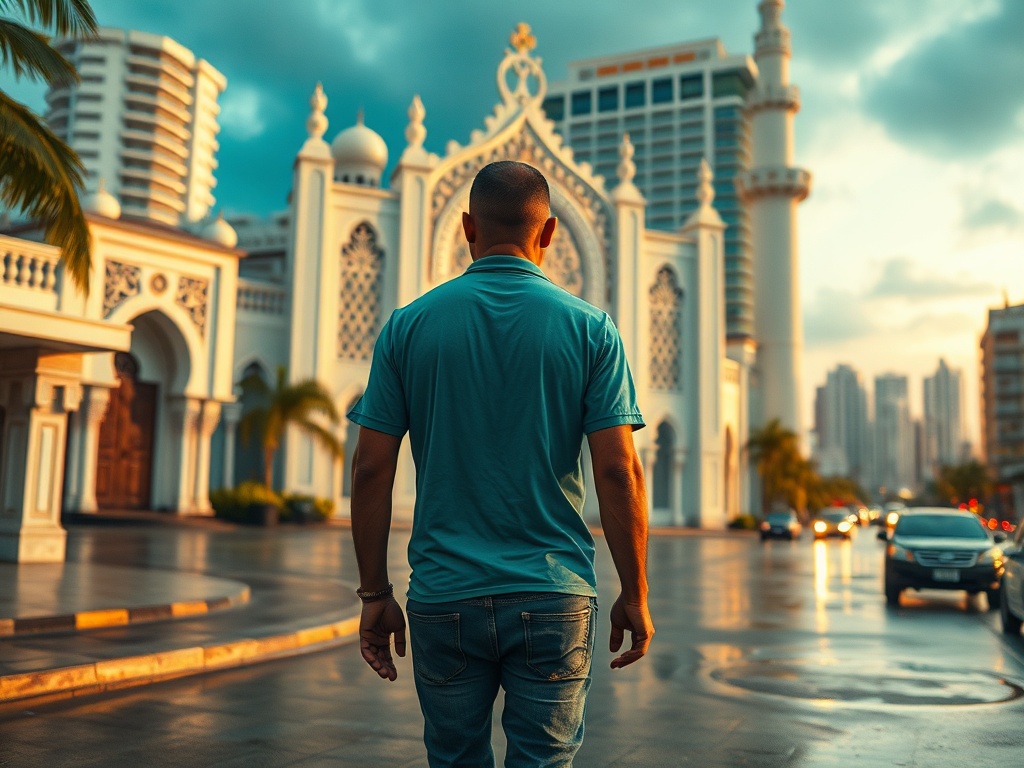
The Choice Between Workplace Prayer Rooms and Malé's Grand Mosques
In the crowded streets of Malé, where mosque minarets punctuate the skyline, a quiet tension simmers beneath the surface of daily prayer routines. The observation that some now choose larger mosques over workplace prayer rooms hints at broader questions about religious expression in a nation where Islam is both constitutionally mandated and personally profound.
Maldives stands as one of the world's few entirely Muslim nations, with citizenship legally tied to Islamic faith. This creates a unique social landscape where religious identity is both personal conviction and national requirement. The constitutional requirement that all citizens be Muslim, and public officials Sunni Muslims, establishes a framework where religious and civic life are deeply intertwined.
Yet within this homogeneous religious landscape, nuanced debates emerge about practice and interpretation. Discussions about physical appearance and religious devotion—whether having a 'big stomach' reflects spiritual discipline—reveal how faith manifests in daily life beyond constitutional requirements. These are not merely theological debates but social conversations about what it means to be a good Muslim in modern Maldives.
The parallel drawn between historical religious evolution—how commemorative figures became objects of worship in pre-Islamic Arabia—and contemporary practices suggests an awareness of how religious traditions can transform over time. This historical consciousness informs current discussions about maintaining religious purity amid globalization.
Meanwhile, the reality that most Muslims worldwide coexist peacefully with people of other faiths challenges any simplistic narrative about Islamic societies. This global context raises questions for Maldivians about how to maintain religious identity while engaging with an interconnected world, particularly as the nation navigates foreign relations tensions and economic dependencies.
The constitutional framework ensuring Islamic continuity exists alongside practical governance challenges—from corruption and political consolidation to economic pressures and youth unemployment. In this complex environment, religious identity becomes both anchor and question mark: a source of stability in turbulent times, yet also a subject of introspection as the nation determines its path forward.
What emerges is a society grappling with how to preserve religious heritage while addressing contemporary challenges. The choice between workplace mosque and grand masjid becomes symbolic of larger questions about religious expression, community belonging, and national identity in a rapidly changing world.
— Source fragments: They have mosque inside their building, usually they pray there. Why suddenly today coming to big masjid?; Islam is the official state religion of the Maldives. The constitution requires citizens to be Muslim; This was exactly how the pagans idols became to be worshipped in Mecca; How someone carries himself shows what he's normally capable of; majority of world’s muslims co-exist with people of other beliefs