The City That Swallowed Its Own Islands
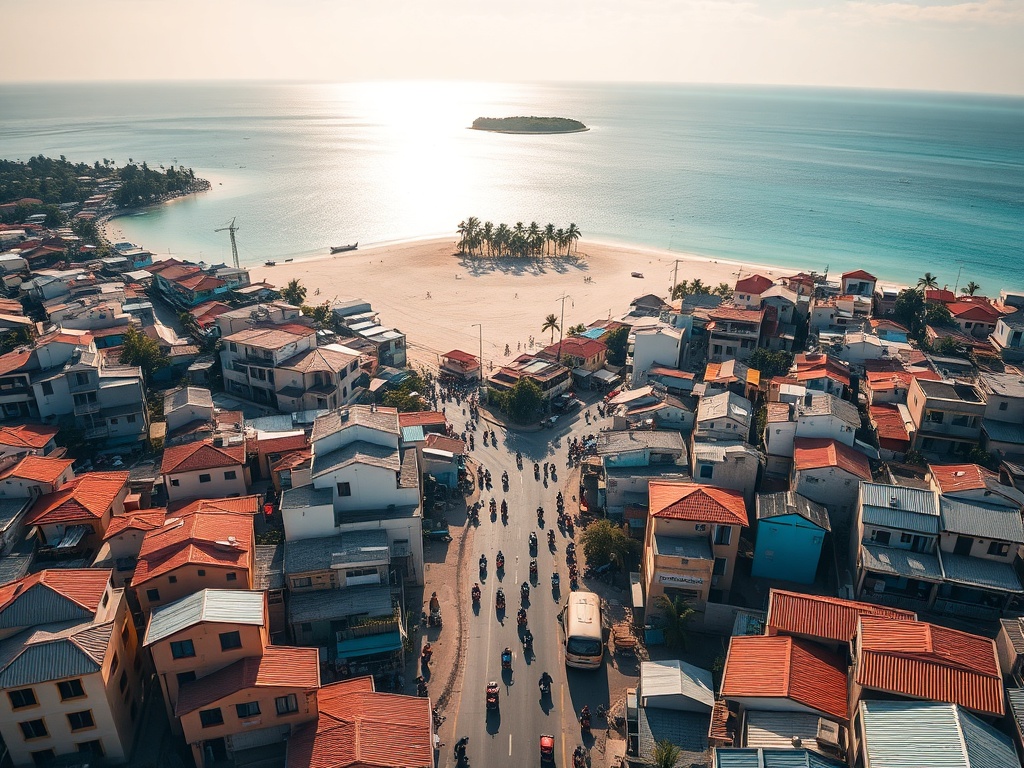
The debate over Malé's future has reached a critical juncture. What began as pragmatic urban planning discussions has evolved into a fundamental questioning of Maldives' development model. At the heart lies a simple but powerful observation: along the way, Malé has lost its identity. The city that once represented Maldivian culture and community has become something else entirely—a congested, unsustainable urban center where basic dignities like parking spaces and healthy living environments have become political battlegrounds.
The statistics tell part of the story—the visible symptoms of a deeper malaise. Majeedhee Magu, the capital's main thoroughfare, perfectly illustrates the paradox: authorities impound vehicles for parking violations while providing no adequate parking solutions, creating an undue burden on citizens whose motorcycles represent their daily means of transportation. This isn't just about traffic management; it's about a system that penalizes citizens for problems it helped create.
Beyond the immediate inconveniences lies a more profound structural issue. The very-cumming in Malé, as some describe the relentless centralization, represents what critics call the biggest blunder by the nation's elites. Historical recommendations to move the capital to Laamu, which would have created a dual-city nation with the region in between seeing rapid development, were ignored in favor of doubling down on Malé's dominance.
The consequences ripple across the archipelago. The recurrent cost of maintaining 200 communities becomes increasingly unsustainable as every island requires basic infrastructure. Yet the alternative—forcing migration through centralized government services—creates its own problems. It promotes congested living where people survive on rent rather than thriving in dignified, healthy living spaces.
New satellite developments like Hulhumalé offer partial solutions but introduce new concerns. Residents question why Hulhumalé remains under the corporate grip of HDC rather than having its own elected council like other islands. The perception of unaccountable development creates tension between modern infrastructure and democratic representation.
Technology offers promising alternatives for decentralized systems that could distribute opportunity more evenly across the nation. The barrier isn't technical capability but political will. As some observers note, governments may resist decentralization because it reduces their control over development financing mechanisms like BML loans.
The core challenge remains philosophical: do we continue promoting congested urban living as the default Maldivian experience, or do we envision a future where development serves people rather than concentrating them? The parking shortages, the garage villages, the underdeveloped spaces—these aren't isolated problems but symptoms of a centralized system straining at its seams.
What emerges from this conversation is a clear consensus: abolishing permanent addresses or building more high-rises merely treats symptoms. The real solution requires confronting the centralization monster itself. It demands a fundamental rethinking of how we distribute power, resources, and opportunity across our scattered nation. The alternative isn't just continued congestion—it's the gradual erosion of the Maldivian way of life itself.
— Source fragments: Malé lost its identity, very-cumming in Malé biggest blunder, should have moved to Laamu, unsustainable cost of maintaining 200 communities, promote congested living forcing migration, Hulhumale corporate grip needing elected council, parking violations and impounding issues, centralization forcing everyone to flock to one area